How to identify

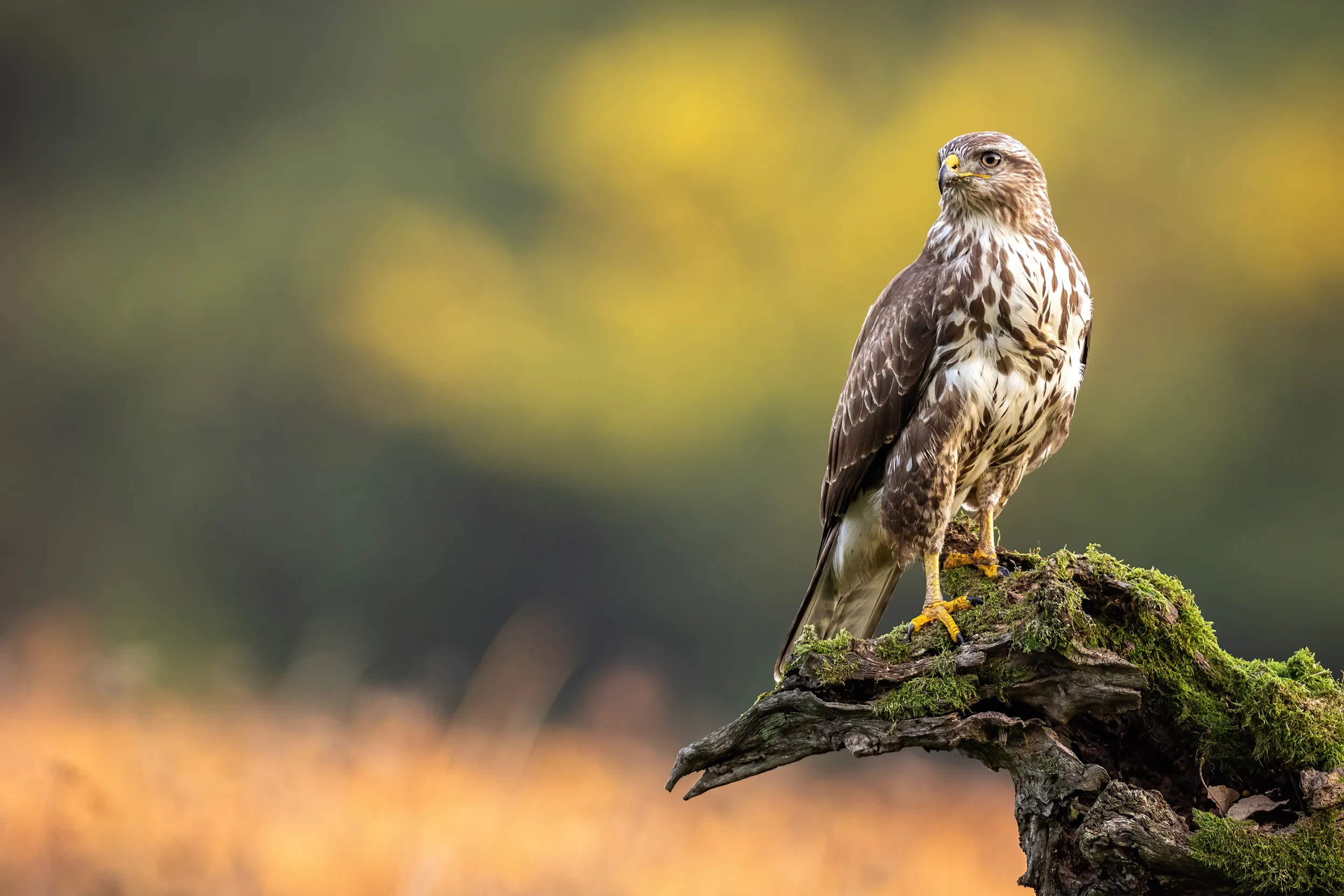
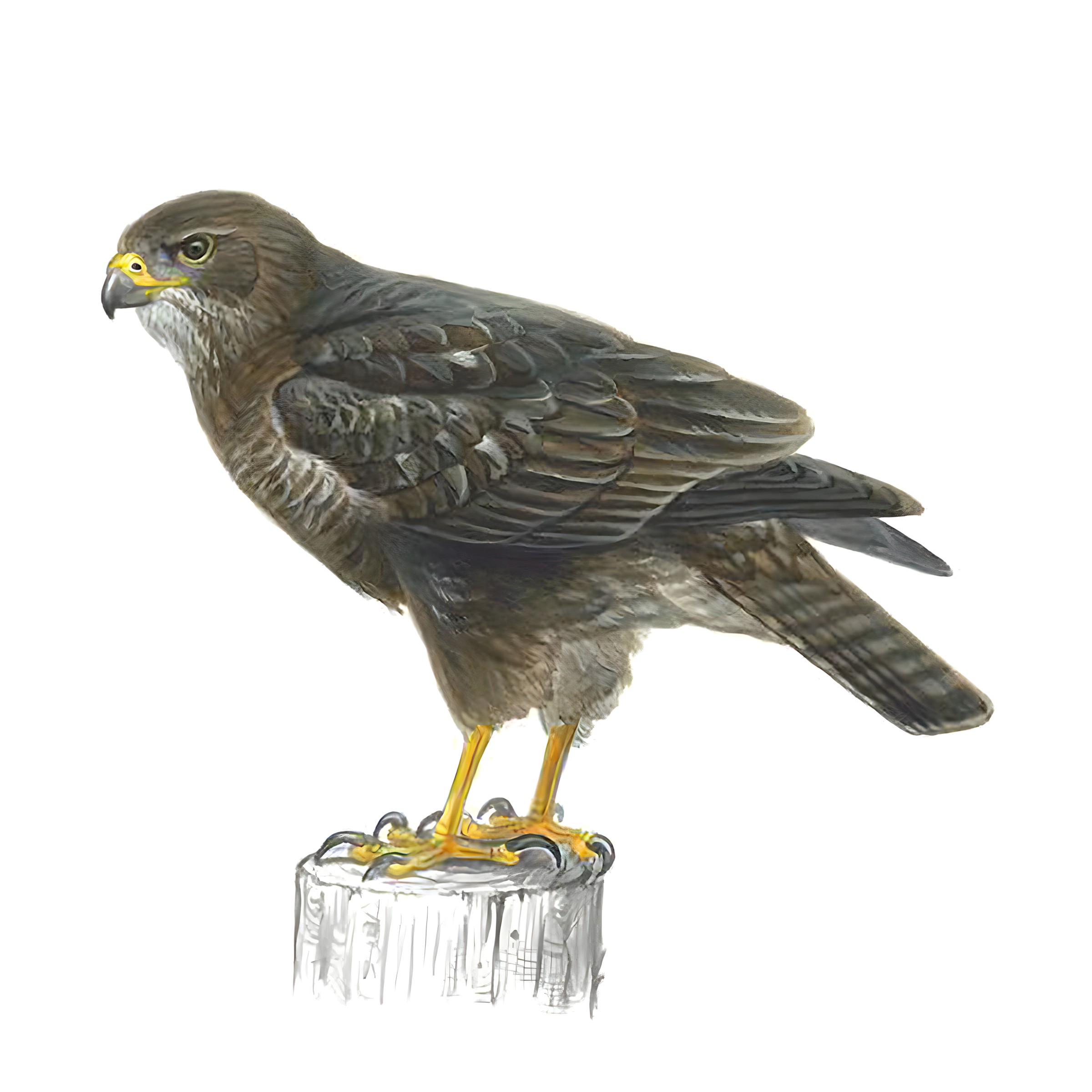
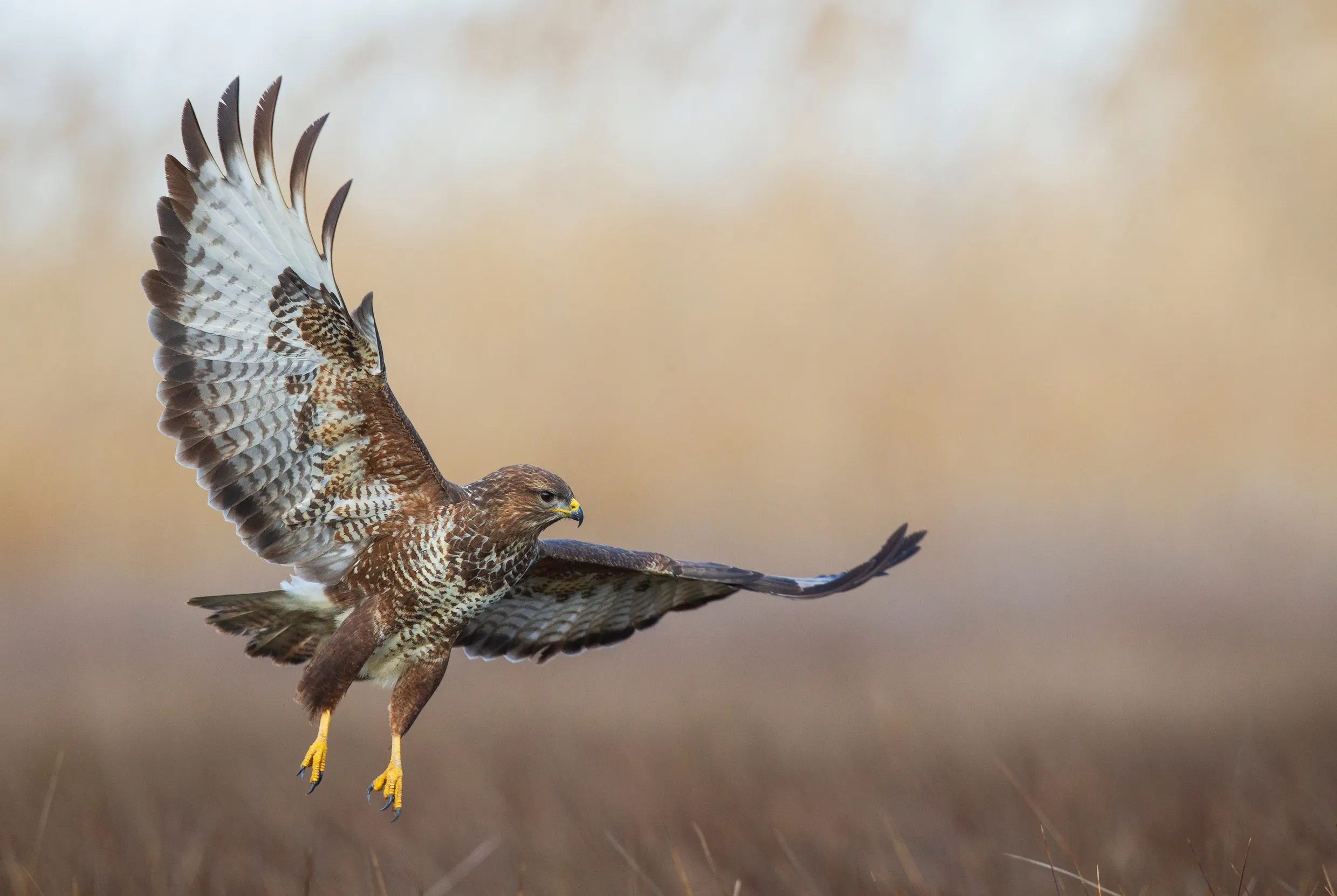
Now the most common and widespread UK bird of prey, the Buzzard is quite large with broad, rounded wings, and a short neck and tail. When gliding and soaring, it will often hold its wings in a shallow 'V' and the tail is fanned. Buzzards vary in colour from all dark brown to much paler variations, but all have dark wingtips and a finely-striped tail. Their mournful mewing call could be mistaken for a cat.

Call

Buzzard

Sander Bot / xeno-canto

Key features to look out for

  • Usually brown, with white undersides to the wings, but their plumage is quite variable
  • Adults have an obvious dark tail band and dark trailing edges to their wings
  • Long, broad wings with prominent ‘fingers’
  • Buzzards tend to hold their wings in a raised ‘V’ when soaring, whereas Red Kites hold their wings flat, or slightly downcurved
  • Short tail, often fanned in flight, which lacks the distinctive fork of a Red Kite’s
  • Yellow beak, with a black tip
  • Yellow legs
  • Often sits with a hunched posture
  • Not to be confused with the Honey Buzzard, which is a rare summer visitor to the UK. They glide with their wings held flat, tilting their tail like a kite. Their wings are not held raised in a ‘V’. They are neatly barred underneath, with a prominent small head.
Buzzard in field of winter wheat
Buzzard
What’s that bird of prey

From tiny Merlins to enormous White-tailed Eagles, the UK’s birds of prey come in all shapes and sizes. These masterful predators are a real treat to see, but they’re often super-fast and many species look quite similar, which can make identifying them a challenge. In this guide, we share some simple ID tips to help you.

Conservation status

Buzzard numbers have recovered from a low point in the mid-1900s and they are now on the Birds of Conservation Concern Green List, meaning that they’re doing well.

Where to see them

Difficulty rating - Easy

Buzzards are birds of the countryside, so you’re unlikely to see one in urban areas. Look out for them perching on lampposts and fences at the side of roads or walking through fields. You could come across a Buzzard almost anywhere in the UK.  

Key

  1. Resident
  2. Passage
  3. Summer
  4. Winter
* This map is intended as a guide. It shows general distribution rather than detailed, localised populations.
  1. Jan
  2. Feb
  3. Mar
  4. Apr
  5. May
  6. Jun
  7. Jul
  8. Aug
  9. Sep
  10. Oct
  11. Nov
  12. Dec

Where best to see them

Behaviour

Buzzards soar on thermals high above woodlands, open countryside and even motorways, looking for prey, including rabbits, rodents and birds. They often feed on carrion, so you might see them feasting on roadkill, or even patrolling along the ground in search of earthworms.

Buzzard in flight
Buzzard
Birds of Prey appeal

Birds of prey are being shot, trapped and poisoned across the UK. Give a regular gift and help keep them in our skies.

Adult Buzzard in flight with Domestic sheep in the background
Buzzard
Birds of the month

Head outside and discover fascinating birds each month. Read on for top ID tips, what to listen for, and where to see them.

Key facts