How to identify

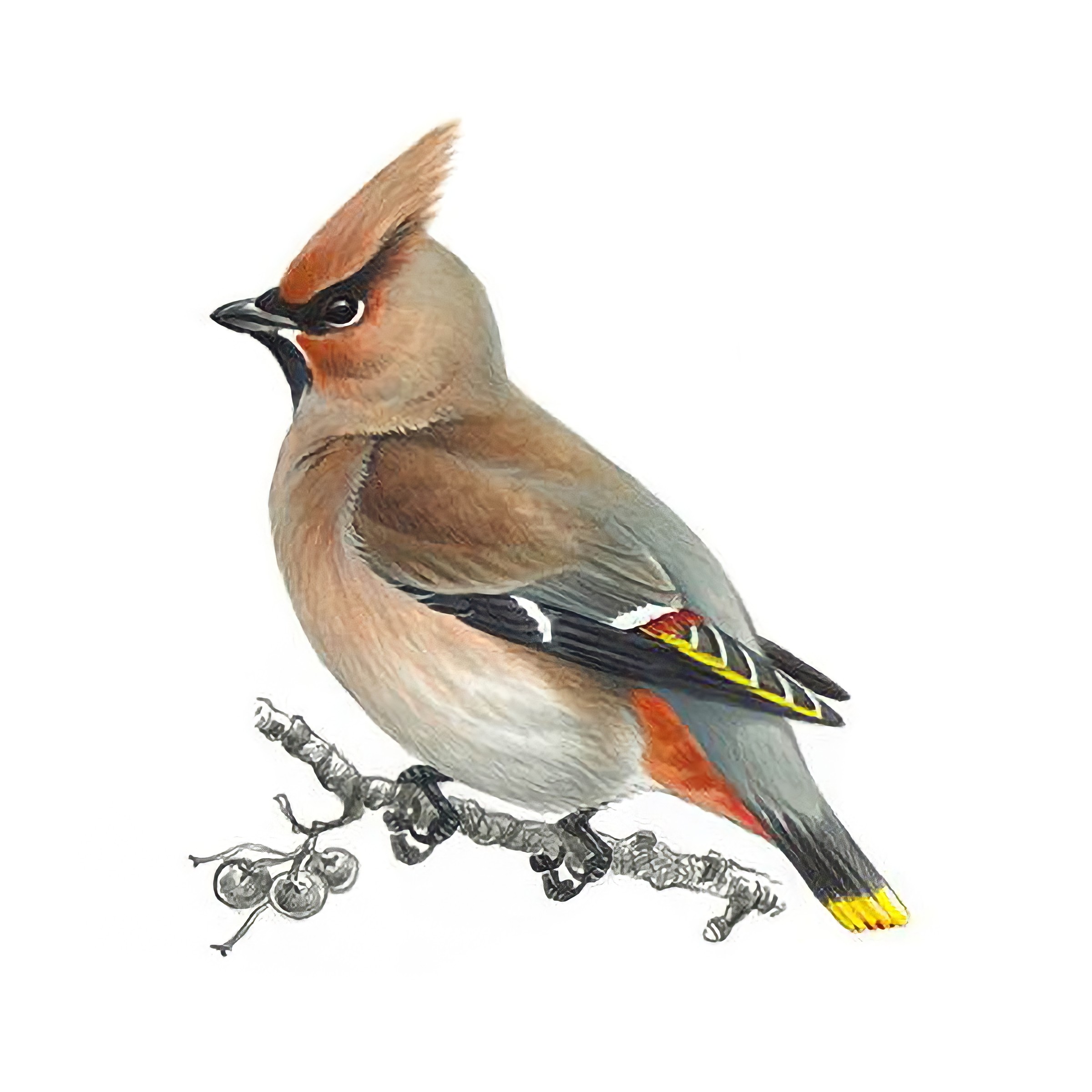
The Waxwing is a plump bird, which is slightly smaller than a Starling. It has a prominent crest (head feathers that stick up). It's reddish-brown with a black throat, a small black mask around its eye, yellow and white in the wings and a yellow-tipped tail. It does not breed in the UK, but is a winter visitor. In some years, we see larger numbers of visiting Waxwings, called irruptions, when the population in their breeding grounds gets too big for the food available.

Call

Waxwing

Patrik Åberg / xeno-canto

Key features to look out for

  • Peachy-buff coloured body
  • Sleek crest that can be held upright or slicked back
  • Black mask across the face and a small black throat patch 
  • Yellow-tipped tail
  • Red, wax-like tips on some wing feathers 
  • Black, white and yellow wing markings 
  • About Starling-sized

Conservation status

Waxwings are on the Green list. Their numbers in the UK vary each winter, depending on berry supplies and weather conditions over in continental Europe.  

Where and when to see them

Difficulty rating: Medium

Waxwings roam in nomadic flocks, searching for berries. Your best chance of seeing them is in northern and eastern England, especially in places with Rowan and Hawthorn trees. They often turn up on suburban streets lined with berry bushes, and even in supermarket car parks – so keep a lookout when you’re doing your weekly shop! 

Waxwing are unpredictable. In some years, only a few hundred will make the journey to the UK, but in others, thousands will flock to our shores in what’s known as an ‘irruption’. If you find a Rowan or Hawthorn tree heavy with fruit, you might strike gold – but you’ll need luck on your side.

Key

  1. Resident
  2. Passage
  3. Summer
  4. Winter
* This map is intended as a guide. It shows general distribution rather than detailed, localised populations.
  1. Jan
  2. Feb
  3. Mar
  4. Apr
  5. May
  6. Jun
  7. Jul
  8. Aug
  9. Sep
  10. Oct
  11. Nov
  12. Dec
Waxwing, adult perched in rowan tree
Waxwing
Birds of the month

Head outside and discover fascinating birds each month. Read on for top ID tips, what to listen for, and where to see them.

Key facts