
The RSPB’s Annual Report
Discover how we’re restoring nature for wildlife, people and the planet.
The RSPB works to save birds and other wildlife here in the UK and abroad. Nature is in trouble and we recognise that this is largely due to the rate at which we’re using up resources.

The RSPB works to save birds and other wildlife here in the UK and abroad. Nature is in crisis, and we recognise that this is largely due to how we manage our environmental impact.
The RSPB is committed to being a nature positive organisation and moving towards having a net climate cooling impact. We’ve had a greening programme since the 1990s and now have a corporate environmental management system (EMS). Under the acronym LARK, we have pulled together the key pillars of our climate change response to enable more holistic and cohesive action planning.
We report our annual greenhouse gas footprint and key greening achievements in the RSPB’s Annual Report each year (see page 62-65). To find out more about the RSPB's Annual Report click the link below.
We also produce a short annual environmental report that sets out the RSPB’s significant progress against our environmental management system (Green Dragon).
Discover how we’re restoring nature for wildlife, people and the planet.
Download and read our Environmental Policy, which sets out our main commitments such as reducing greenhouse gas emissions from our business and land operations, maintaining our recycling rate and tackling plastic use, and ensuring our purchasing of products meets our nature protection standards.
Our policy also commits us to preparing our reserves and operations for future climatic change; you can find the RSPB’s Climate Change Adaptation Report prepared for DEFRA here.
As well as embedding good environmental practice across our business operations, the RSPB have committed to do the same within our extensive science and research activities. We have signed the Concordat for the Environmental Sustainability of Research and Innovation Practice. As a concordat signatory, we recognise the need to change how we conduct research and innovation as well as promote wider solutions. We also agree to take shared action now and in the future to reduce and eliminate our own negative environmental impacts and emissions and achieve the transition to sustainable practices.
As the largest nature conservation charity in the UK, we at the RSPB are committed to more sustainable ways of delivering our work. To that end, we will continue to minimise our negative environmental impacts and integrate environmental best practices across our business operations.
Our Greenhouse Gas Reduction Commitment is an overview that sets out our targets, and the measures that we will take to reduce our Greenhouse Gas emissions.
We have set both short and long-term reduction targets. By 2030, we aim to reduce our Greenhouse Gas emissions by at least 26% compared to our 2025 baseline. In the long term, we are working to lower our emissions by at least 90% by 2045.

Through a partnership-funded project, we installed an 800kW (kilowatt) wind turbine at our UK headquarters in Sandy, Bedfordshire. In an average year, the turbine generates the equivalent of around 50% of our total electricity requirements across all our UK sites.

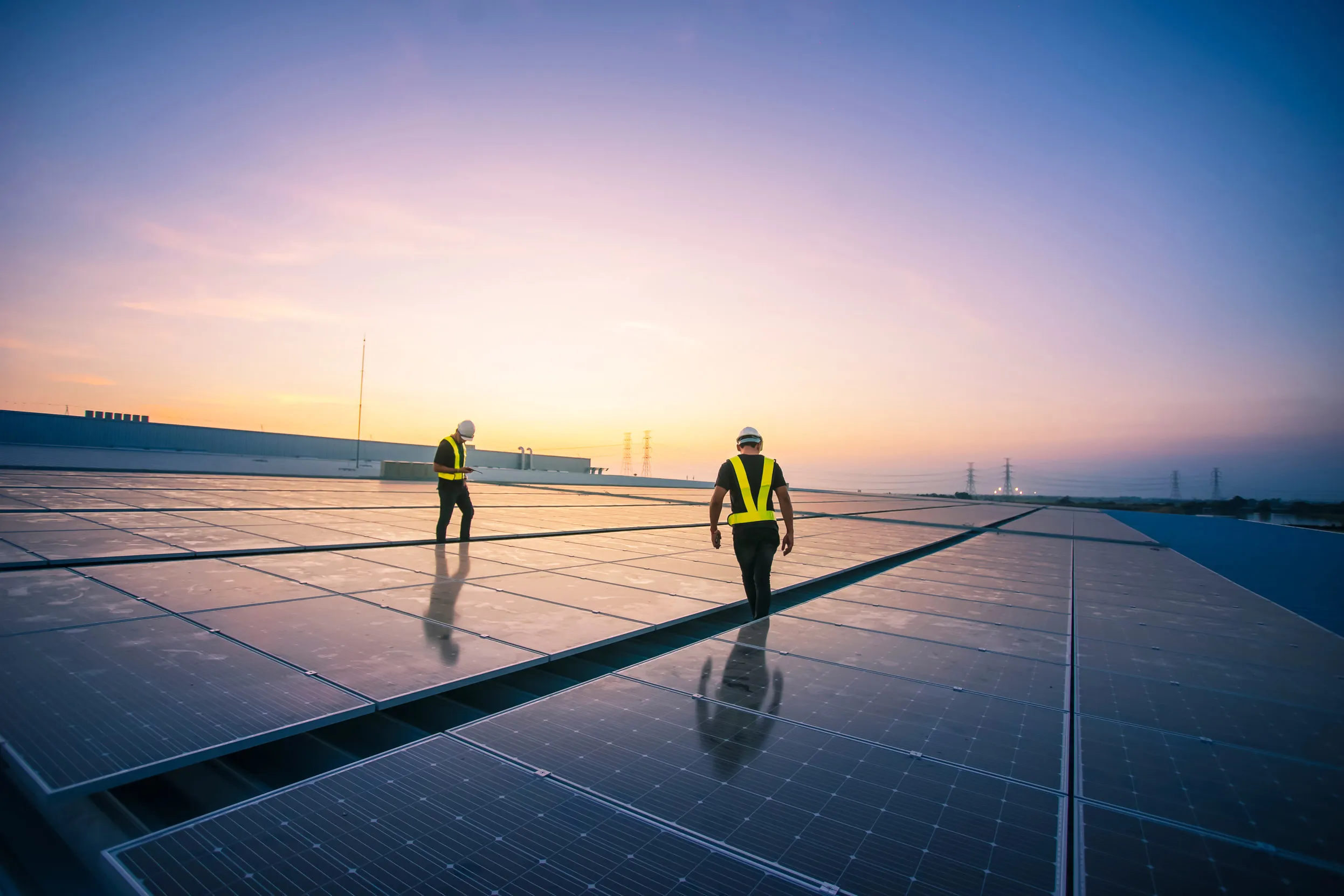
We have been installing solar photovoltaic (PV) systems at our sites since 2004 and now have over 50 in operation. Together, these generate over 300MWh (megawatt-hours) of electricity per year, which is the same as the annual electricity consumption of over 120 standard UK houses.

Our ongoing maintenance programme across all buildings at our sites has seen many improvements in energy efficiency. For example, in Northern Ireland, we replaced older lighting with higher-efficiency LED lights, saving around £3,000 in electricity costs per year.

We have installed telecommunication devices across our fleet of vehicles, which is helping us understand more about our travel patterns and driving. In addition, we have begun replacing petrol and diesel vehicles with electric vehicles (EVs) and have installed EV charge points at several of our reserves.