.jpg)
Listen to a Robin
Our expert, Mey Duek, answers some of this month's most commonly asked questions.

You might not expect to hear much bird song in November since most birds are not territorial or looking to attract mates right now. However, there are still some birds that are chatting up a storm.
We often receive questions from people confused by hearing a bird singing in the middle of the night. This will most likely be a Robin. Unlike many other birds, Robins continue defending their territory all year round and sing in autumn.
It’s also normal to hear them singing at night. In spring, Robins are one of the earliest birds to start the dawn chorus and one of the last to stop singing in the evening. They can also be triggered into song by many things including loud noises such as thunder, flashes of light such as lightning, or their roosting ground shaking, especially if they are roosting on a tree during a windy night. They can also be triggered into song by other birds signing. Their song is to make sure the neighbouring birds know the territory holder is still here and thriving!
Tawny Owls are another bird you can hear. They call throughout the year but especially in autumn. This is because the birds often pair up in autumn, ahead of the breeding season in early spring. The males attract females with their classic hooting we often associate with owls. Pairs call to each other and can be heard responding, often using a contact call.

One of our lovely winter visitors can also be heard calling in November – the Redwing. These small thrushes migrate to the UK from Scandinavia and Iceland at nighttime and you can hear them call as they fly in. They migrate in flocks, and these calls help them stay in touch with each other:

At this time of year, we often get reports of Mute Swans on roads. Understandably, people can be both concerned and confused by this behaviour.
There is often an increase in rainfall in autumn, and this makes our roads wet and reflective, similar to the surface of water bodies. This unfortunately confuses some swans and they end up landing on the road, mistaking it for a river. You might see them walking along the pavement or even in the middle of the road.
Swans need a run-up to take off, so the long and straight appearance can also make it attractive. When the cars aren’t around, it may seem like the perfect place to land, almost like a runway.

Additionally, as the cygnets from the summer grow up, they start to move about and leave the area they hatched in. This results in many swans being on the move and in search of new territories at this time of year. They are in search of feeding areas for the winter and may be seen trying out different areas.
Make sure to keep your eyes out for wildlife when driving, especially when roads are wet and slippery this winter! If you think a swan may have gotten trapped somewhere, speak to a rescue service such as The Swan Sanctuary or to a local rescue service.
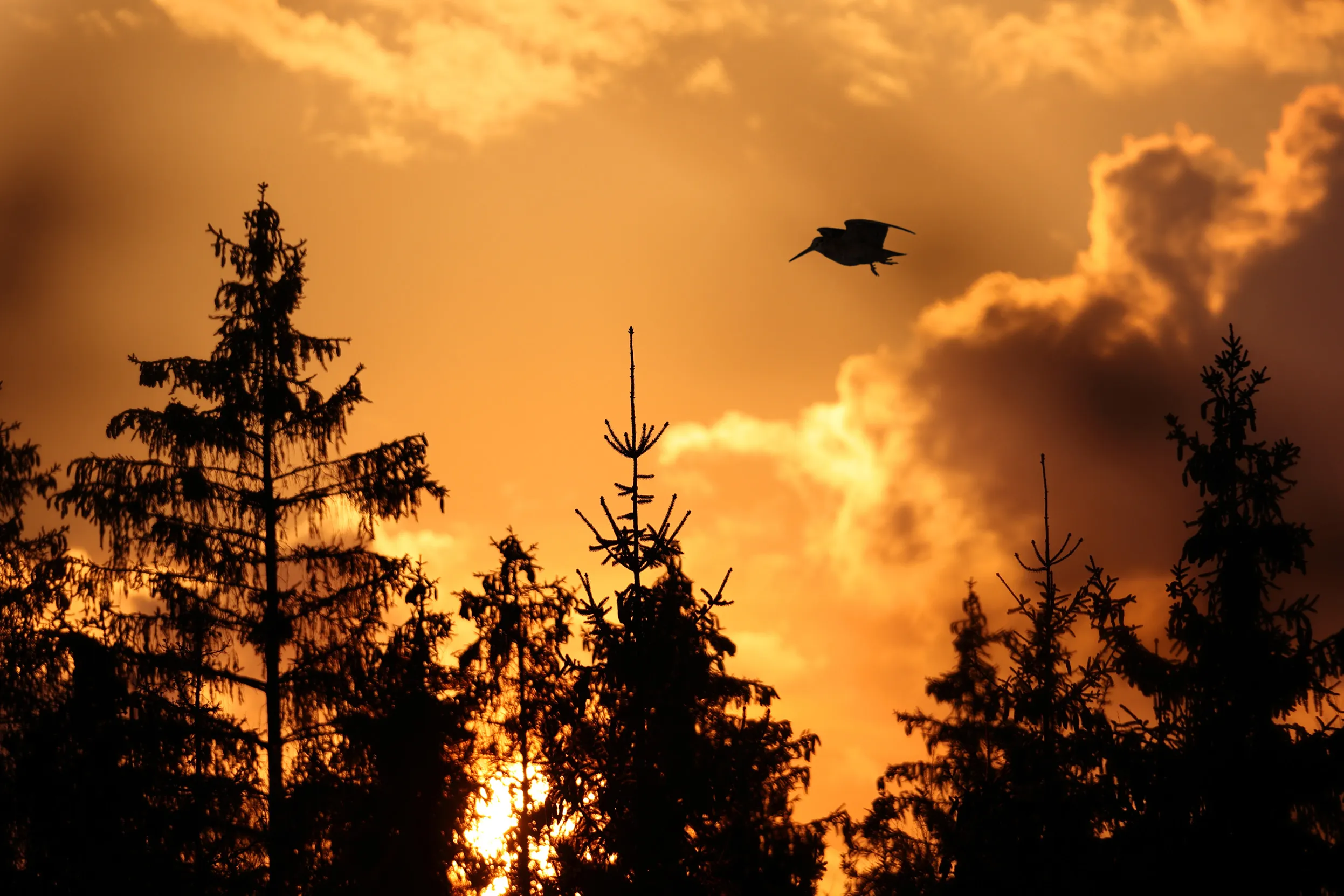
This is very likely a Woodcock! At this time of year, lots of Woodcocks are migrating to the UK from Finland and Russia. They like to migrate at night when the cover of darkness offers them more protection from predators.
In some cases, they end up in gardens. With their long beak, Woodcocks don’t look like the typical garden birds you might expect to see, and we get lots of calls asking us what this unusual bird might be!
Woodcocks can also turn up in very urbanised areas as their nighttime migration can sometimes result in collisions with buildings. Sadly, the lights in our cities and the glass in our buildings can be confusing to them. We can help by being mindful of the glare on our own windows and switching off lights at night.

Woodcocks are usually secretive birds so many people have not seen one before they find one in the garden or at the foot of a glass skyscraper. Woodcocks are generally solitary and often migrate alone but can gather in small groups. They often return to the same site to spend their winter. As you might have guessed from their name, they love woodlands but will also venture out to feed near streams and ditches.
Most Woodcock migration is from east to west as they fly in from the continent. However, you might still see them flying in different directions because they also like to feed at night and may move between feeding sites. You might also spot them on the move at dusk.

There is nothing like being in nature that lifts my spirits. Whether I’m having a great day or a bad day, watching the wildlife around me and walking under trees always gives a boost of serotonin. You can find me in my local green space attempting to take photos of butterflies and moths, watching the beautiful gulls, and admiring the tall trees.
We depend on donations to tackle the increasing threats our natural world faces. Every donation makes a difference. Will you help us today?