Ask an RSPB expert: your September questions answered
Our expert, Alex Wilkins, answers some of this month's most commonly asked questions.

On this page
You can expect to see some changes in the birds you see in September, as this is a month of transition with some birds leaving our shores and some returning.
September is also a great month for creating ponds and pond maintenance. Read on for why a pond is so beneficial for birds and other wildlife. Alex explains all...
What birds can I see migrating now?
September tends to be a time of transition for birds in the UK, with many of our summer visitors departing for their wintering grounds and the arrival of winter visitors in the UK.
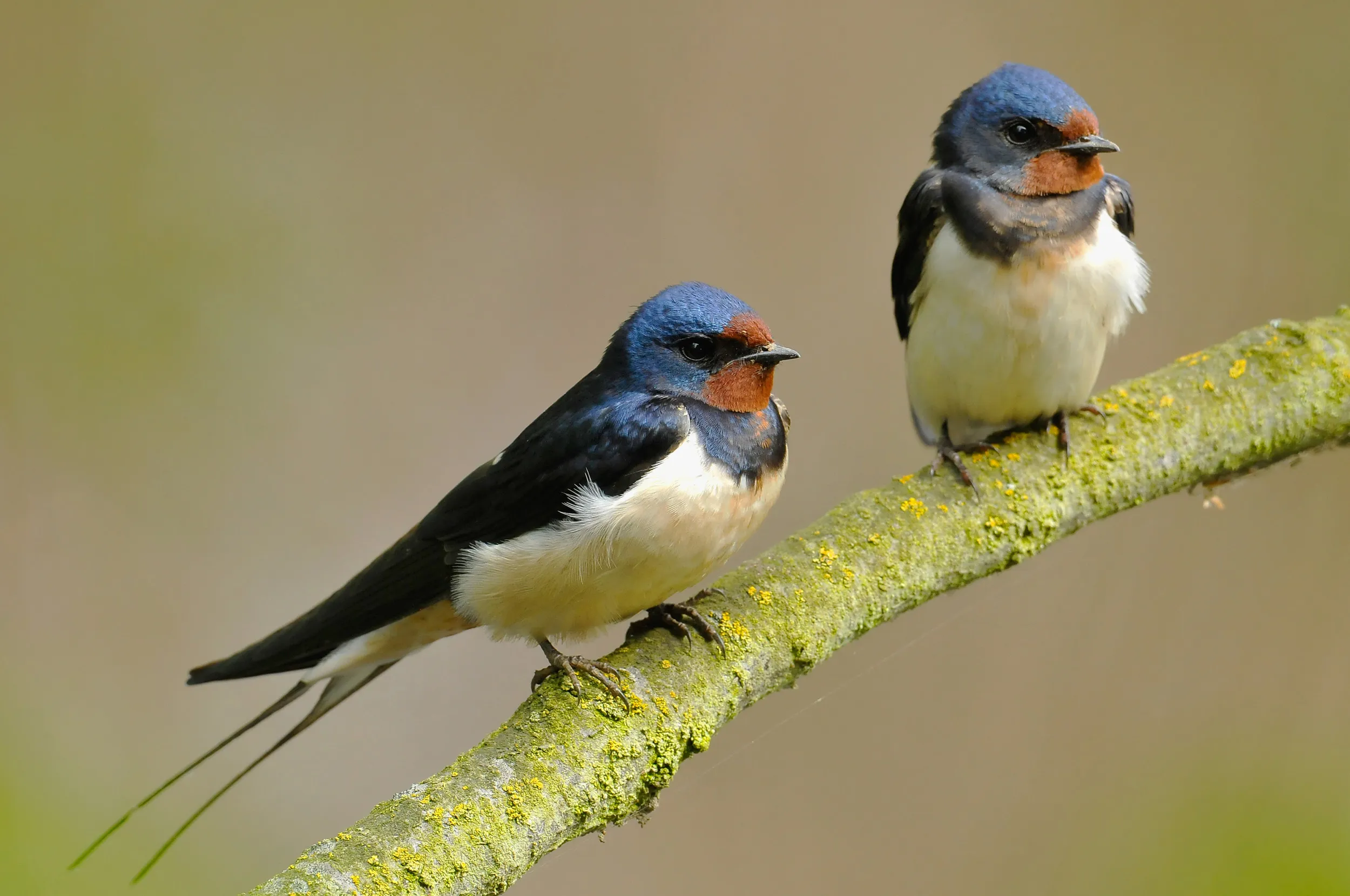
Whilst some now stay in the UK later into the year, Swallows and martins will mostly depart through September and October. During this time, you may see large groups gathered on telephone wires or flying around farmland as they look to stock up on the insect "fuel" they will need for their 6000-mile migration to their African wintering grounds.
Many geese start to return to the UK, with up to 90% of the world’s population of Pink-footed Geese wintering here! They are joined by species such as Barnacle and Brent Geese further into late September and October. Big groups of geese can be found on estuaries, wetlands and farmland, particularly in eastern and northern England.

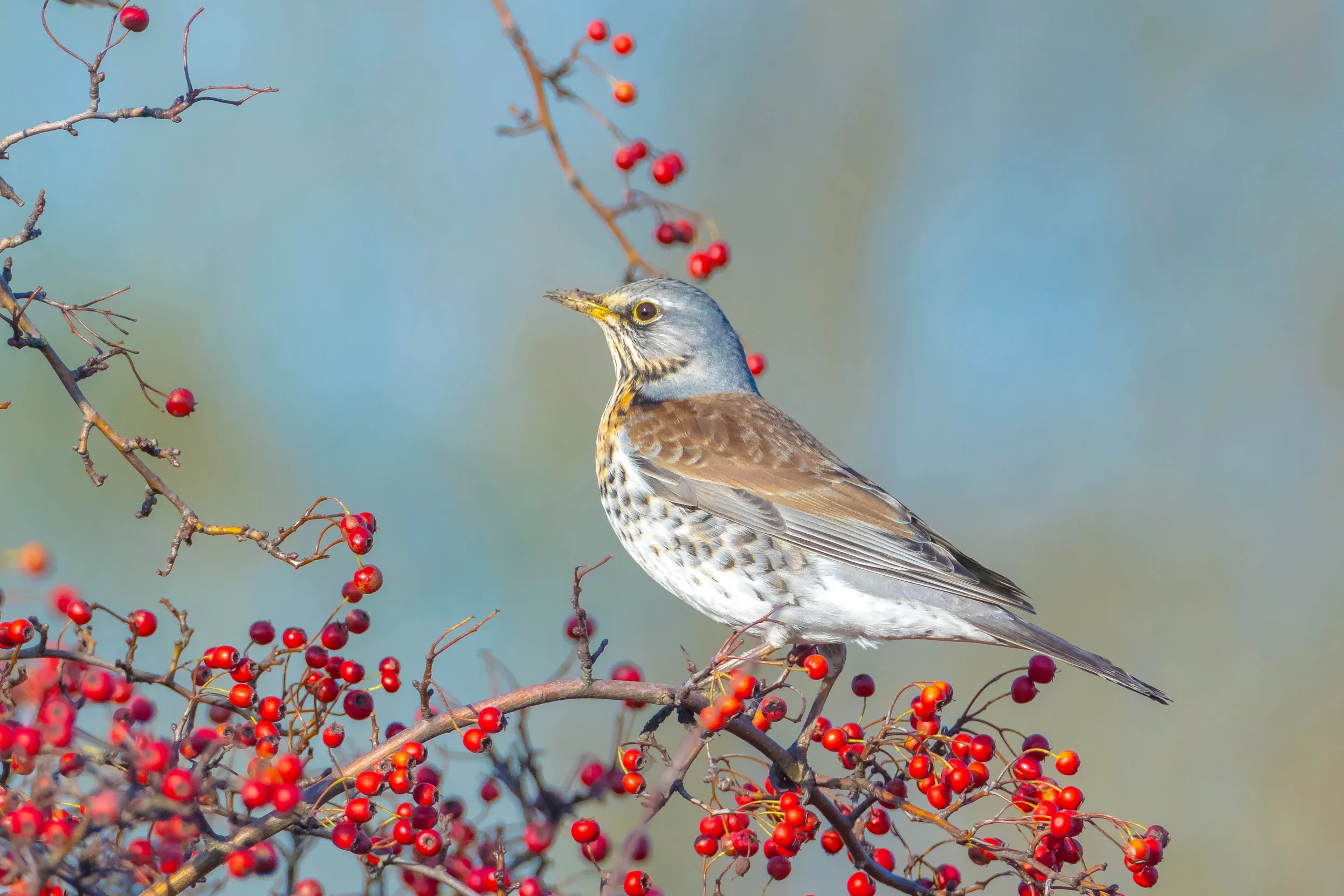
Redwings and Fieldfares, members of the thrush family, begin to fly in from colder parts of Europe at this time of year, with big numbers arriving in October on the search for berries such as Holly, Rowan and Hawthorn. During autumn, Redwings will migrate at night and be heard across the UK making a high-pitched migration call.
As winter progresses, the UK will become a vital home to hundreds of thousands of wintering waders which can be seen at coastal and wetland areas. World Migratory Bird Day falls on 10 October this year.
Keep an eye out for stories on our Nature news as we highlight and celebrate birds returning to their wintering areas.
How do birds undertake such large migrations?
Birds can undertake some truly epic migrations, travelling spectacular distances following the same routes, where they are able to find the exact location of their previous nests. Swifts, for example, make a 6,000 mile journey from the UK to central and eastern Africa twice a year!
Birds navigate using a combination of skills, including sight and a magnetic sense. Using sight, birds can follow landmarks such as valleys or coastlines – or even major roads – but this isn’t always possible in situations such as crossing deserts and oceans.

Birds can also detect the earth’s magnetic field (magnetoreception) in a couple of different ways. Many birds have magnetite in their beaks. This is a magnetic mineral that helps in detecting magnetic fields. Many birds also have a light activated protein in their eye called Cry4, which helps them to see magnetic fields.
Whilst less well understood, some birds such as shearwaters, petrels and albatrosses also use their sense of smell, using olfactory cues, to aid in migration over great distances. Some studies have shown that this can allow them to navigate even when magnetic senses have been disrupted. You can find more information about migration on our Guide to bird migration

How are ponds beneficial for wildlife?
A clean source of water is vital for birds, especially with recent hot weather creating a shortage of water resources. However, water can be a site of transmission for diseases such as trichomonosis. Ponds are complex ecosystems with a range of invertebrates that often eat disease-causing parasites. This reduces this risk of disease, and in addition ponds provide a home for a variety of wildlife. It’s for these reasons that wildlife ponds are more beneficial than just providing a source of water for birds.
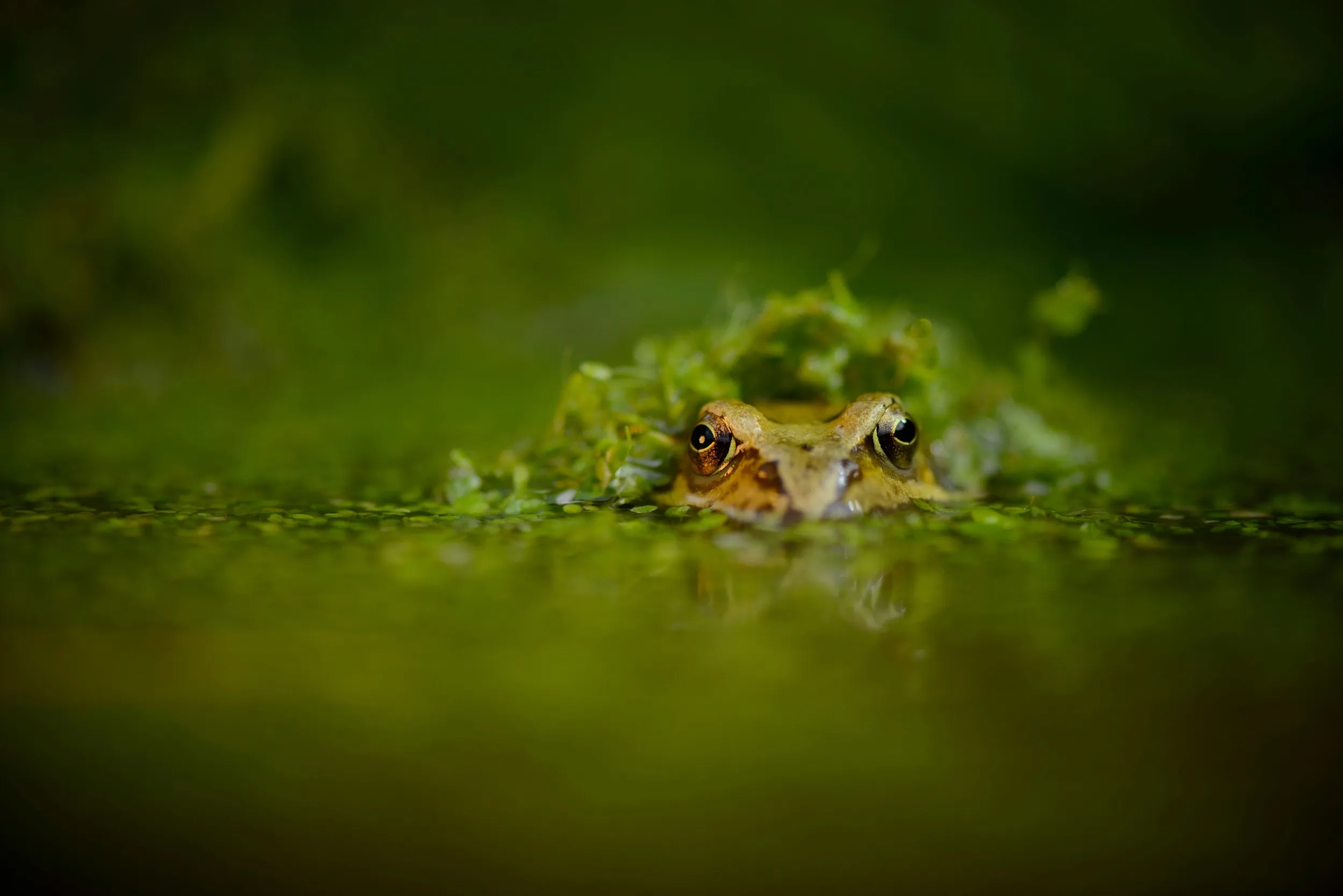
Although you can make ponds at any time of year, September is a great time to do it as wildlife, such as frogs and toads, are not breeding. This gives a new pond time to settle before the breeding season begins.
For a pond to be most effective, build it in an area with plenty of sunshine. Think about where any excess water can go if it overflows, so it doesn't create any flood risk. If there is an area that is shaded for part of the day, then the pond won’t dry out so quickly in hotter summers. However, it’s best not to place ponds under trees to avoid leaf fall in autumn.
One golden rule for a pond is to design your pond shape so that it includes shallow shelving edges. These will ensure that animals, such as Hedgehogs, that fall in can escape easily. Ponds should also have deeper areas, but you don’t have to go too deep, 60cm deep in the middle is fine.
To make it a thriving wildlife pond, you will need plenty of submerged aquatic pondweed and emergent vegetation. You'll find our suggestions on what to plant in our Guide to building a pond for wildlife.
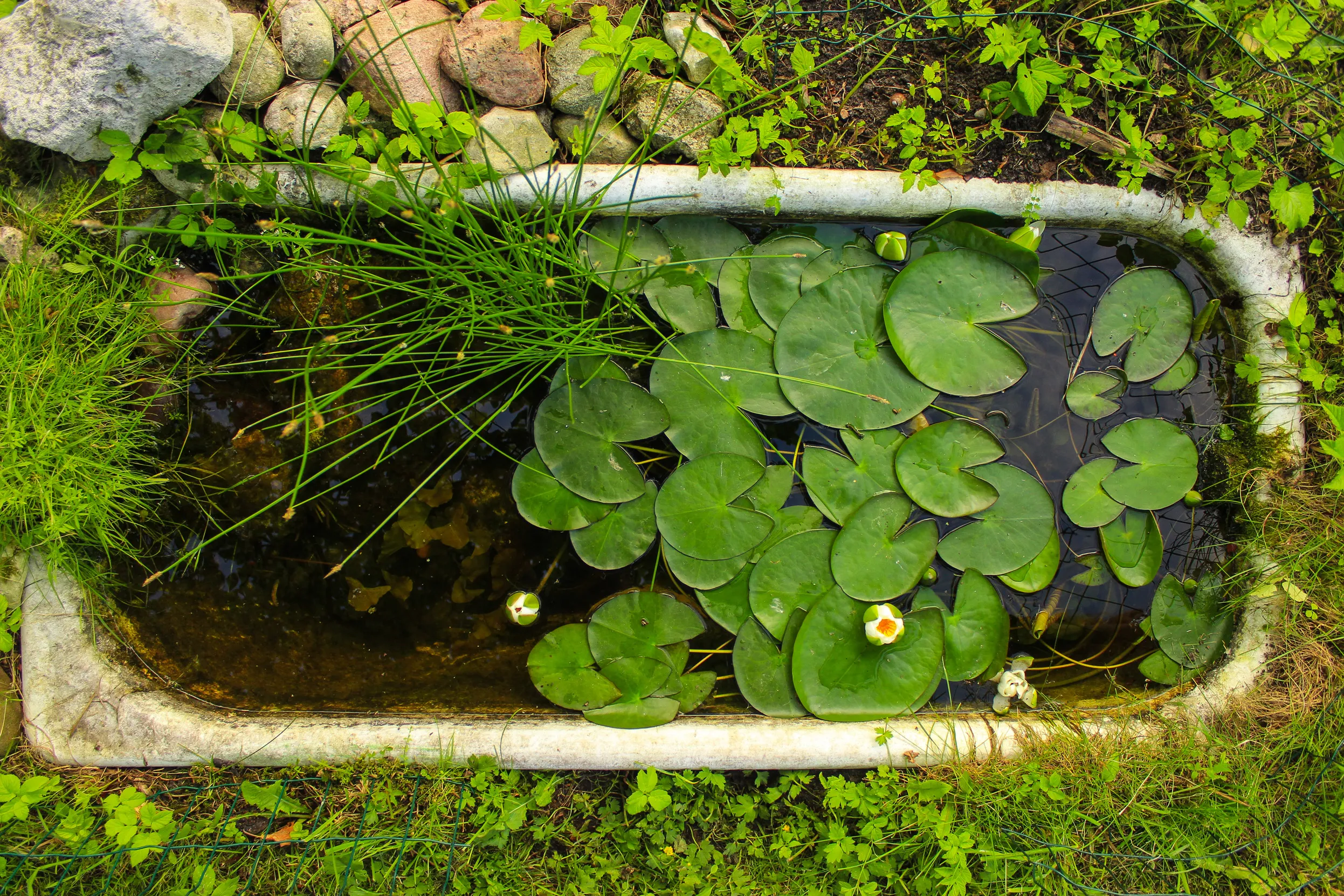
If you do not have the space for a larger pond, it’s possible to create a smaller pond using something like a washing up bowl, find out more here.
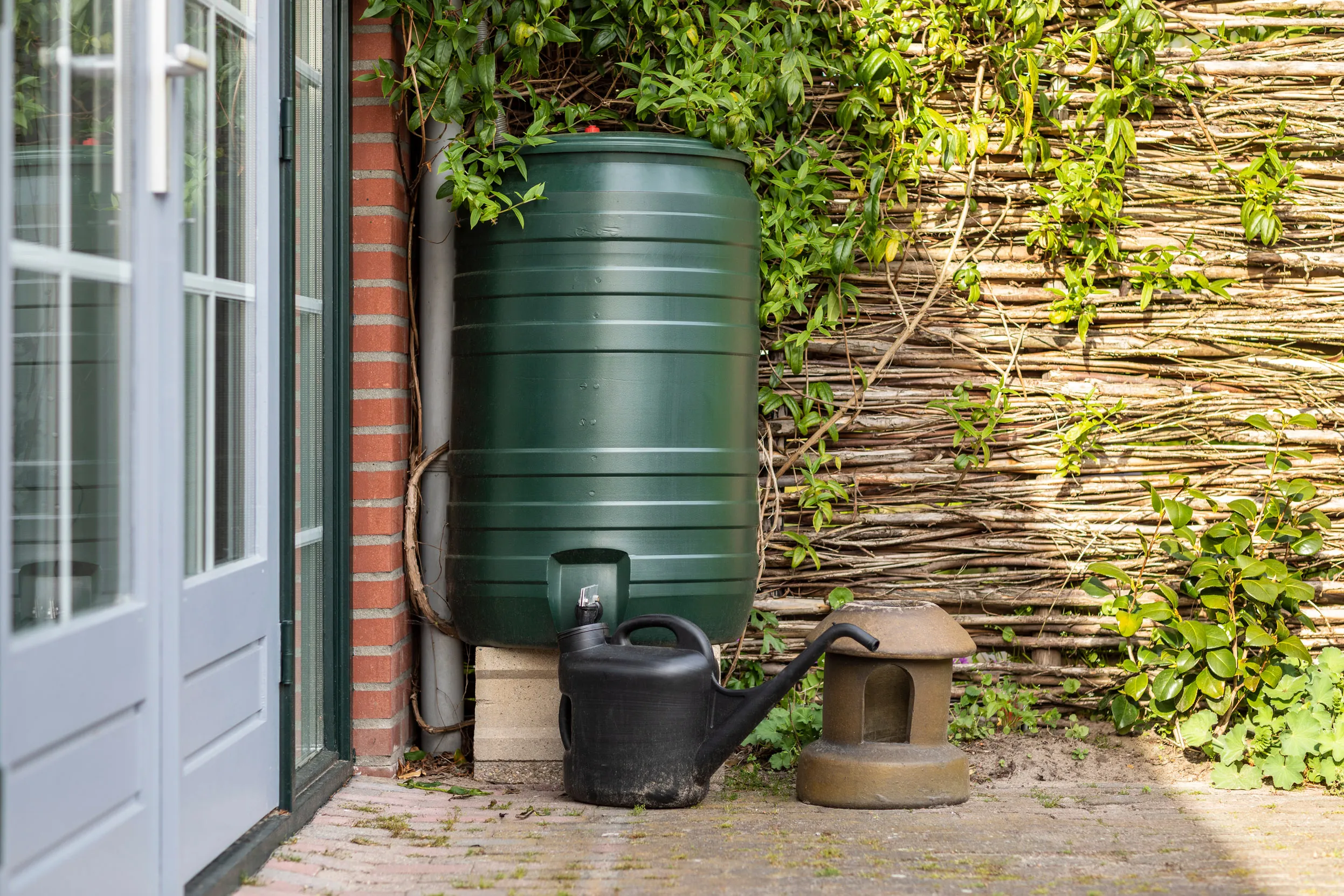
We recommend filling ponds with rainwater (collected in a water butt). Tap water contains nitrates and phosphates which can lead to problems with algae.
What do I need to do to maintain my pond?
For the first few months after making your pond, it's normal to find algae or blanket weed. These can be removed with a rubber rake or by winding it around a stick (a rubber rake is preferable to metal as it is less likely to damage the pond lining). Before composting or disposing of any weed, let it sit at the side of the pond, as this will allow any critters to escape into the water.
During periods of hot weather, you may need to top up your pond. You should do this with rainwater from a water butt as much as possible. If you do need to fill with tap water, please check how your water company treats your water as chloraminated water (treated with chlorine and ammonia) is not suitable for aquatic life. If topped up correctly, your pond should keep itself thriving and in balance so there won’t be much need to 'interfere' which may in fact disturb wildlife and upset this balance).
Ponds very rarely need to be completely cleared out, unless they become seriously overgrown or silted up. At this time of year, you could help keep your pond healthy by inspecting and removing any fallen leaves and stems to avoid a build-up of any decomposing vegetation.
If you think your pond will need to be completely drained and cleaned, this should be done in late autumn to avoid disturbing amphibians. Do this slowly to allow creatures that can't fly to get away. You can also transfer small creatures and plants to a temporary "mini-pond" (such as a washing up bowl mentioned above) and move adult amphibians to a dark and damp area of the garden.
Meet the expert: Alex Wilkins
Working in the RSPB Wildlife Enquiries Team is really fun as I am always working on my knowledge with interesting queries and projects! I am especially interested in seabirds and their conservation, having previously had the pleasure of working on the RSPB’s Little Tern restoration projects. It’s always great just to get out there and see some birds!
