How to identify

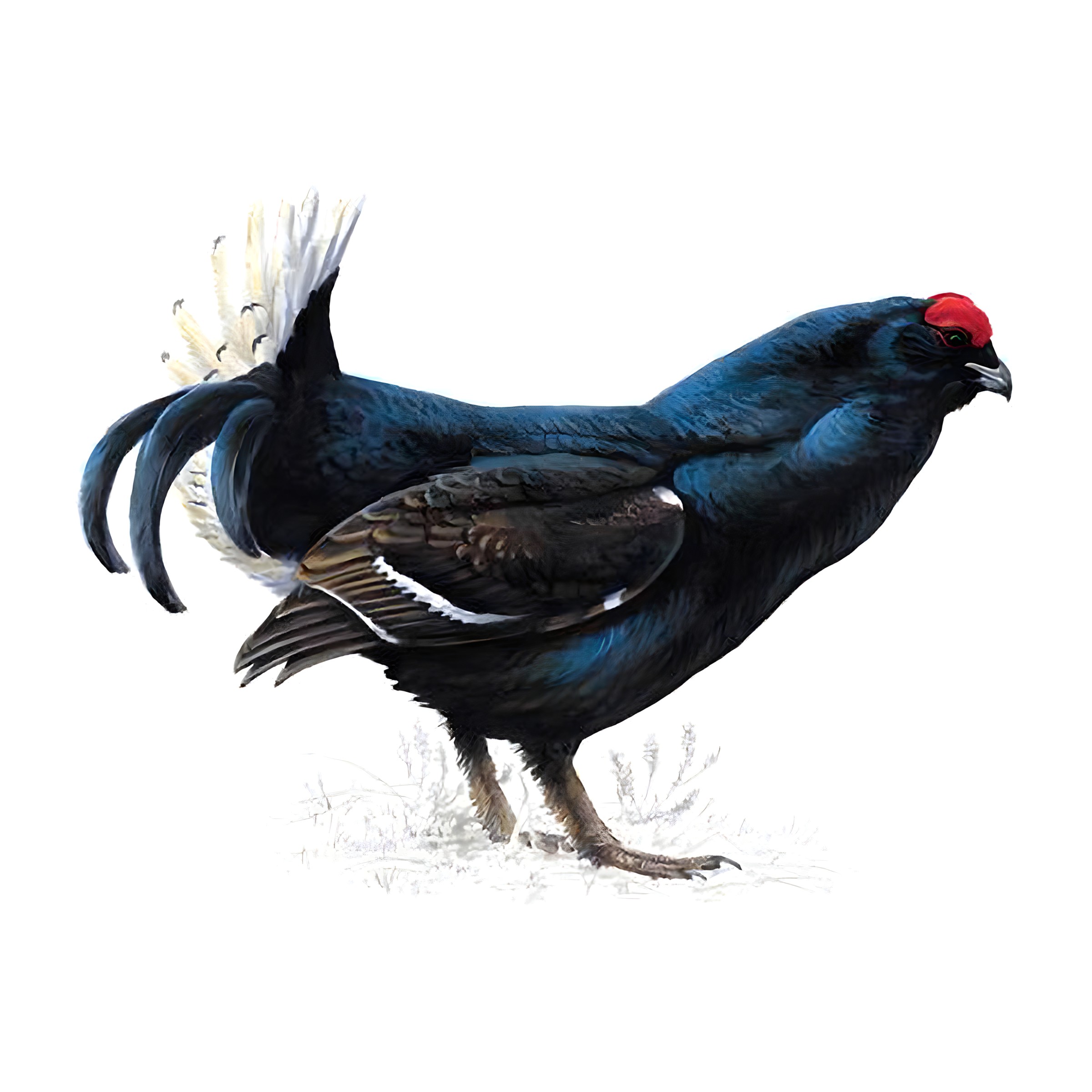
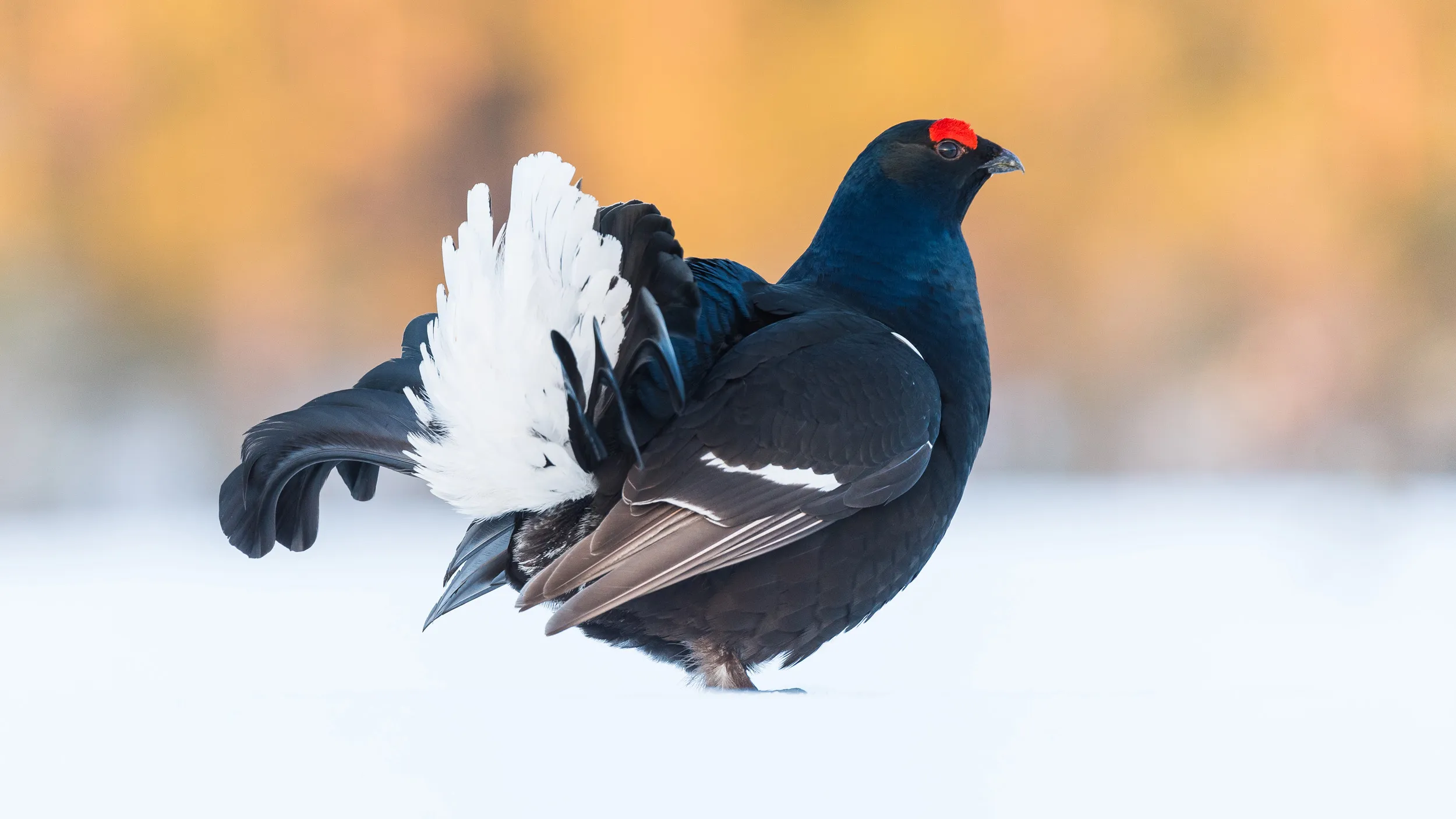
The all-black males have distinctive red wattle (bit of skin) over the eye and show a striking white stripe along each wing in flight. They have long, curling tail feathers which are fanned out and raised to show white under-tail feathers when displaying. The smaller grey-brown females have a slightly notched tail. Habitat loss and overgrazing have resulted in a decline in numbers and range, making them a Red List species. Positive habitat management is helping them to increase in some areas. Black Grouse conservation work is supported by The Famous Grouse.

Call

Black Grouse

Baltasar Pinheiro / xeno-canto

The spectacular spring mating ritual of the Black Grouse

See the spectacular spring mating ritual of the Black Grouse | RSPB Nature Breaks
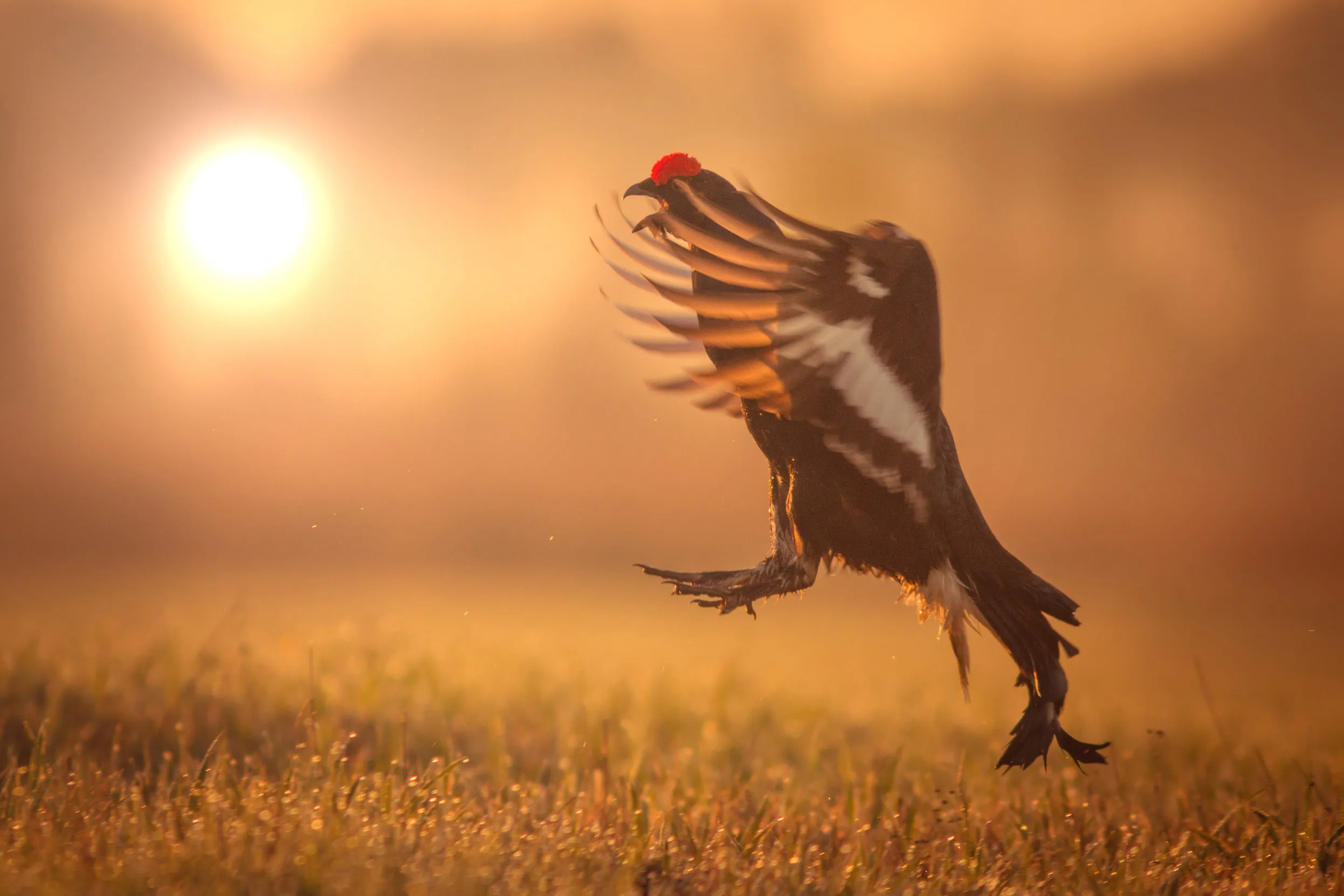
A Black Grouse taking flight at sunrise.
Black Grouse
Watching endangered grouse

Find out how you can watch endangered grouse without harming these wonderful but scarce birds.

Where and when to see them

Black Grouse are found in upland areas of Wales, the Pennines and most of Scotland. Best looked for on farmland and moorland with nearby forestry or scattered trees. They have traditional 'lek' sites where the males display.

Key

  1. Resident
  2. Passage
  3. Summer
  4. Winter
* This map is intended as a guide. It shows general distribution rather than detailed, localised populations.
  1. Jan
  2. Feb
  3. Mar
  4. Apr
  5. May
  6. Jun
  7. Jul
  8. Aug
  9. Sep
  10. Oct
  11. Nov
  12. Dec

Key facts