
How to identify

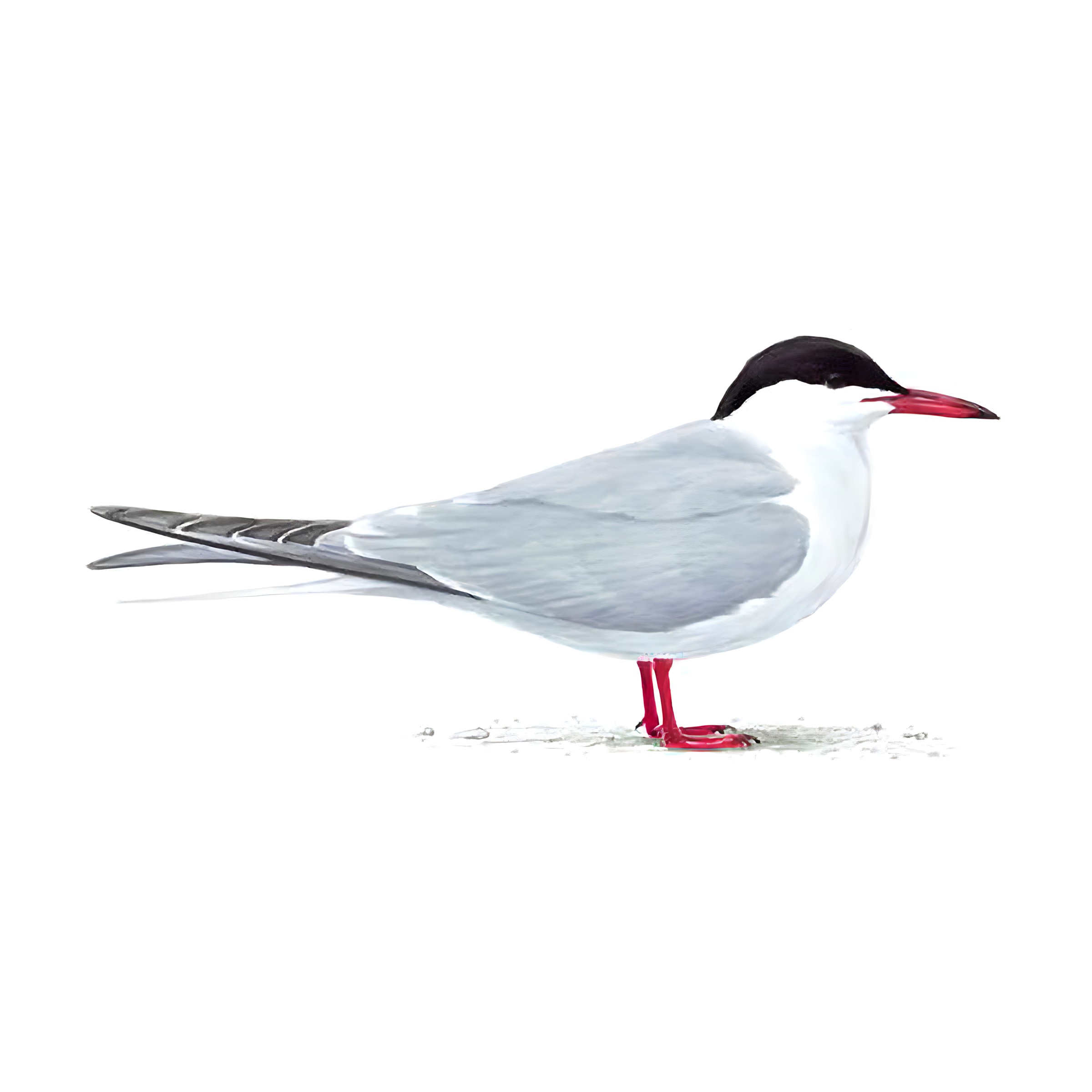
These delightful silvery-grey and white birds have long tails which have earned them the nickname 'sea-swallow'. They have a graceful, floating flight and frequently hover over water before plunging down for fish. They often gather and breed in noisy groups. The Common Tern is the tern species most often found inland.

Call

Common Tern

Ross Ahmed / xeno-canto

Key features to look out for

  • Silvery-grey and white, having moulted out of full summer plumage 
  • Long tail, which earns them the nickname 'sea-swallow' 
  • A bill with a black tip, darker wing feathers and longer legs set them apart from Arctic Terns

Conservation status

Common Terns are Amber-listed in the UK. Nesting out in the open leaves their eggs and chicks exposed to threats like predation and human disturbance.

Where and when to see them

Difficulty rating - Easy

Pebbly coastal beaches, along with gravel pits, inland lakes and reservoirs, and even cities. Look for the noisy groups gathering on our coasts or inland. 

Key

  1. Resident
  2. Passage
  3. Summer
  4. Winter
* This map is intended as a guide. It shows general distribution rather than detailed, localised populations.
UK distribution map for Common Tern
  1. Jan
  2. Feb
  3. Mar
  4. Apr
  5. May
  6. Jun
  7. Jul
  8. Aug
  9. Sep
  10. Oct
  11. Nov
  12. Dec

Behaviour

In September, head to the coast and you might run into a noisy crowd of Common Terns gathering before one of the longest journeys of any UK bird. Some will travel all the way to the southern tip of Africa, following fish down the Benguela Current and rubbing shoulders with albatrosses along the way. 

Common Tern, adult perched on post calling
Common Tern
Wing Tips

Brilliant birds, month by month: what to see and where to go.

Key facts