How to identify

Kestrels are a familiar sight, with their pointed wings and long tail, hovering beside a roadside verge. Numbers of Kestrels have declined since the 1970s, probably as a result of changes in farming, and so it is included on the Amber List. They have adapted readily to man-made environments and can survive right in the centre of cities.

Call

Kestrel

Marco Dragonetti / xeno-canto

Key features to look out for

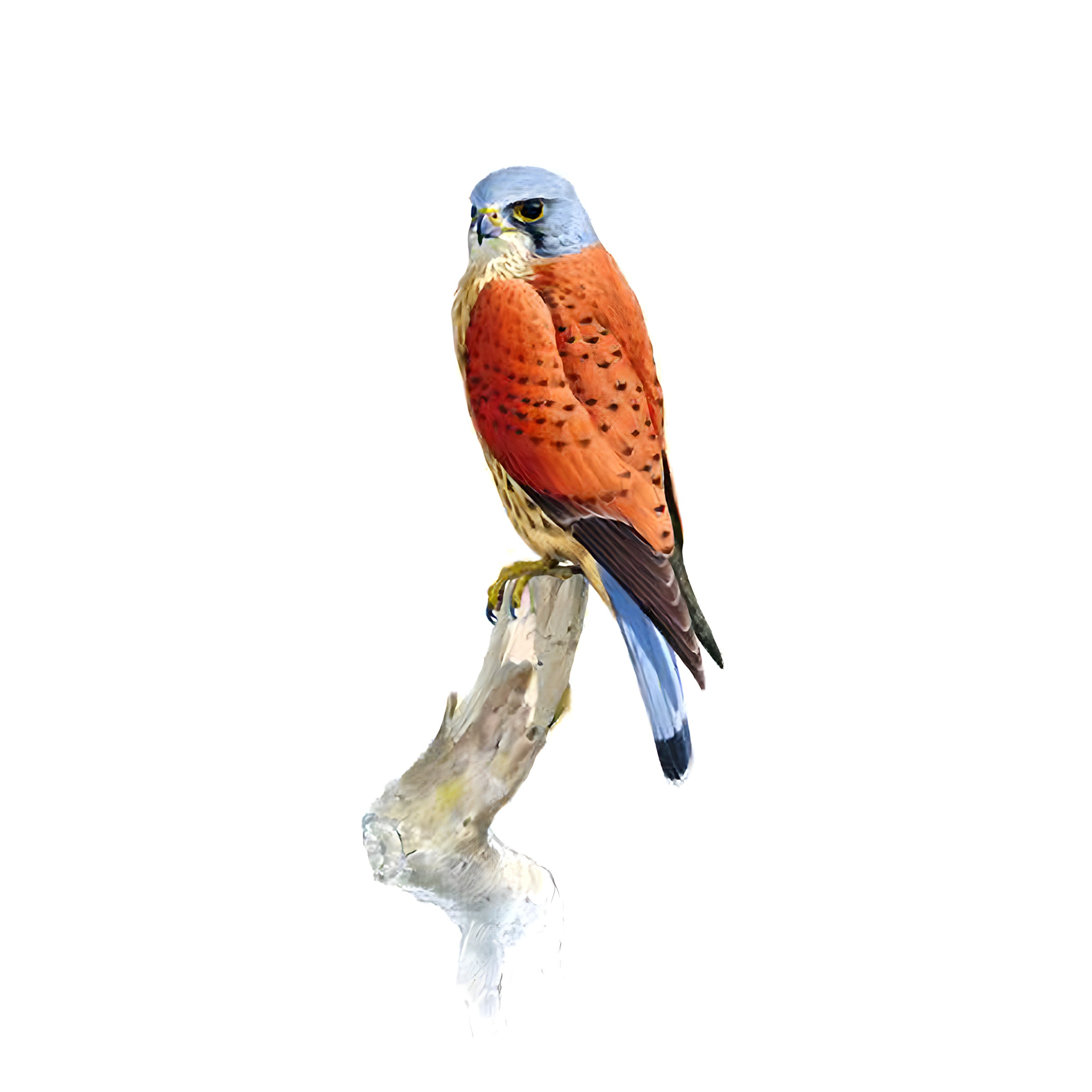
  • Both males and females have pale undersides with black speckles (not bars like on a Sparrowhawk)
  • Males have a slate-grey head and uppertail with a single black band at the tip
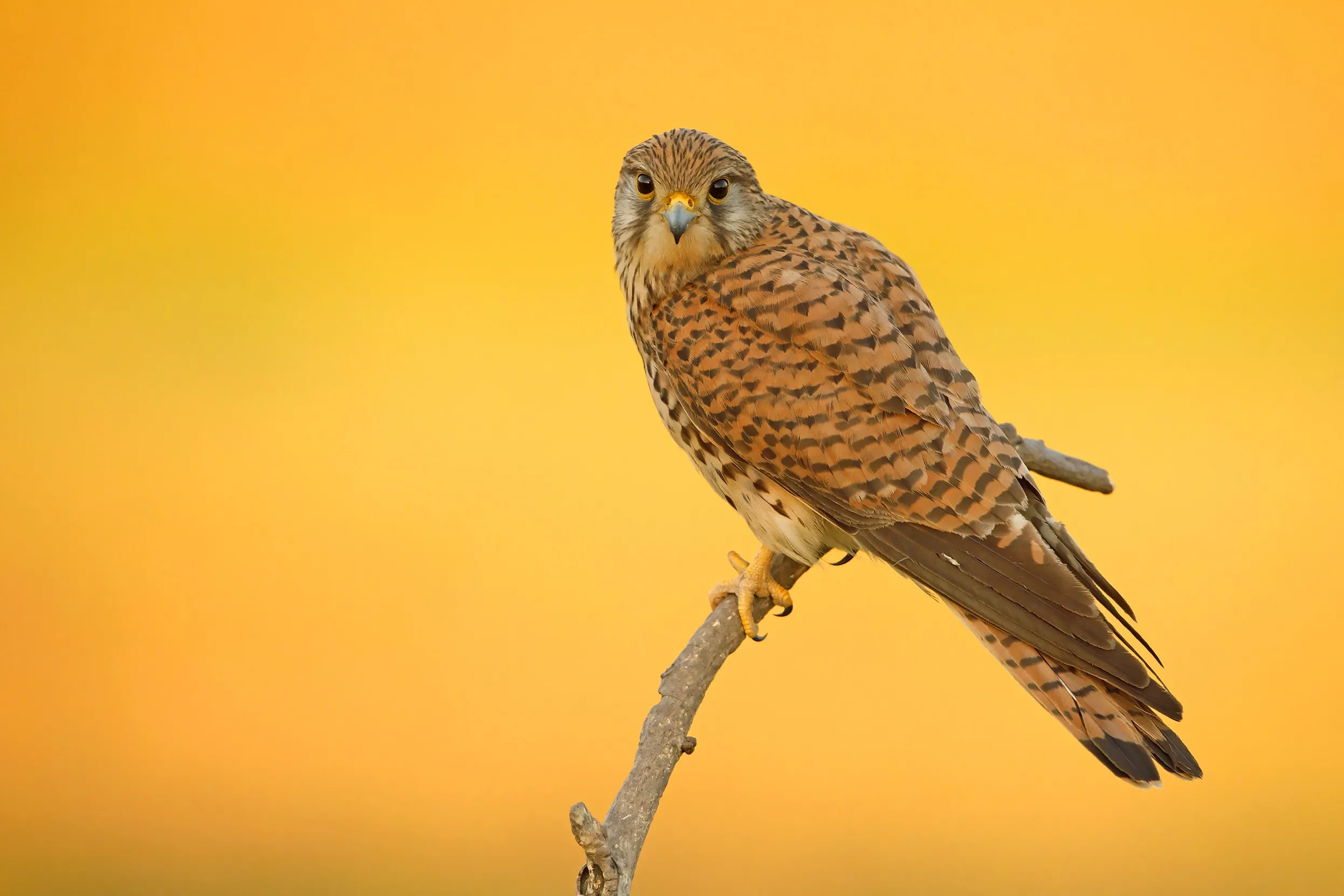
  • Females are browner all over, with bars all along the uppertail
  • Both males and females have dark ‘tear’ marks extending below each eye
  • Wing tips are more pointed than a Sparrowhawk’s      
  • Longer tail than other falcons, with a black band at the end. Fanned out while hovering
A Common Kestrel on a log.
Kestrel
What’s that bird of prey

From tiny Merlins to enormous White-tailed Eagles, the UK’s birds of prey come in all shapes and sizes. These masterful predators are a real treat to see, but they’re often super-fast and many species look quite similar, which can make identifying them a challenge. In this guide, we share some simple ID tips to help you.

Conservation status

Sadly, Kestrels declined by 37% between 1995 and 2023 and now feature on the Amber List of Birds of Conservation Concern. The exact causes of this decline are still unclear, but could include what’s known as ‘secondary poisoning’ where Kestrels become sick or die from eating poisoned prey. Changes to the way land is farmed might also be a factor.

Kestrels are an RSPB Priority Species and we’re carrying out research to get to the bottom of their decline, so that we can better understand how to help them. We also work with farmers to help them create ideal habitat for these birds.

Where to see them

Difficulty rating - Easy

Kestrels live in most areas of the UK, apart from western Scotland. They like to use open habitats, such as grasslands, farmland and heathland, where they can get a good view of their prey. They also visit open spaces in towns and cities. 

Key

  1. Resident
  2. Passage
  3. Summer
  4. Winter
* This map is intended as a guide. It shows general distribution rather than detailed, localised populations.
  1. Jan
  2. Feb
  3. Mar
  4. Apr
  5. May
  6. Jun
  7. Jul
  8. Aug
  9. Sep
  10. Oct
  11. Nov
  12. Dec

Behaviour

You’re most likely to see a Kestrel hovering in the air – in fact, this behaviour is so characteristic that it led to the Kestrel’s colloquial name of ‘windhover’. While hovering, Kestrels keep their head still and their eyes fixed on the ground, adjusting their tail and wings to hold position, before dropping down to catch a vole or other small mammal. Kestrels are a familiar sight hovering above road verges, and you might also see them perched on fence posts, scanning the ground for prey.

They have incredible eyesight and can even see UV light, which allows them to spot the trails of wee left behind by the voles and other small mammals they eat, as these trails reflect UV light.

Kestrel chicks sitting in nest in old industrial building
Kestrel chicks
Birds of Prey appeal

Birds of prey are being shot, trapped and poisoned across the UK. Give a regular gift and help keep them in our skies.

Juvenile Kestrel hunting grasshoppers in long grass
Juvenile Kestrel
Birds of the month

Head outside and discover fascinating birds each month. Read on for top ID tips, what to listen for, and where to see them.

Key facts