How to identify

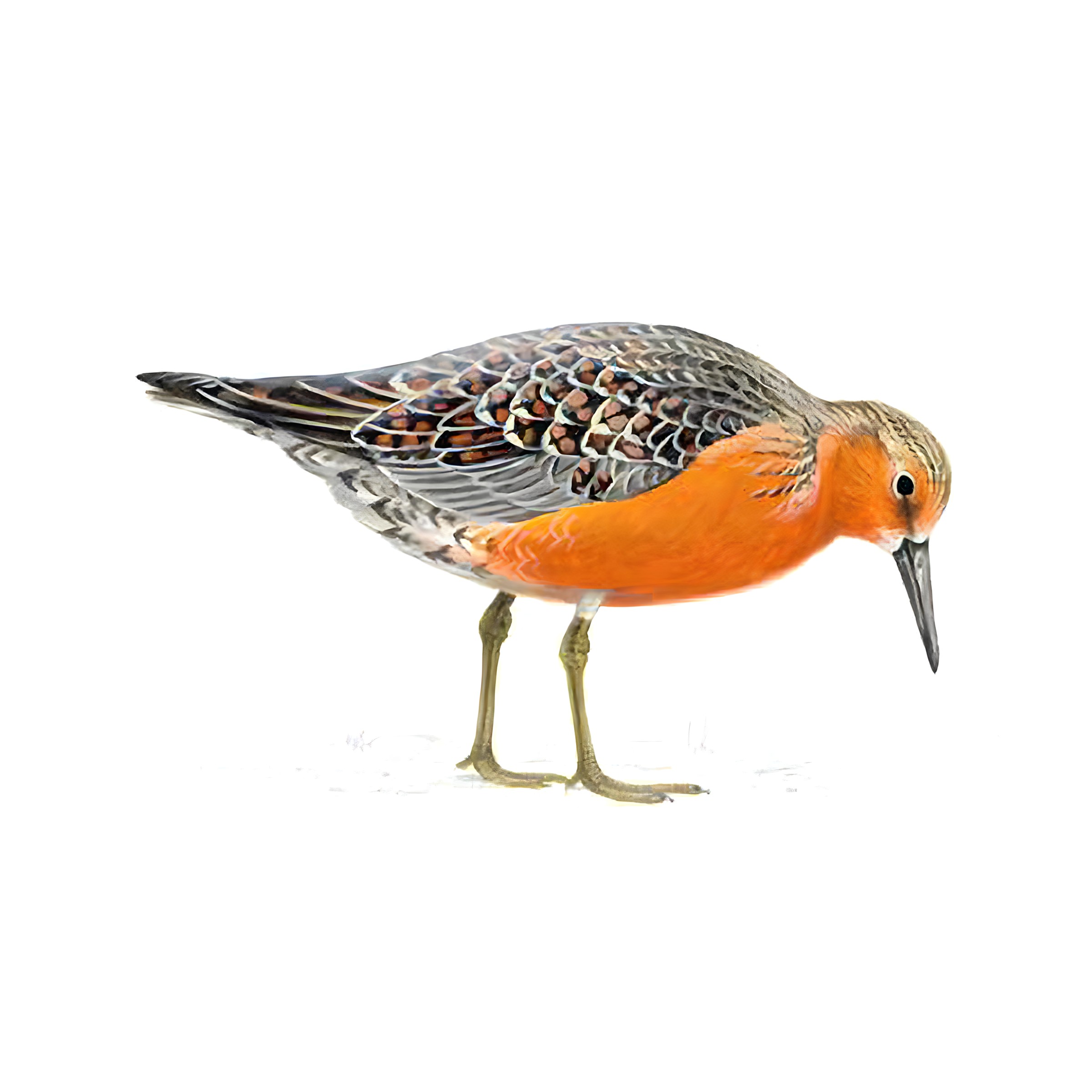
The Knot is a dumpy, legged, stocky wading bird. In winter, it is grey above and white below. In summer the chest, belly and face are brick-red. In flight, it shows a pale rump and a faint wing-stripe. Birds forms huge flocks in winter, flashing their pale underwings as they twist and turn. Many Knots use UK estuaries as feeding grounds, both on migration and in winter, and therefore the population is vulnerable to any changes such as barrages, sea-level rises and human disturbance. Large numbers of birds visit the UK in winter from their Arctic breeding grounds.

Key features to look out for

  • Regularly hanging around with Dunlins, Knots are a larger bird – think Blackbird size.
  • Its plumage is more of a slate grey, and its belly less ‘clean’; look out for tell-tale chevron-like grey patterning down its sides.
  • Their legs have a green hue, and their bill is well-proportioned, about the same length as their head. 

Conservation status

In the UK, wintering Knots have declined by 13% in 25 years, putting them on the Amber List. Last winter, it was estimated that 37% of Great Britain’s populations of Knots were on RSPB nature reserves at one time. This emphasises just how important your support for our East Coast Wetlands nature reserves is to help save threatened species.  

Where and when to see them

Difficulty rating - Medium

The best place to see Knots in the UK is on the North Norfolk coastline, especially on The Wash, with mudflats there hosting internationally important numbers of birds. 

Key

  1. Resident
  2. Passage
  3. Summer
  4. Winter
* This map is intended as a guide. It shows general distribution rather than detailed, localised populations.
  1. Jan
  2. Feb
  3. Mar
  4. Apr
  5. May
  6. Jun
  7. Jul
  8. Aug
  9. Sep
  10. Oct
  11. Nov
  12. Dec
Knot, adult foraging along tideline
Knot
Birds of the month

Head outside and discover fascinating birds each month. Read on for top ID tips, what to listen for, and where to see them.

Key facts