How to identify

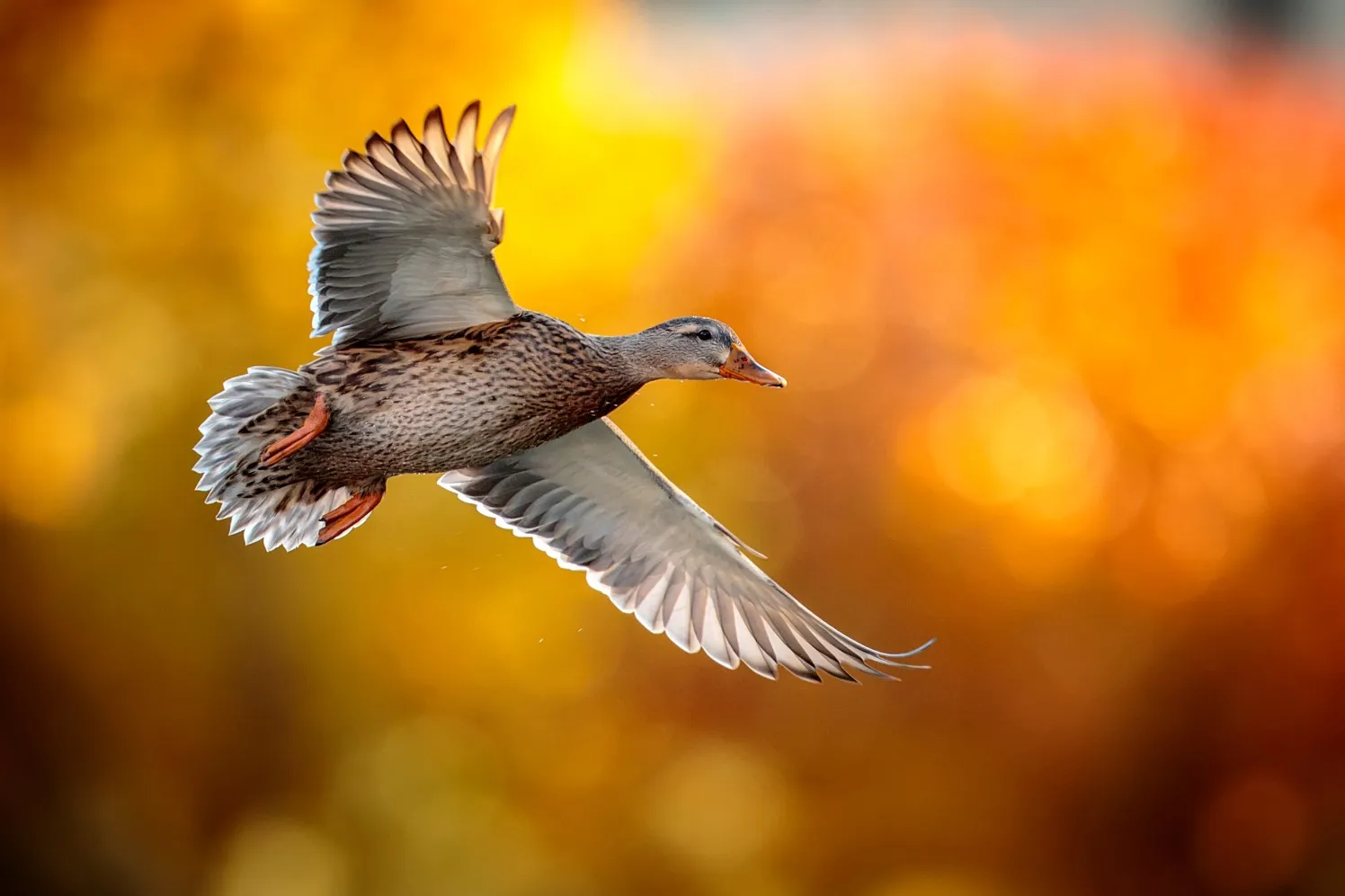
The Mallard is a large and heavy-looking duck. It has a long body, and a long and broad bill. The male has a dark green head, a yellow bill, is mainly purple-brown on the breast and grey on the body. The female is mainly brown with an orange bill. Mallards breed in all parts of the UK in summer and winter, wherever there are suitable wetland habitats, although it is rarer in upland areas. In the UK, Mallards may be resident breeders or migrants – many of the birds that breed in Iceland and northern Europe spend the winter here.

Call

Mallard

Matthias Feuersenger / xeno-canto

Key features to look out for

  • A large, heavy-looking duck (51-62cm).
  • Females have mottled-brown plumage with a striking flash of purple on the wing.
  • Males share the purple wing patch and have a rich, forest-green head and grey-brown body.

Conservation status

Mallard populations are currently ‘not assessed’ in the UK.

Where and when to see them

Difficulty rating - Easy

Freshwater bodies across the UK. Mallards are probably the first birds you’ll see when visiting a pond or lake.

Key

  1. Resident
  2. Passage
  3. Summer
  4. Winter
* This map is intended as a guide. It shows general distribution rather than detailed, localised populations.
  1. Jan
  2. Feb
  3. Mar
  4. Apr
  5. May
  6. Jun
  7. Jul
  8. Aug
  9. Sep
  10. Oct
  11. Nov
  12. Dec

Behaviour

At the tail-feather-end of spring, the breeding season blends seamlessly into a race to rear young, and family favourite the Mallard, is no exception. Mallards can breed in suitable weather from February, but June is best for spotting fluffy ducklings.

Mallard mothers can be seen proudly promenading up to 13 adorable ducklings on bodies of fresh water across the UK. During this time, she alone will raise them, offering protection and teaching them all they need to know to strike out on their own.

Mallard ducklings making their way onto reedbed jetty to rest
Mallard ducklings
Wing Tips

Brilliant birds, month by month: what to see and where to go.

Key facts