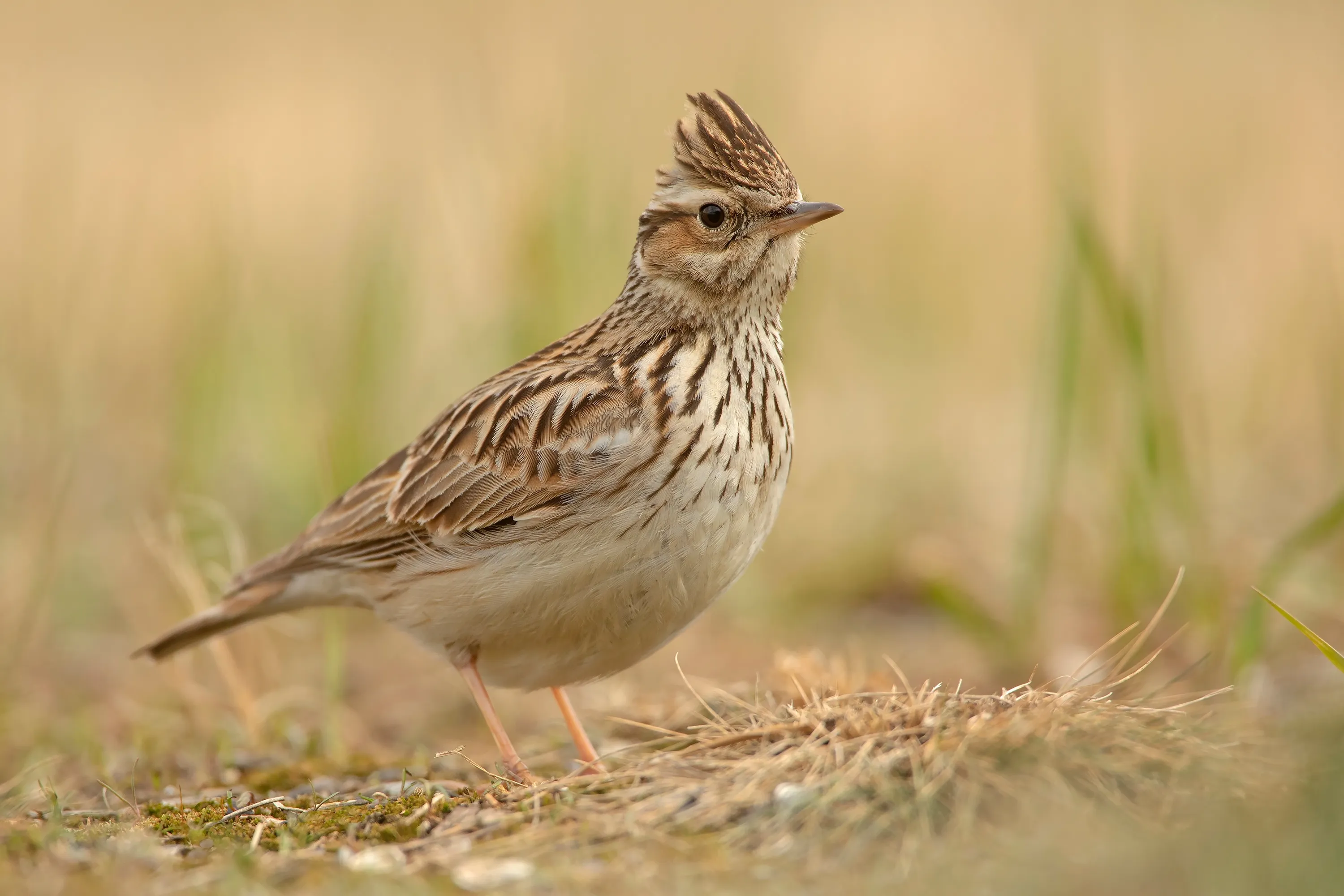
How to identify

The Mistle Thrush is a pale, black-spotted thrush – large and powerful. It stands boldly upright and bounds across the ground. In flight, it has long wings and its tail has whitish edges. It's most likely to be noticed perched high at the top of a tree, singing its fluty song or giving its rattling call in flight.

Call

Mistle Thrush

Patrik Åberg / xeno-canto

Key features to look out for

  • Larger than Blackbird 
  • Cold greyish brown above with spots on a white breast  

Did you know?

Despite being our largest songbird, Mistle Thrushes are surprisingly easily overlooked. They can be distinguished from the smaller Song Thrush by their size, the lack of warm brown tones in their plumage and the very heavy dark spots on the breast.

Mistle Thrush feeding fledgling on the ground
Mistle Thrush
How to identify the UK’s thrushes, including two special winter visitors

Get to know the UK’s thrushes, including the Fieldfares and Redwings that flock here for the winter.

Redwings and Fieldfares are both species of thrush and in this feature, we take a look at these and other thrushes that are found in the UK. Read on to find out more about this fascinating family of birds and for ID tips. 

Conservation status

The Mistle Thrush is on the Red List of Birds of Conservation Concern in the UK, meaning it is in need of the most help.

Where to see them

Difficulty rating - Easy/Moderate.

Mistle Thrushes are widespread across the UK. Look and listen for them on farmland, woodland, heathland, moorland and in gardens.

Key

  1. Resident
  2. Passage
  3. Summer
  4. Winter
* This map is intended as a guide. It shows general distribution rather than detailed, localised populations.
  1. Jan
  2. Feb
  3. Mar
  4. Apr
  5. May
  6. Jun
  7. Jul
  8. Aug
  9. Sep
  10. Oct
  11. Nov
  12. Dec

Call/song

As well as the ‘football rattle’ call, you might hear some repeated fluty phrases, but nowhere near the repertoire of a Song Thrush.

Mistle Thrush perched on a high branch in a tree.
Mistle Thrush
Birds of the month

Head outside and discover fascinating birds each month. Read on for top ID tips, what to listen for, and where to see them.

Key facts