
Juvenile Robin
With their bright red chests, adult Robins are pretty unmistakeable, but juveniles lack these characteristic red feathers and are speckly brown all over.


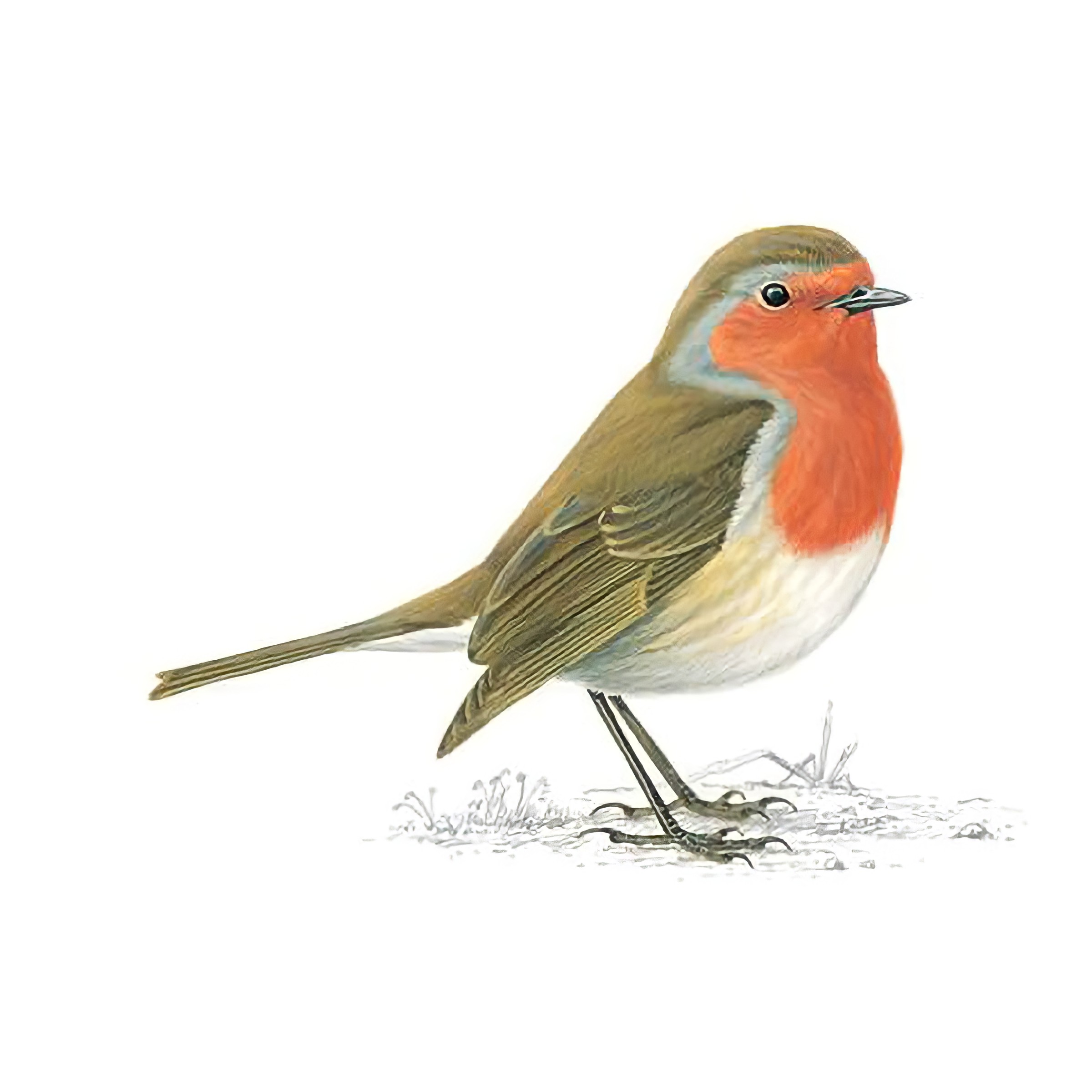

With their bright red chests, adult Robins are pretty unmistakeable, but juveniles lack these characteristic red feathers and are speckly brown all over.
Robins are currently listed as Green on the UK List of Birds of Conservation Concern. This means they are of least concern.
Robins are one of only a few birds in the UK that sing throughout the year. Take a walk in the countryside, head to your local park or into your garden and see if you can hear one.

The UK’s favourite bird is a Christmas staple. However, the brightly breasted Robin is actually here year-round. Despite their adorable appearance, these plucky little birds will aggressively defend their territory, especially around the breeding season.
A melodic, high-pitched whistle. Each verse is different, but most follow a similar structure: short (two to four second), gushing phrases – punctuated with abrupt pauses.
All year round, apart from a quieter period when they’re moulting after breeding, during July – August. They’re even notorious nighttime vocalists, with the invention of streetlights increasing the regularity of their after-dark performances.
Robins like to sing from a perch, whether that be a fence post, a tree branch or the handle of your garden spade. They can be seen almost anywhere around the UK, in gardens, parks and cities.

The dawn chorus is the symphony of song performed by birds looking for love, and to defend their patch.
Robins are famous for following around gardeners, waiting for a spadeful of overturned soil to reveal a bounty of bugs. Their confidence around humans makes them one of our most beloved feathered friends, and their nesting habits are often reflective of how well they’ve adapted to live alongside us.
Robins’ nests have been found in plant pots, car bonnets, in a plane engine and apparently even in a (deceased) human skull! Despite their placid behaviour around people, male Robins are extremely territorial, defending their patch sometimes until death. They’ll lay around four or five eggs and have two or three clutches throughout the spring and summer months.
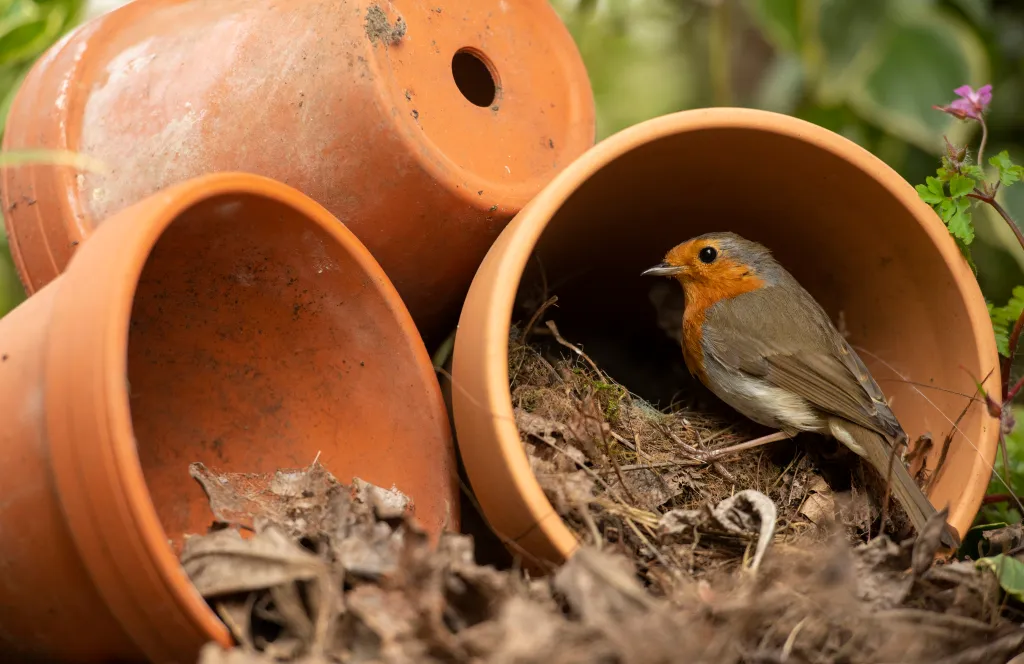
Seen a friendly Robin around the garden? They don't use conventional boxes with a hole. Instead they like what is called an 'open front nestbox' where, instead of a hole, the front is cut in half.