Return: a celebration of White-tailed Eagles
Watch our new film charting the incredible re-introduction success of White-tailed Eagles.


Watch our new film charting the incredible re-introduction success of White-tailed Eagles.
We know from archaeological evidence and historical place names that White-tailed Eagles were once found across the UK, but by the early 19th century they had been driven to extinction in England, as a result of persecution. They clung on longer in Scotland, but the last known White-tailed Eagle was shot and killed here in 1918.
Thanks to a reintroduction project led by the RSPB and Scottish Natural Heritage, White-tailed Eagles returned to Scotland’s skies in 1975. There have been several more reintroductions in Scotland since then, and in 2019 White-tailed Eagles were released on the Isle of Wight.
White-tailed Eagles are also known as Sea Eagles, which gives a clue to their preferred habitat – coasts. Like Golden Eagles, they suffered high levels of persecution and as a result their range was limited to the west coast of Scotland and the Scottish Islands, but they have recently been reintroduced to the Isle of Wight and are now much more visible in England, especially along the south coast.
There are thought to be fewer than 150 pairs of White-tailed Eagles in the UK, and their range is very restricted, so you might have to travel to track them down. But it’ll be worth it – the sight of a White-tailed Eagle soaring through the sky is one you’ll never forget.

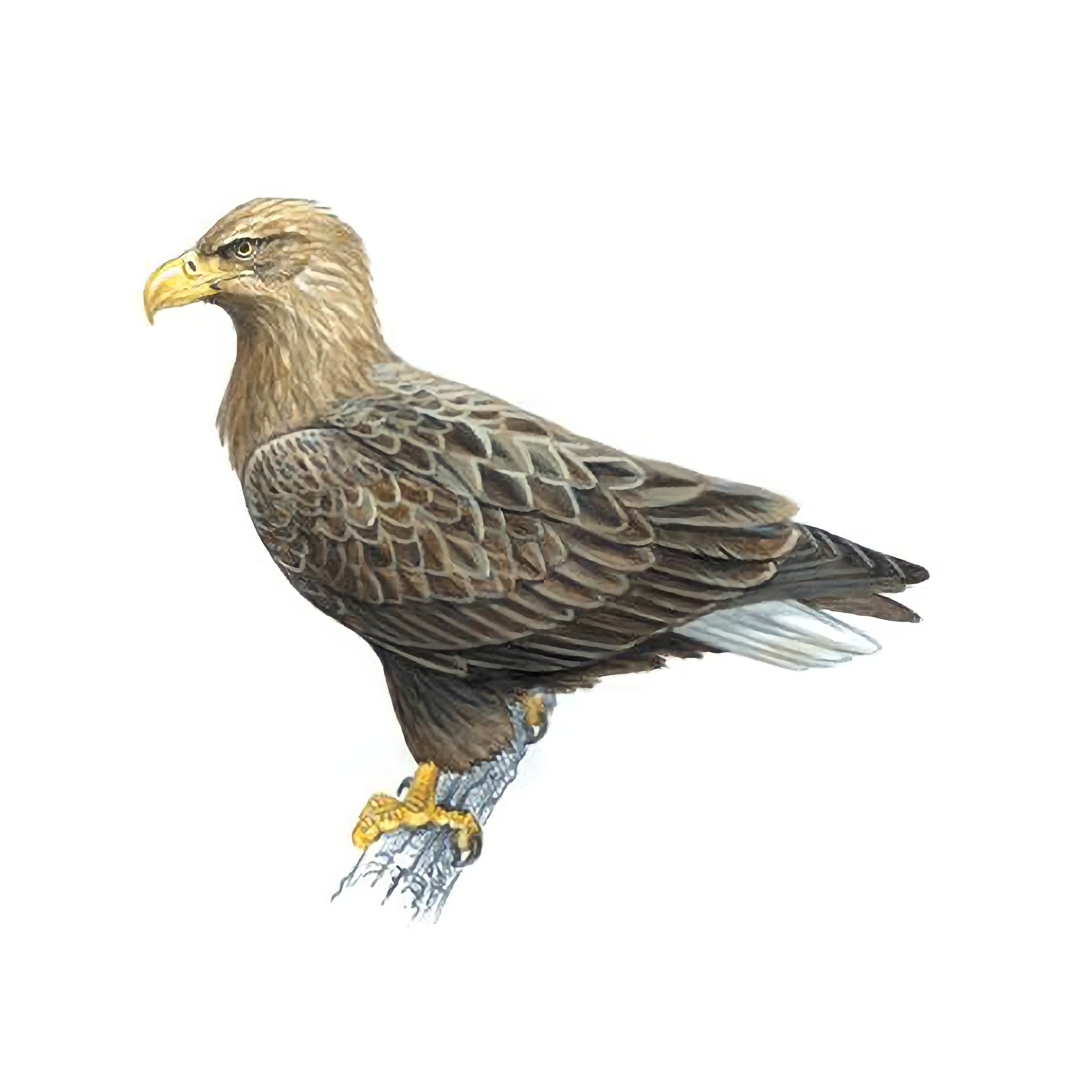
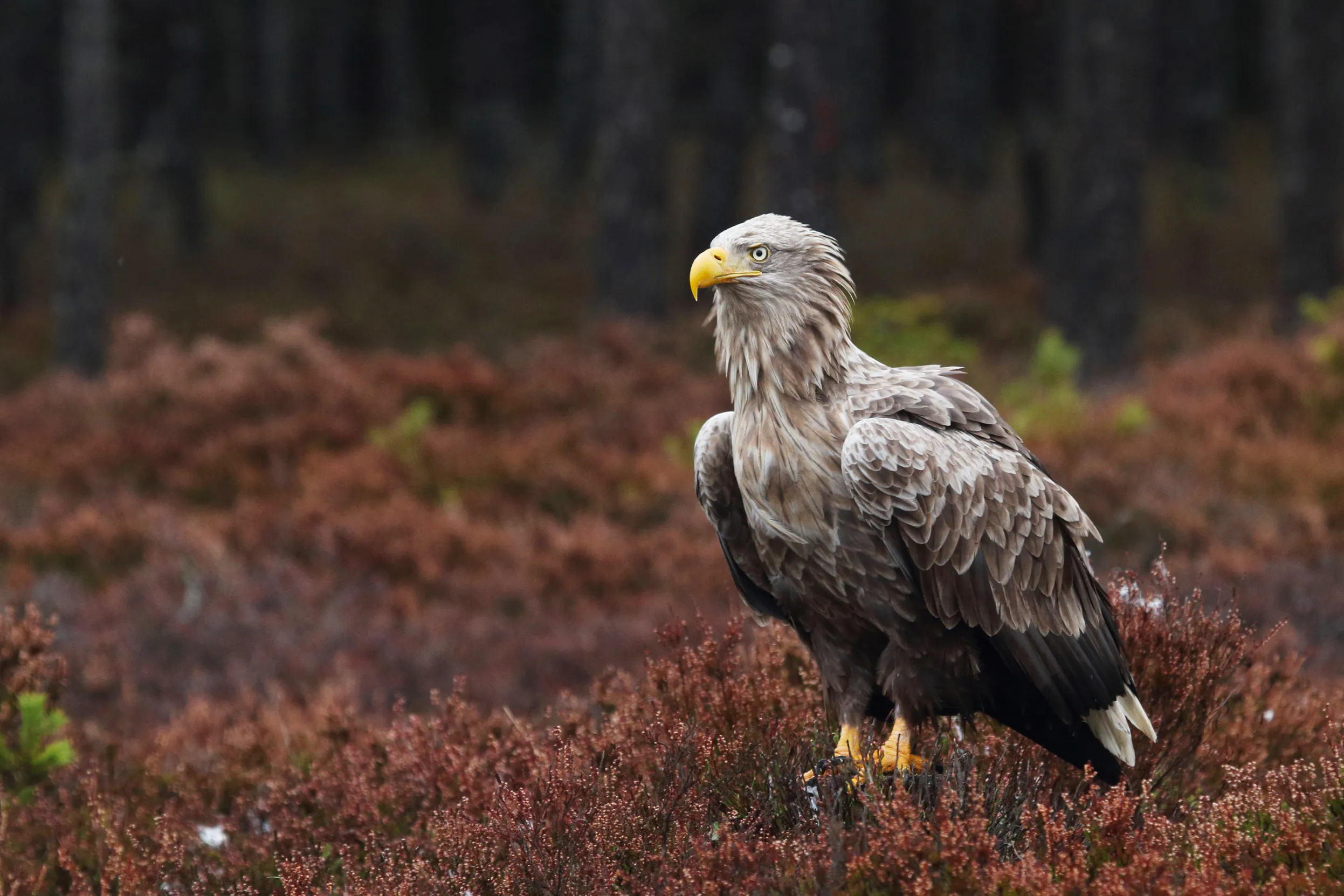
In the UK, birds of prey don’t come any bigger than the mighty White-tailed Eagle. Their enormous size and broad, almost rectangular wings have even earned them the nickname of the ‘flying barn door’!
Unlike Golden Eagles, they will catch fish, so you might spot them plunging their talons into the sea or a lake to pluck out a meal. They also eat rabbits, hares and other mammals, as well as birds, such as gulls and ducks, and carrion.
White-tailed Eagles mate for life and are very faithful to their nest site, which will usually be on a cliff ledge or in a large tree. Pairs add material, like twigs and grass, to their nest each breeding season and as a result nests can reach up to 6 feet/1.8 metres across – that’s about the size of a double bed!

Birds of prey are being shot, trapped and poisoned across the UK. Give a regular gift and help keep them in our skies.

Head outside and discover fascinating birds each month. Read on for top ID tips, what to listen for, and where to see them.