
Advice
Feeding birds near you
If you want to attract birds to your garden, you’ve come to the right place.
The leaves have fallen and winter grows near, but there’s fireworks to see at this time of year.

Remember, remember, the birds of November, there’s wintering migrants to spot. We know of no reason why the birds of this season should ever be forgot.
Yes, November is here and the UK’s bird banks are bursting with hundreds of thousands of winter migrants. So, if you fancy some feathered fireworks, now’s the time to plot your nature escape. Prepare to marvel at mesmerising murmurations. Feel a flutter from flocks of Fieldfares and reap the rewards of a revolutionary raptor return.
In November, it’s easy to get hung up on the idea that nature’s winding down. But allow yourself to be drawn outside this seasonal quarter, and a bonfire of birding activity awaits.
Fantastic mimics with spectacular speckled plumage, sociable Starlings can be seen in the UK all year round. However, in winter, their numbers are boosted by thousands of migrating birds from Scandinavia, Eastern Europe and Russia, setting the scene for an avian aurora that puts the northern lights to shame.
From November to February, huge flocks of Starlings take to the air and paint the sky in everchanging swirling clouds. These jaw-dropping displays occur at dusk when hundreds, if not thousands of the birds flock together for safety, warmth and to share information before settling down to roost.
It’s also thought the pulsating flights baffle onlooking predators, who find it almost impossible to lock on and pursue an individual amidst the masses. For updates of the best places to spot a marvellous murmuration this November, visit Starlings Murmurations UK | Starling Roost Sites.


Slightly smaller than a Blackbird (21cm).
Glossy black plumage with an iridescent purple, blue-green sheen and light white speckles.
Listen for their seemingly random clicks, rattles and whistles coming from trees and roof tops.

Towns, cities and rural areas. Large roosts are usually found at reedbeds, piers and coastal marshes.
Easy – Starlings are relatively easy to find, but spotting a murmuration usually requires timing, planning and a little bit of luck.
Their magnificent murmurations might suggest that Starlings are doing well. However, the species declined by 57% between 1995 and 2023 and is now on the Red List of UK Birds of Conservation Concern. Starlings are also an RSPB Priority Species, and we’re currently working to identify the causes and solutions to their decline.
Penny for a cute guy; Lapwings are medium-sized wading birds and an adorable addition to your November watch list. With their iridescent plumage, pinpoint head crest, and striking two-tone facial features, these little sparklers wouldn’t look out of place at your brightest firework display.
Lapwings get their name from the ‘wavering’ way that they fly. However, you might also hear them referred to as ‘Peewits’, a name that stems from the unusual sound of their display calls. It almost sounds like someone is tuning in an old radio nearby!
November’s a fantastic time to land a lovely Lapwing in your sights, as their numbers are bolstered by migrants from Scandinavia and Northern Europe. So, wrap up warm and head to coastal estuaries and inland wetlands, where they gather in large flocks to gobble up juicy worms and invertebrates.
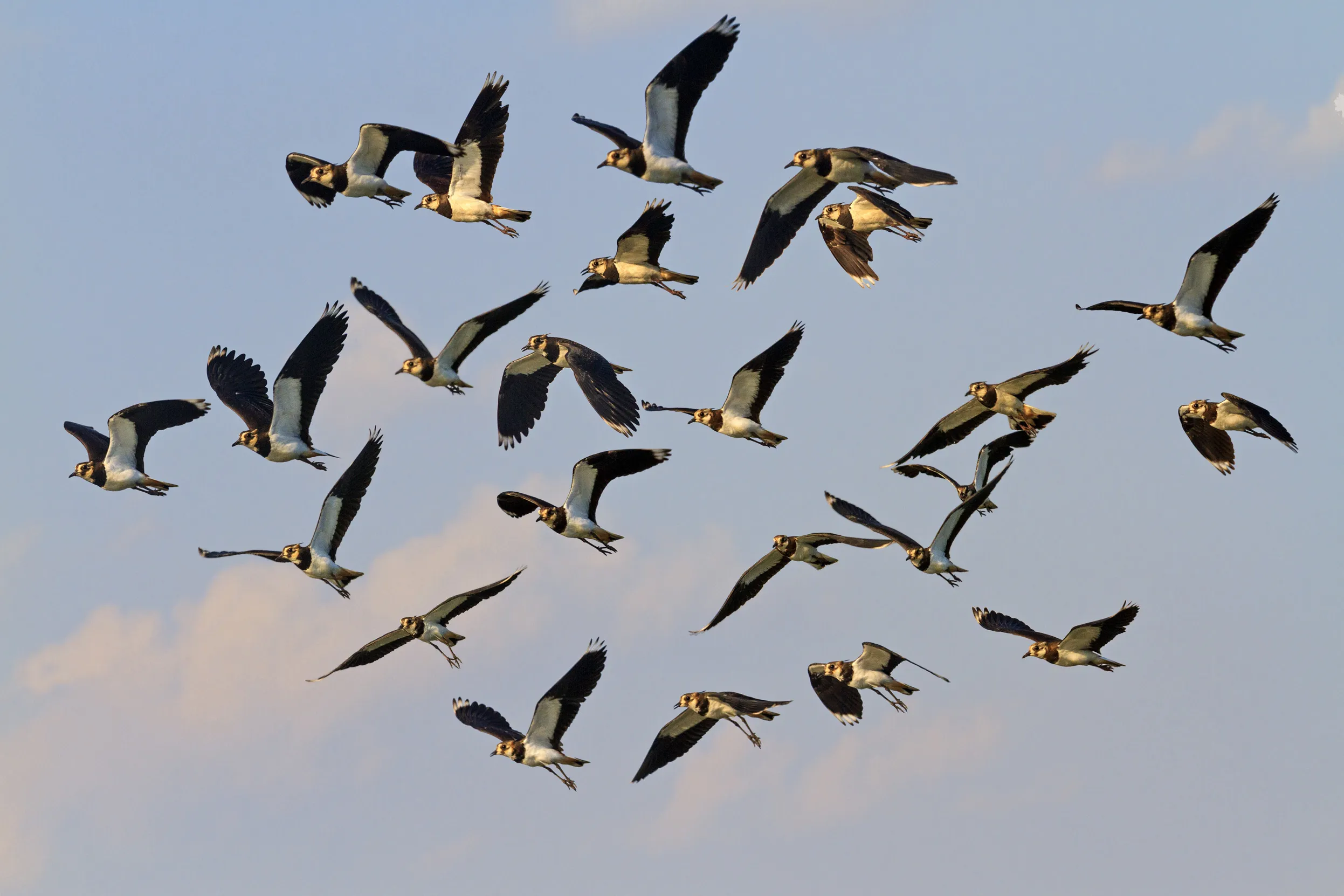


Medium wading bird (28-31cm).
Gravity-defying head crest, iridescent plumage and black and white breast and facial feathers.
That unique ‘peewit’ call is a dead giveaway.
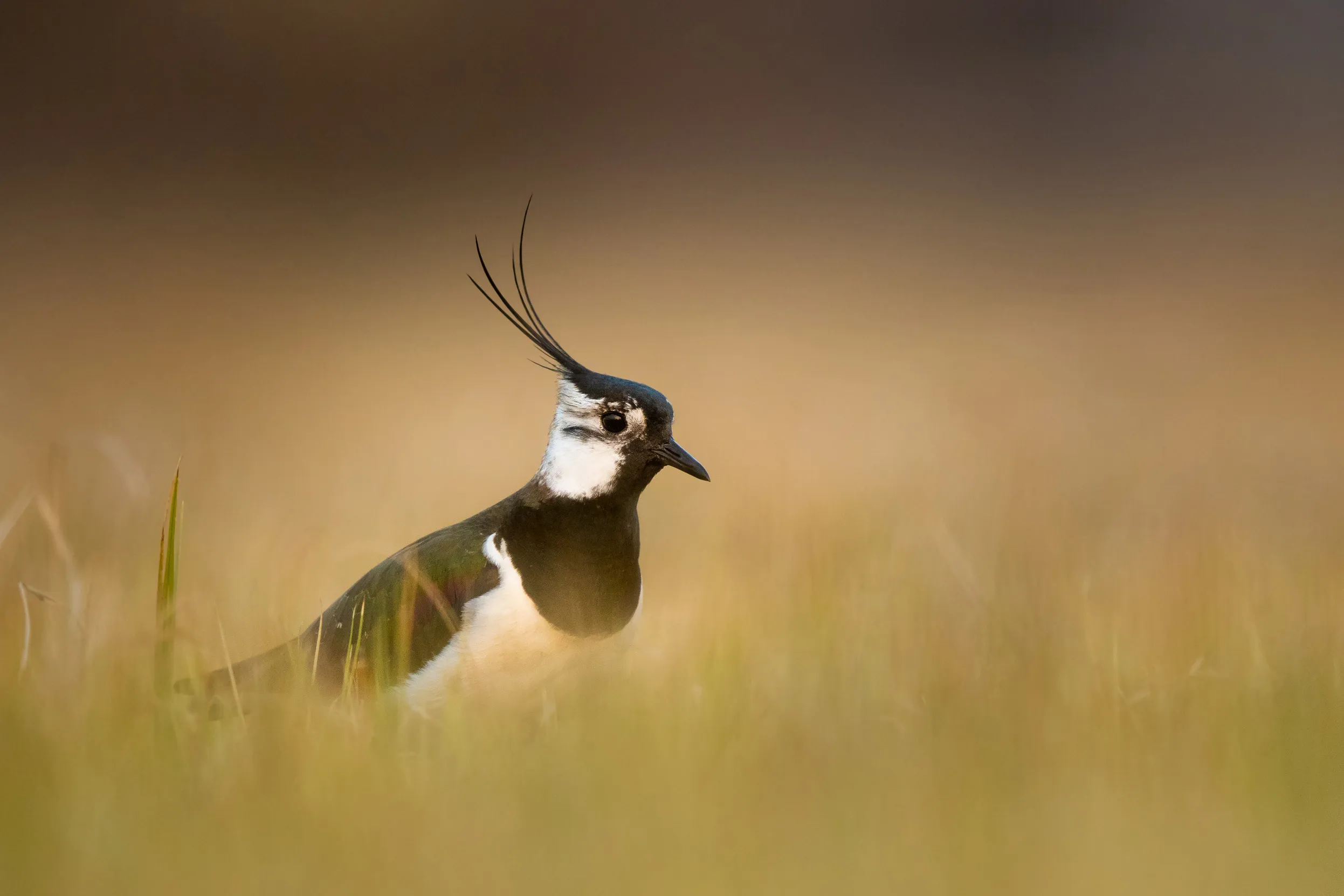
In late autumn and winter, look for Lapwings flocking on inland wetlands, arable farm fields and estuaries.
Easy/Medium.
Numbers of breeding Lapwings plummeted in the UK by 56% between 1995 and 2024. The species’ decline led to it being added to the Red List of UK Birds of Conservation Concern in 2021. We’ve also made the Lapwing an RSPB Priority Species and manage our nature reserves and test conservation solutions to help them recover.
Comeback kings and queens assemble – November is the perfect time to spot some returning raptor royalty! Graceful, glamorous and nearly gone. In the late 19th century, persecution led to the extinction of Red Kites in Scotland, Northern Ireland and England, with just a few pairs left clinging on in Wales.
However, following a series of reintroduction programmes led by the RSPB and other organisations, the species has made one of the greatest conservation comebacks ever recorded. Numbers of UK Red Kites increased by 2,464% between 1995 and 2023! It’s a truly incredible return for an iconic species pushed to the edge of existence.
Today, these seriously slick birds can be seen soaring in all four UK countries, and this month, their striking plumage really pops against the cool autumn sky. Look for a bird of prey with rusty orange plumage and white, eye-like underwing spots sailing by overhead.

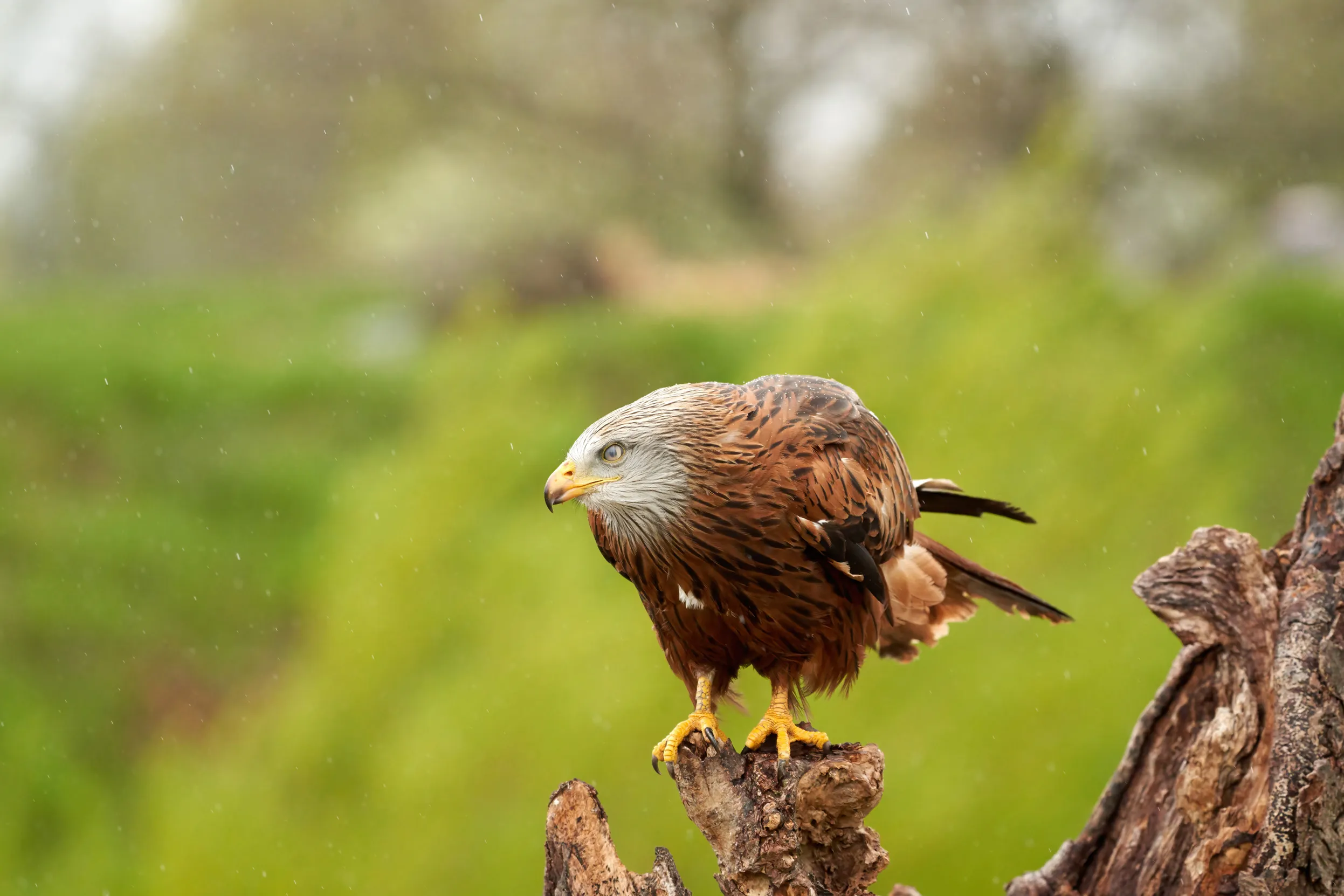

A medium-large bird of prey (60-66cm).
A pale head, rusty, reddish-brown body and bright white underwing patches with black wing fingertips visible during flight.
A soaring bird of prey constantly adjusting the angle of its forked tail and barely moving its wings.

Woodland, farmland, upland and suburban areas across much of the UK.
Easy/Medium – Red Kites are now quite widespread, but you need a keen pair of eyes and a healthy dose of luck on your side.
Thanks to the incredible success of reintroduction programmes, the Red Kite is now green-listed on the UK Birds of Conservation Concern. That means it is of ‘least concern’ – what a sensational comeback!
Next up is a dainty thrush! Aside from a very small breeding population in Northern Scotland, Redwings are winter visitors to the UK, migrating from Northern Europe to escape the worst of the cold. While here, they flock to our green spaces to feast on the banquet of berries offered by late-fruiting bushes and trees.
The species is ‘highly nomadic’, which means the birds never settle in one place and typically won’t return to the same site twice. In fact, if you’re lucky enough to spot one of these chirpy visitors, it might just be the first and last time it visits the UK!
Redwings are named for the orangey-red patches on their flanks and underwings and are closely related to other thrush species. These include familiar favourite, the Blackbird, and fellow winter visitor, the Fieldfare. Ready to go Redwing watching? Make sure you take your sneaking boots – these birds are very skittish!

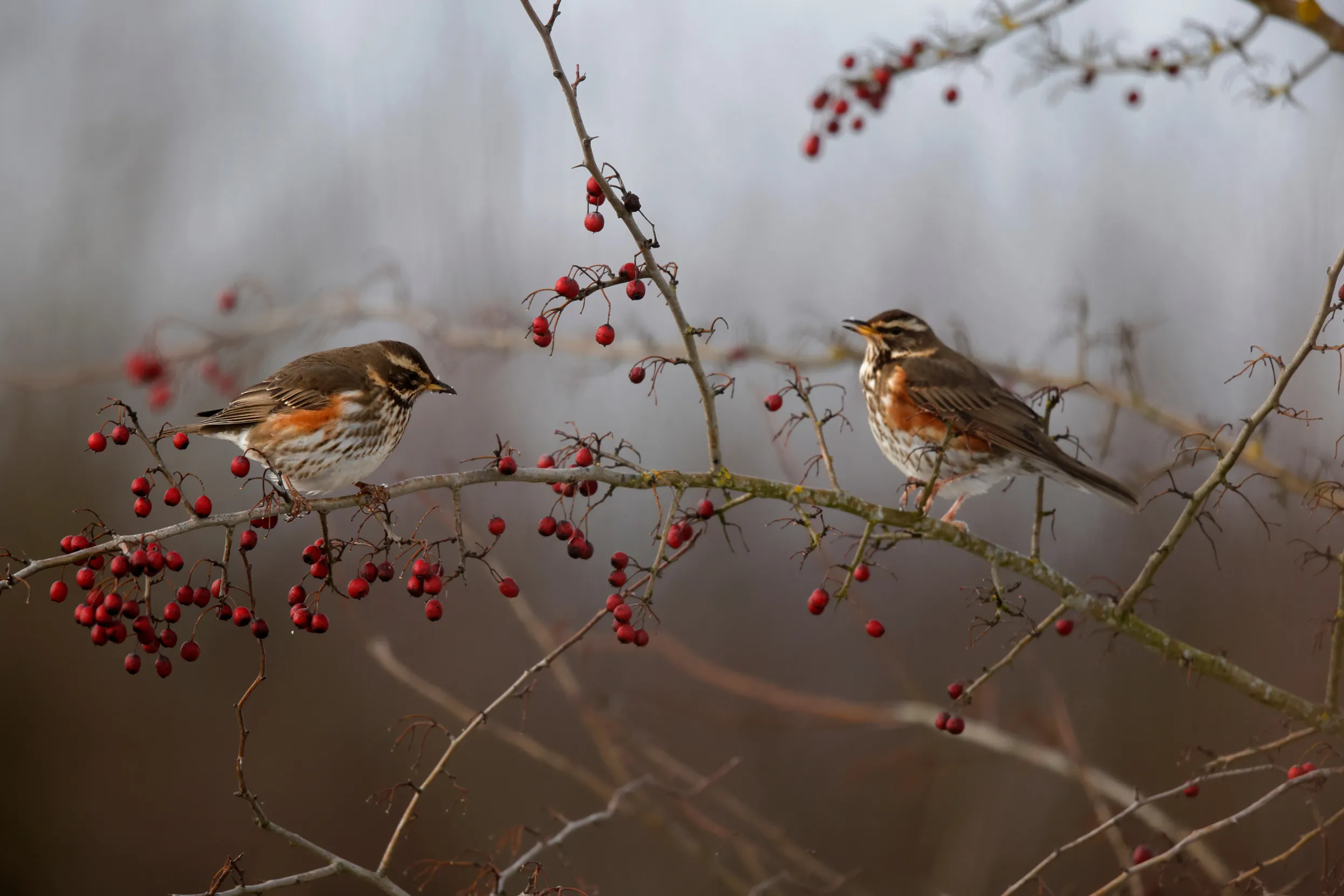

Small thrush (21cm).
Brown above, pale with brown-stripes below with orange-red underwings and flank patches.
Redwings also have a creamy stripe above their eyes.

Countryside, parks and nature reserves, and urban and suburban green spaces across the UK.
Easy – head to a large green space and look for berry-laden hedges and trees.
According to the British Trust for Ornithology (BTO), around 700,000 Redwings spend the winter in the UK. However, the numbers can increase or decrease greatly depending on the availability of berries in Northern Europe. The species is currently listed as Amber on the UK Birds of Conservation Concern.
Fieldfares are one of our largest thrush species, and just like their dainty Redwing counterparts, are winter visitors on UK shores. These colourful birds start arriving from Scandinavia, Western Russia and Eastern Europe from October. From then, they can be seen roaming our countryside and green spaces in gossiping, berry-hungry flocks until April.
Despite the size difference and shared love of berries, Fieldfares get along well with Redwings and the species often flock together. So, if you’re lucky this month, these chattering chums might just explode from the nearest treetop in front of your very eyes.
Fieldfares can often be heard before they’re seen, so for the best chance of spotting these chunky thrushes, head to a green space and listen out for their excitable ‘chack-chack’ call. Once you’ve heard a telltale chuckle, cast your eyes to the treetops to pick out a blue grey head, chestnut wings and speckled underparts amidst the berries.


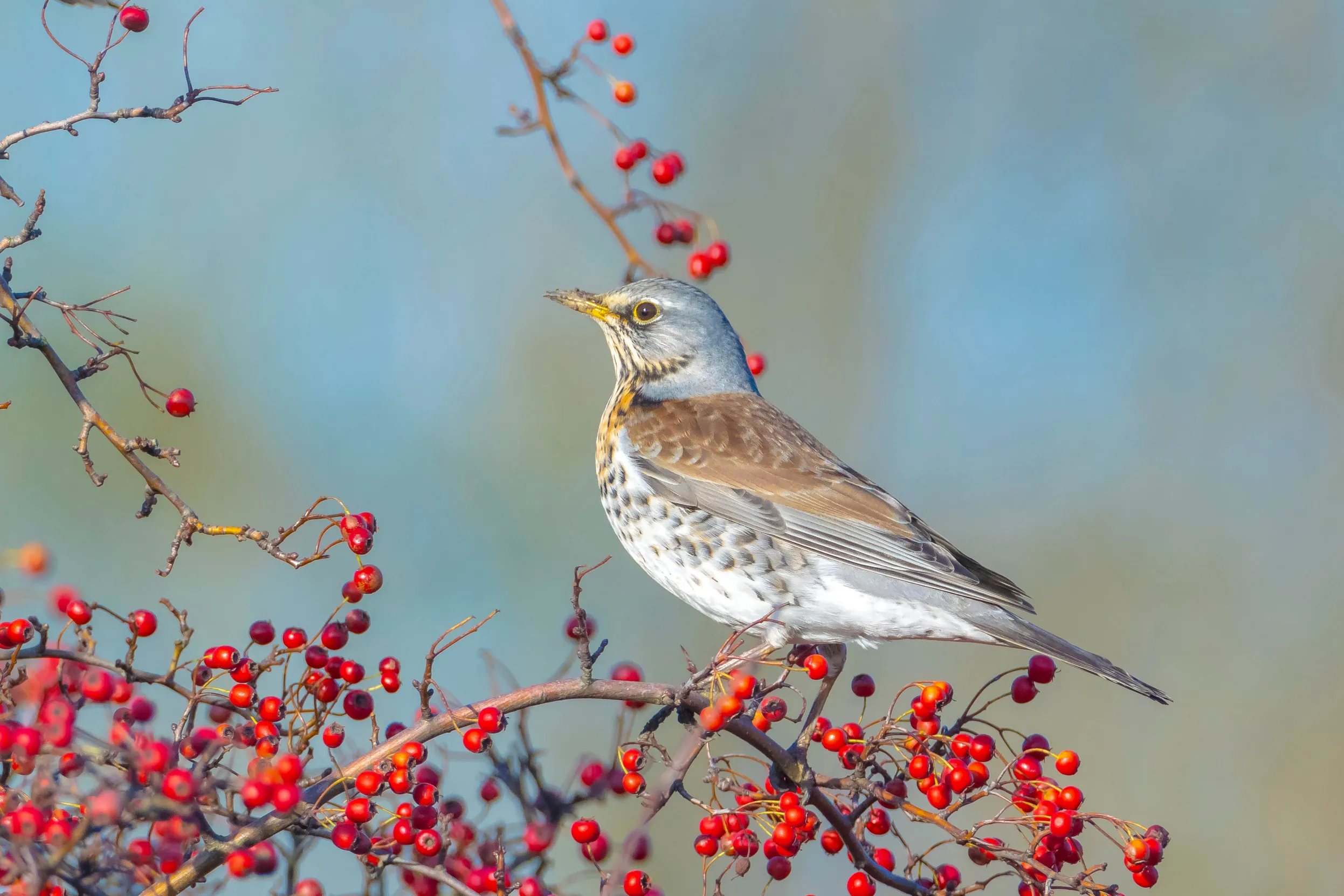
Large thrush bigger than a Blackbird (25cm).
A blue grey head and rump, brown above and pale and speckled below with a sunset-orange chest patch.
Listen for their chuckling ‘chack-chack' chattering.

Woodland, farmland, grassland and both urban and suburban green spaces.
Medium – look to the tops of berry-laden trees in parks, nature reserves and rural areas.
Globally, Fieldfares are listed as ‘least concern’. However, in the UK, our small breeding population of Fieldfares is red-listed on the UK Birds of Conservation Concern following a strong decline between 1996-2019. Research is ongoing to work out the cause of their decline.
We hope you feel inspired to try and see some of these birds and events this month. We’d love to hear how you get on. You can share your photos with us at NotesonNature@rspb.org.uk. We’ll share some of the best in a future issue of Notes on Nature.

