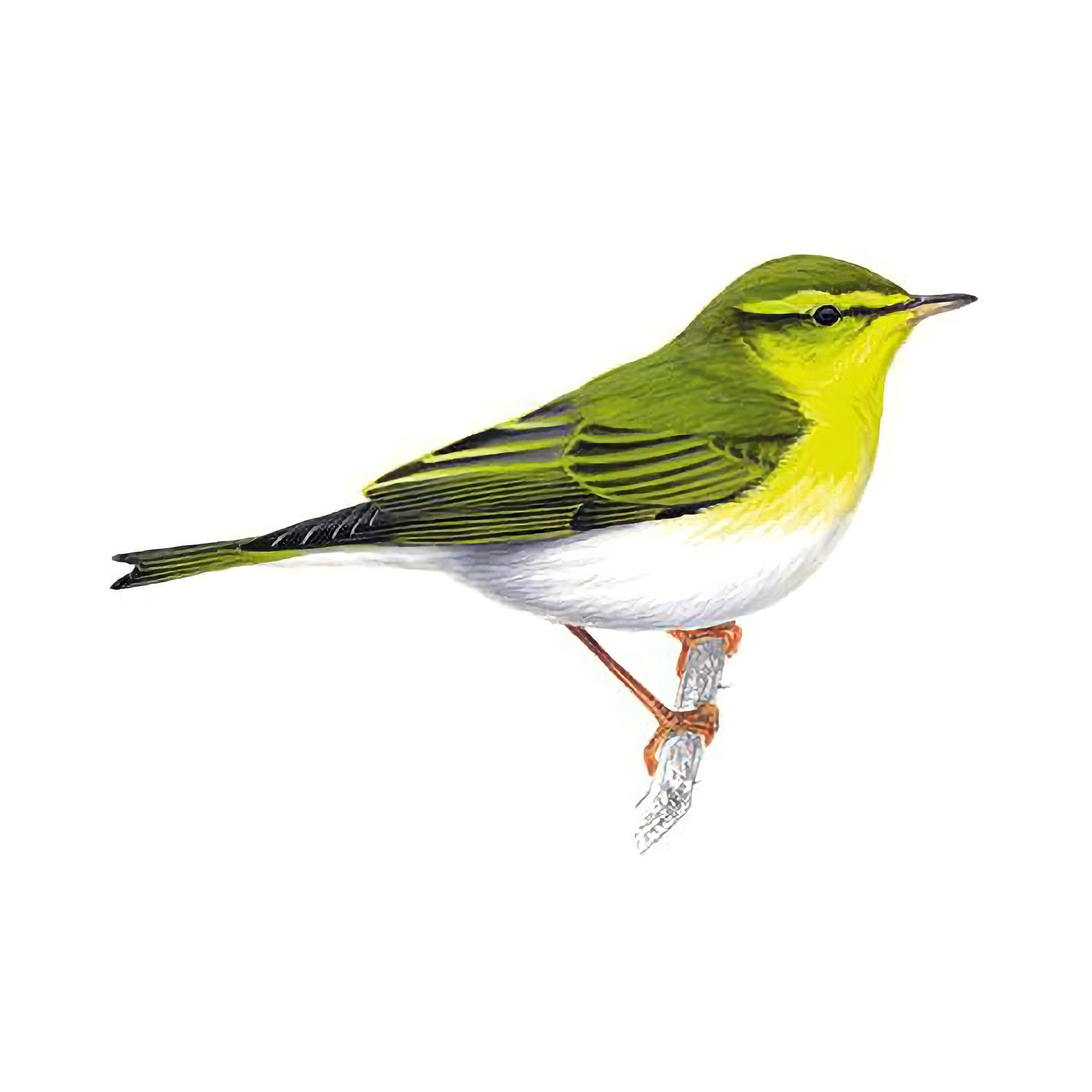
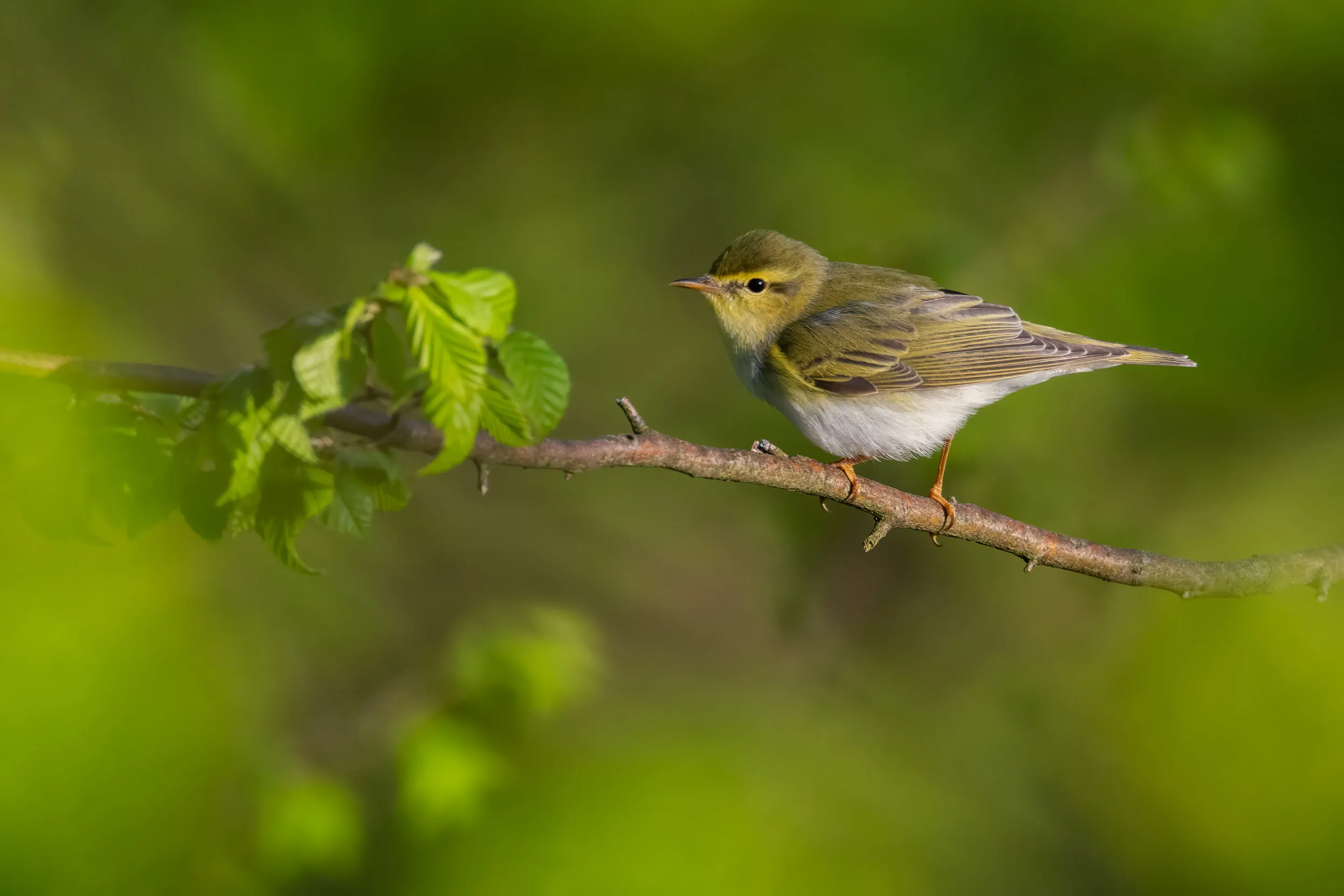
The Wood Warbler is the largest of the Phylloscopus (meaning ‘leaf seeker’) warblers. These plucky birds can be seen in the UK between April and September, when they return from Africa to breed.
June is the perfect time to eyeball a Wood Warbler, as they flit back and forth collecting insects and spiders to feed their brood of five to six boisterous chicks. It’s the perfect excuse for a summer stroll through their preferred habitat of Atlantic oak forest, which you can find in RSPB nature reserves like Lake Vyrnwy and Loch Lomond.
By summer, most Wood Warblers are paired off and have less need to sing. However, lucky listeners could catch their characterful 'coin spinning’ song which, sadly, has become increasingly rare. These spritely little birds have suffered steep declines since the 1990s and 2010. This has led to the species being placed on the Red list of UK Birds of Conservation Concern.