Nightingales sing in a chorus of approval for RSPB conservation at Minsmere
One of the UK’s most famous songbirds, the Nightingale, is making a comeback on the Suffolk coast thanks to successful habitat creation.

On this page
Anyone visiting Suffolk’s RSPB Minsmere nature reserve over the next month could be serenaded by one of the UK’s most famous songbirds; the Nightingale.
A thriving Nightingale population can be found at the reserve during spring and early summer, reflecting the success of carefully created and managed habitat designed to support the species. This work is especially important as Nightingale numbers have declined sharply across the UK in recent years, making Minsmere a vital stronghold for these much‑loved birds.
.jpg)


.jpg)
Why did Nightingale numbers decline?
This charismatic bird, known for its beautiful song, is red-listed in the UK meaning they are a bird of high conservation concern due to its strongly declining population. Between 1995 to 2024 the UK breeding population dropped by 34%.
This significant drop in UK breeding numbers is mainly due to wide-scale habitat loss and habitat degradation of its breeding grounds. The loss of their favoured thicket and scrub, along with a rise in deer populations that browse and damage their favoured breeding habitat, have all been significant contributing factors.
Recovery made possible by the Minsmere team
Over 8½ years, RSPB Minsmere has gradually transformed more than three hectares of scrubland on the nature reserve into Nightingale friendly habitat. In addition, 925 metres of hedgerows have been restored through coppicing, rejuvenating growth so the hedges become thick and dense again — exactly the conditions Nightingales prefer resulting in an increase in numbers from a low of eight singing makes in 2018 to between 22 to 35 in the last 3 years.
This is quite a leap in numbers for a threatened species, demonstrating that correct land management for birds such as Nightingales can aid their recovery.
Nightingale friendly scrub, a mix of low growing vegetation including shrubs and small trees, has been created providing a place for them to shelter, raise a family and find food. Trees are coppiced when needed - sawing them close to the ground to create regrowth and a dense, almost impenetrable canopy made up of thorny plants such as Blackthorn, Hawthorn, Dog Rose and Brambles - creating the perfect place for Nightingales to nest and hunt for insects on the ground below.
Nightingales will only use scrub to nest in for a few years when it is at its most vigorous and thick, providing maximum protection, which is why the site team have put in place a management programme to cut different areas of the scrub on rotation over a number of years – making sure there is always suitable nesting habitat on site for them when they return from their annual migration.
The Minsmere team also installed brash fencing to prevent deer from grazing this regrowth, giving it time to establish into the thickets and scrub favoured by Nightingales.
The thick vegetation helps Nightingales remain unseen when singing to attract a mate and claim their territory, meaning they are less vulnerable to predation. They also build their nests either on or just off the ground within the thicket, again protected by the thick vegetation.
Nick Forster, RSPB Minsmere’s Nature Reserve Manager said, “Our visitors can hear Nightingales singing at Minsmere from now until mid to late May. It really is a treat for the ears and also a surprise to many that they can be heard singing in the day. By applying our conservation knowledge to meet the needs of these charismatic birds, we’ve seen long-term hard work pay off and have high hopes of even more Nightingales singing at RSPB Minsmere this year, finding mates and boosting population numbers."
When can I hope to hear a Nightingale at Minsmere?
Nightingales annually migrate to the UK in April and leave between July to September once breeding has ended and chicks have fledged, spending the winter in West Africa. On average they live for just 2 years, travelling approximately 20,000 miles during their short lifetime and weigh just 21 grams.
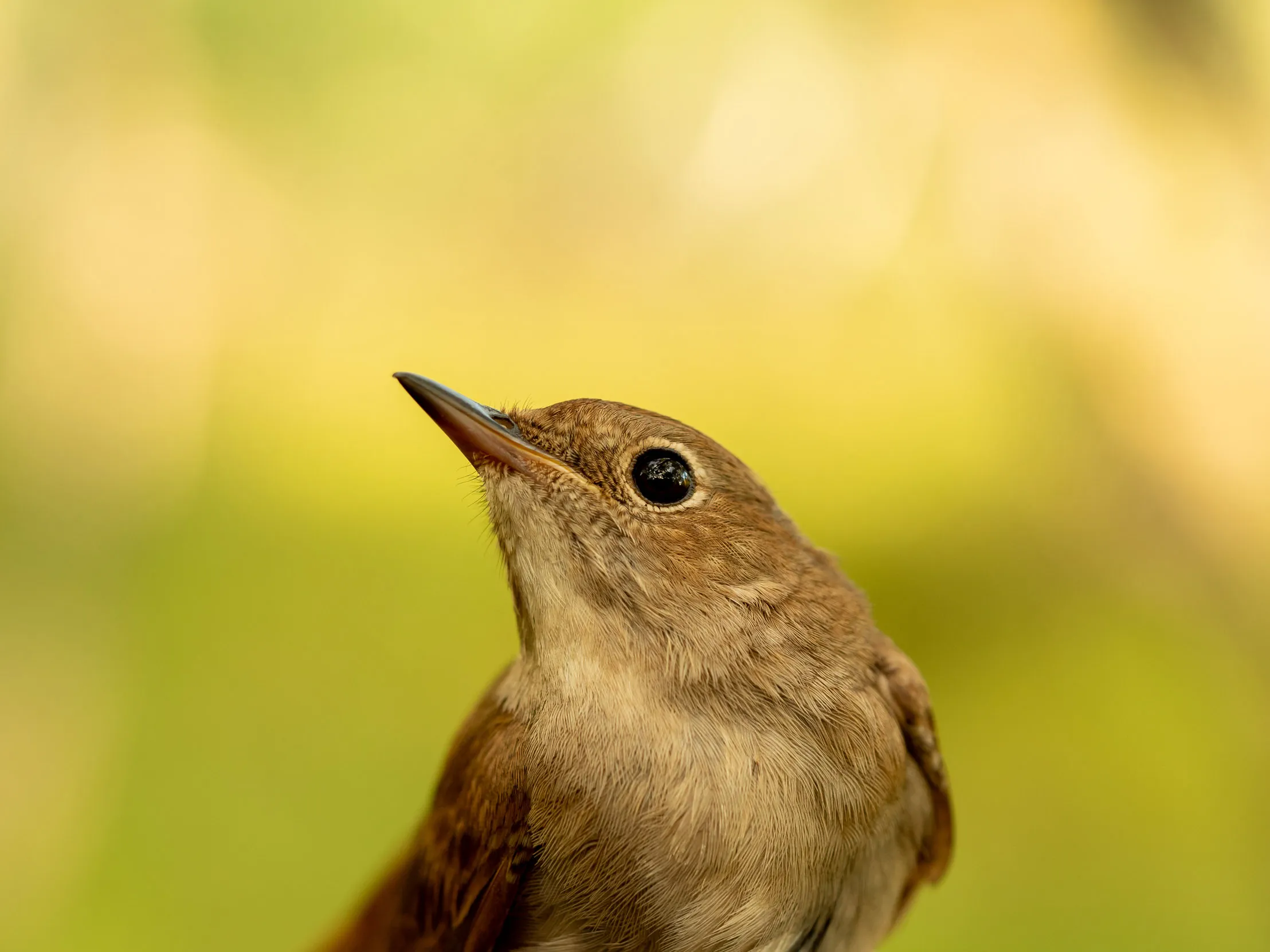
A little larger than a Robin, Nightingales sport a warm brown plumage, grey brown underparts, whiter on the throat and light pink legs. You are more likely to hear a Nightingale than see one due to their secretive nature. Their song is rich, powerful and mellow and is used to attract a mate and stake a claim to its territory. Their song can be delivered at night as well as during the day and is made up of some 250 phrases compiled from a repertoire of 600 sounds.
To be in with a chance of hearing a Nightingale at RSPB Minsmere, visit before the end of May.