
South Atlantic
- Saint Helena, Ascension and Tristan da Cunha
- Falkland Islands
- South Georgia
From penguins to iguanas, we are working with our partners to protect nature in the UK’s Overseas Territories.
The UK Overseas Territories are territories which fall under the UK’s jurisdiction, including Anguilla, the British Virgin Islands and Saint Helena, Ascension and Tristan da Cunha. We campaign to increase the scale and quality of UK Government financial and technical support needed to protect these special places where so many vulnerable species live.
The UK Overseas Territories are areas with a historical and constitutional connection to the UK. We have been working in partnership with UK Overseas Territories for around 25 years. They are mainly small islands, and are home to 94% of the UK’s endemic species. Between them, they hold every major habitat type on Earth, including rainforest, tundra, deserts and coral reefs. The main threats are invasive species, climate change, habitat loss from uncontrolled development in the Caribbean, and accidentally being caught by industrial fishing nets and hooks in the South Atlantic.
There are 14 UK Overseas Territories in total. We work in 10 territories, always in collaboration with local partners.
 Joe Jeffcoate.jpg)


We work with local NGOs, governments and other international partners to protect and restore both land-based and marine environments. Our major areas of work involve building long-term partner capacity, safeguarding sites, species recovery and extinction protection, strengthening policy, and island restoration projects. Data and evidence underpin all our work. On this page you’ll find a sample of our work in the UK Overseas Territories.
Across the Overseas Territories in which we operate, we work with and through local partners – including National Trusts, government departments and other organisations – such as the St Helena National Trust and Falklands Conservation. A core focus for our work is playing a supporting role to enable these organisations to grow and develop, through capacity-building and by providing advice and support. Here are some examples of our partner development activity.
The Atlantic Guardians project aims to support Tristan da Cunha with their Marine Protection Zone, after its legal designation in 2021. One of the key outputs of this project was to build marine management capacity within the Tristan community. This project provided employment opportunities, for example, recruiting a Marine Protection Zone officer who was previously the island’s creche manager. Another training and development initiative was the Young Ocean Champions, providing school leavers the opportunity to travel to the UK for three months to gain skills they could take back to the island.
The RSPB works with BirdLife Cyprus across the Sovereign Base Area and the wider Republic. This includes managing the wetlands of the Akrotiri Peninsula in the face of ongoing development, and continued work to reduce illegal bird trapping across the island.


Inaccessible Island and Gough Island in the South Atlantic are part of the Tristan archipelago and together make up a World Heritage Site with internationally-important seabird colonies home to three endemic species. However, invasive non-native species are a major threat to the islands. The invasive Brown Soft Scale insect has infested Tristan’s only native tree, Phylica arborea. The Critically Endangered Wilkins' Finch relies on the Phylica for food and habitat. The RSPB has supported work to aid the recovery of Phylica trees through releasing biological control agents to reduce scale insect numbers, and helped strengthen biosecurity across the Tristan archipelago to reduce the risk of other invasive species reaching the islands.
East Caicos in the Turks and Caicos Islands is the second largest uninhabited island in the Caribbean, but only 18% of the island is protected. We’re working with the Turks and Caicos National Trust and Marine Conservation Society to create a vision for sustainable use for the island and strengthening local capacity to protect the island’s ecological and cultural heritage.
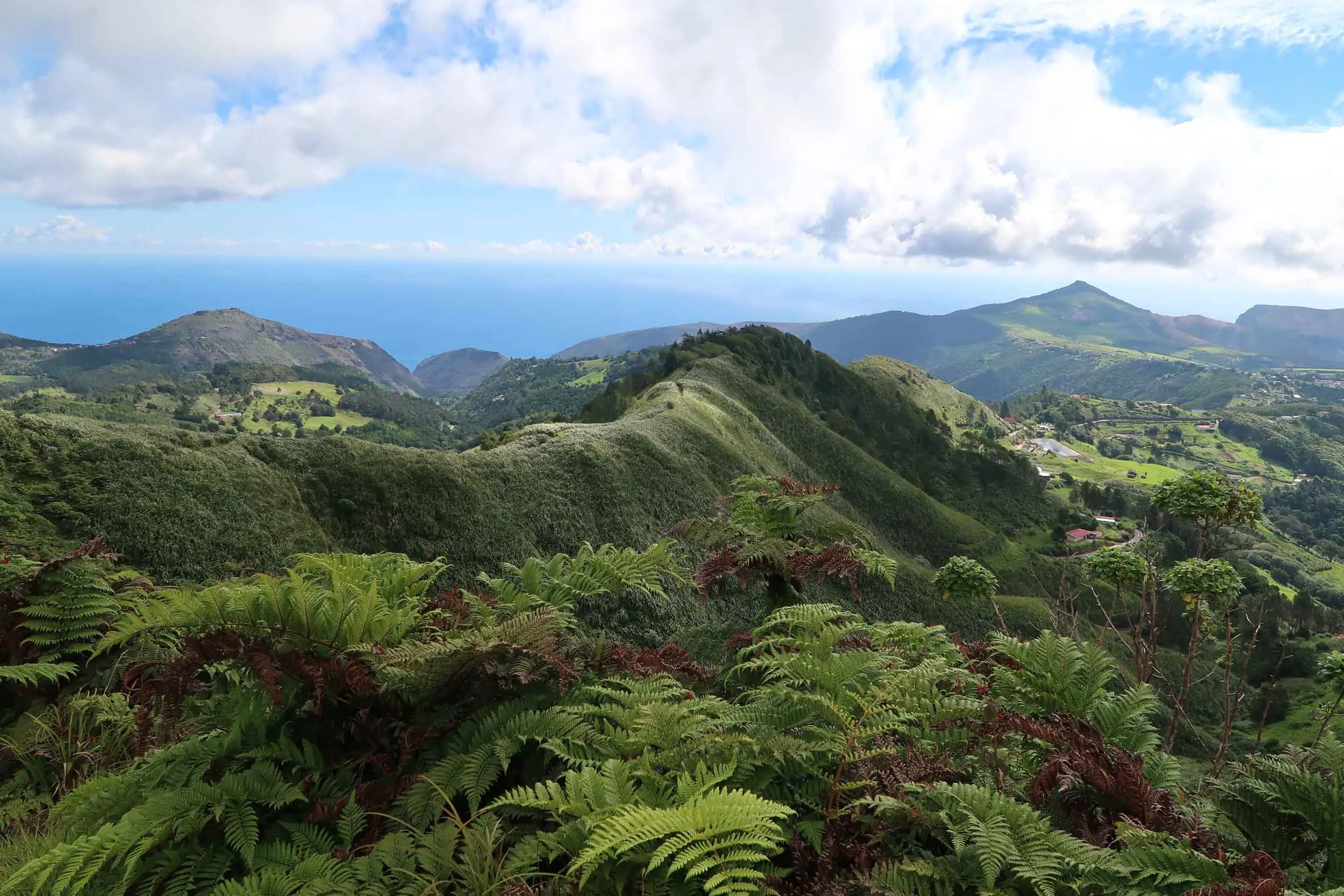
The mist-covered mountain tops of the island of St Helena are home to ancient fragments of the UK’s last natural cloud forest. The RSPB supports the St. Helena Government alongside island partners St Helena National Trust on the St Helena Cloud Forest Project. The project works to remove invasive plant species from key water catchment areas, rejuvenate and restore areas of endemic cloud forest, connect fragmented sections, and create new areas of habitat. This work is vital to safeguard the island's future water security. It also has incredible benefits for the island's endemic biodiversity.


Tristan da Cunha is a key breeding site for the endangered Northern Rockhopper Penguin (supporting 96% of the global population). The RSPB works in close partnership with the Tristan da Cunha Conservation Department and the local community to sustainably protect and manage this globally threatened species. Population monitoring has been recognised as a critical conservation tool, with current conservation support for this species including providing updated population estimates and, where possible, assessing population trends to help re-evaluate the species’ conservation status.
In the Caribbean, we’re working in partnership to protect two species of rock iguana, the Endangered Turks and Caicos Rock Iguana (Turks & Caicos) and Critically Endangered Sister Islands Rock Iguana (Cayman Islands). These species are at risk from many threats such as habitat loss, driven by development, and invasive non-native species such as feral cats, rats and Green Iguanas. Collaborating with local NGOs and government, our work focuses on addressing the invasive species threats which includes improving biosecurity, initiating effective control and removal operations, and working with islanders to improve responsible pet management.
.jpg)

Joe-Jeffcoate.jpg)
Sarah-Havery.jpg)
-(c)JoeJeffcoate.jpg)
Uncontrolled development is a major threat to fragile habitats. This is especially true in the Caribbean UK Overseas Territories, where tourism developments in coastal areas significantly reduce climate resilience. We work with Territory partners to strengthen planning laws, helping ensure that the most valuable nature sites are protected and environmental impacts of development are properly assessed and mitigated.
We also engage directly with developers, and work with a number of Caribbean Overseas Territory governments to develop state-of-the-art biosecurity policy and legislation.
For over 20 years, we have supported the Government of Tristan da Cunha and a coalition of partners to help secure marine protection for Tristan’s waters, a wildlife haven home to tens of millions of seabirds including albatross and penguins, plus whales, sharks and seals. In 2020, a vast Marine Protection Zone was established in Tristan da Cunha and the surrounding sea. At 690,000 square kilometres, this is the largest ‘no-take’ zone in the Atlantic Ocean and protects 91% of Tristan’s waters.

Island ecosystems are hotspots of global biodiversity that face significant threats. Despite being less than 6% of the global land mass they hold 40% of all Critically Endangered species and up to 95% of bird extincitons are thought to have occurred on islands. This is because islands' unique ecosystems have evolved in isolation and so are vulnerable to invasive species. Since 1500, invasive species have been implicated in at least 112 avian extinctions – more than 70% of those known to have occurred. Restoring islands – both through the eradication of invasive predators and the installation of appropriate biosecurity actions – therefore represents one of the single-most necessary conservation interventions the RSPB can undertake.
The RSPB is involved in island restoration projects both in the UK and internationally including two that are currently in the planning stage on New Island and Henderson Island.
Owned and managed by BirdLife Partner Falklands Conservation since 2020, New Island in the west of the Falkland Islands is an Important Bird Area and Key Biodiversity Area for its seabirds. A project to eradicate four invasive species, the House Mouse, Black Rat, feral Domestic Cat and Rabbit, is planned for 2027. Their removal will allow the reintroduction of lost endemic species, the restoration of natural habitats including combatting catastrophic peat erosion, increase climate change resilience and enable the recovery of seabird populations, passerines and invertebrates.
If this project is successful, it would increase the Falklands rodent-free territory by a third: from 6,500 to 8,770 hectares.
The Pitcairn archipelago in the South Pacific comprises four islands, Pitcairn (the only inhabited island in the group with around 40 residents), Henderson and the two low-lying coral atolls of Oeno and Ducie. Henderson is the largest in the group and is also a World Heritage Site supporting at least 18 breeding seabird species. However, seabird breeding success is severely hampered by predation from invasive non-native Pacific Rats.
The RSPB has a long-standing commitment to return to Henderson following an unsuccessful rat eradication attempt in 2011. Currently we are preparing for further trials of new bait flavours to identify which bait is most likely to succeed, alone or in combination with others, next time around. We are also exploring the feasibility of eradication of rats on the inhabited but smaller Pitcairn Island.


