Feature

What is an ecological assessment and when is it needed?

Learn about what types of ecological assessments are required under the planning system.

A white Mountain Hare sat in heather on the side of heathland.
On this page

Last updated: 2 July 2025

When is an ecological assessment required?

All development proposals must be assessed for their potential impact on species and habitats, regardless of their size. However, not all proposals will require an ecological assessment to be carried out. Ecological assessments are only sought when there is a reasonable risk of a protected species or habitat being present on the development site. 

Some planning authorities have development criteria and indicative thresholds to help applicants understand when an ecological assessment might be required.  

Certain types and locations of development sites will be more likely to support protected species, eg buildings that contain features that are suitable for bats, large gardens in suburban/rural areas which can provide habitats for breeding birds, badgers and reptiles, or sites located close to areas of ecological interest (eg, a locally designated wildlife site or statutory designated sites of national or international importance). 

For statutory wildlife sites protected by law, off-site or ‘indirect’ impacts of a development must be considered. For example, this could be hydrological changes to a wetland site or increased recreational impacts as a result of the proposed development. 

How can I find out if a site is protected?

The planning application and ecological reports should mention if there are protected sites within the development site or nearby. To check, contact your Local Environmental Record Centre (sometimes called biological or biodiversity record centres) or your local Wildlife Trust as they usually have details of locally (non-statutory) designated wildlife sites. Statutory protected areas can be found on NatureScot’s website

Perfect reflections of woodland in the Loch with mountains in the background
Cairngorms - National Park
Top tip

Planning authorities have a statutory duty to consider biodiversity when assessing planning applications. You can check that biodiversity has been considered properly by looking out for certain documents on the planning authority’s online planning register using the planning application reference number. Look out for a section on ecology in a planning statement or a separate ecological report. 

The Planning Officer should include their own assessment of the ecological impacts of the proposal in their report, which should be made publicly available after the planning application has been determined. Contact your planning authority if you can’t find the Planning Officer’s report on their website. 

What types of ecological assessment are required?

Phase 1 Survey/Preliminary Ecological Assessment

For development proposals that have the potential to impact on protected species or priority habitats, a Phase 1 Survey, also known as a Preliminary Ecological Assessment (PEA), will need to be submitted to the planning authority with the planning application. A Phase 1 Survey/PEA is undertaken by a qualified ecologist (ideally a member of the Chartered Institute of Ecology and Environmental Management) and involves a desk study and usually a ‘walkover’ survey. Its purpose is to identify what habitats are present on the site and whether any protected species might be supported there. The desk study should also identify the presence of any statutory or non-statutory designated wildlife sites or other wildlife interests within the vicinity that could be affected by the proposals. 

Detailed surveys (Phase 2 Surveys)

If a Phase 1 Survey/PEA identifies the likely presence of protected or valuable habitats or species within the development site that could be affected by the proposal, more detailed ‘Phase 2’ surveys will be required.  

These additional surveys must be completed and submitted to the planning authority before the planning application can be determined. A qualified ecologist will provide advice on how to minimise the effects of a development on particular species or habitats eg, by amending the design, preparing a mitigation plan or a compensation proposal. 

Ecological Impact Assessment

In certain cases, a Phase 1 Survey/PEA and detailed (Phase 2) surveys may not be enough to meet the overall ecological requirements of a development proposal. In these situations, an Ecological Impact Assessment (EcIA) report may also be produced.  

Not to be confused with the broader, statutory Environmental Impact Assessment process, EcIA is a process of evaluating potential effects of a development on ecological interests specifically. The report should also include recommendations for measures to avoid, mitigate or (where the wildlife cannot be protected in situ) compensate for impacts to priority wildlife, as well as setting out any ecological enhancements.  

EcIA reports are provided to the LPA as part of the planning application in order to help the LPAs better understand the ecological issues when determining the application.  

Crested Tit, adult perched in young pine tree
Crested Tit
Top tip

Although guidelines exist for ecologists undertaking Phase 1/PEA and Phase 2 Surveys and Ecological Impact Assessments, there is no standard format for the process and the reports can be given various names such as ‘ecological report’, ‘wildlife assessment’ or ‘ecology appraisal’.  

Environmental Impact Assessment

Unlike the EcIA process, which can be applied to any size development, the statutory process of Environmental Impact Assessment (EIA) is reserved for larger developments or those that, because of their type or sensitive location, are likely to have more significant effects on the environment or important ecological interests such as statutory wildlife sites. 

EIA assesses the effects on a much wider range of environmental interests, including impacts on people as a result of changes to air quality, landscape and cultural heritage for example. Ecological impacts will be assessed alongside these other topics, with the ecological chapter of the EIA taking a similar approach to the EcIA process.  

Take a look at our EIA guide (link in Find out more section below) for further information on the process, including tips on what to look out for when reviewing an applicant’s EIA documents.  

Habitats Regulations Assessment

Where developments could affect one of the UK’s wildlife sites with the highest level of statutory protection – those being Special Protection Areas (SPAs) for birds, Special Areas of Conservation (SACs) for habitats and other species, and Ramsar Wetland Sites – a Habitats Regulations Assessment (potentially including a full ‘Appropriate Assessment’) is also required. 

This type of assessment specifically considers the potential impacts of the proposal on the designated interests of the SPA, SAC or Ramsar site, including any avoidance or mitigation measures necessary to ensure that the special interests of the site will not be harmed.  

Learn more in our guide to the Habitats Regulations (link in Find out more section below). 

Three Barn Owl chicks, sitting in the hole of a tree stump, looking at the camera
Top tip

Where certain protected species could be affected, development will only be able to proceed with a licence granted by the relevant licencing authority eg, NatureScot. Read more about wildlife licences here. 

Planning authorities are not allowed to determine planning applications until all the necessary ecological surveys have been submitted and any mitigation plans and wildlife licences have been agreed (or secured by a planning condition or planning obligation). 

Ecological assessments – what to look out for

  • Is anything missing? If a desktop study has been undertaken, make sure it contains records of the species you know are present on the site. Local Environmental Record Centres (LERCs), which are sometimes called biological or biodiversity record centres, are the go-to place for records, but they don’t necessarily hold all records. Remember that ‘absence of evidence is not evidence of absence,’ so a lack of records doesn’t necessarily mean a species isn’t present at a location. Find your nearest LERC here.
A male Bullfinch perched on a branch with sunlit greenery behind him
Bullfinch
Top tip

It is always important to submit your wildlife records to national databases (eg, iRecord) or local record centres because these can provide part of the records for desktop studies undertaken to inform ecological assessments for development proposals. Learn more about recording your own wildlife data in our How to record wildlife guide (link in Find out more section below). 

  • Is the survey methodology correct? Check that any surveys have been carried out at the correct times of the day/year for that particular species. Compare the findings with your own local knowledge and experiences of the development site. If you find any discrepancies between the submitted information and your own evidence, contact the planning authority immediately to let the Planning Officer know.  

  • Are further surveys required? If a Phase 1 Survey/PEA identifies the likely presence of a protected species or habitat, further detailed surveys that focus on the impact of the proposal on that particular species must then be undertaken (also known as a Phase 2 Survey). For larger proposals, or those near to an area of ecological interest, a full impact assessment (EcIA) of the potential effects on the priority species present may be required. 

  • Is the survey data up to date? Ecological survey data (both field-based and desk-based) is only valid for a certain amount of time, potentially up to a maximum of three years, although this can vary for certain sites and species. When reviewing an ecological report submitted with a planning application, check the date that any surveys were completed and use this handy CIEEM guide to check how long the data is likely to be valid for.  

  • Has the ‘mitigation hierarchy’ been followed? The mitigation hierarchy is an important principle that should be applied to all developments that could impact on wildlife. It means that impacts on wildlife should first be avoided wherever possible, mitigated (reduced or minimised) where they cannot be avoided, and compensated (wildlife features replaced, usually off-site) as a last resort. If information on avoidance, mitigation and compensation measures is missing, or if you feel that the proposed measures aren’t good enough, make the Planning Officer aware of this as soon as possible. 

  • Are the avoidance, mitigation and compensation measures included in the actual planning proposal? Check that any recommendations in the ecological reports, that are needed to protect priority wildlife, are included as part of the planning proposals. If not, raise this with the Planning Officer to ensure that the necessary measures are secured by condition/planning obligation.  

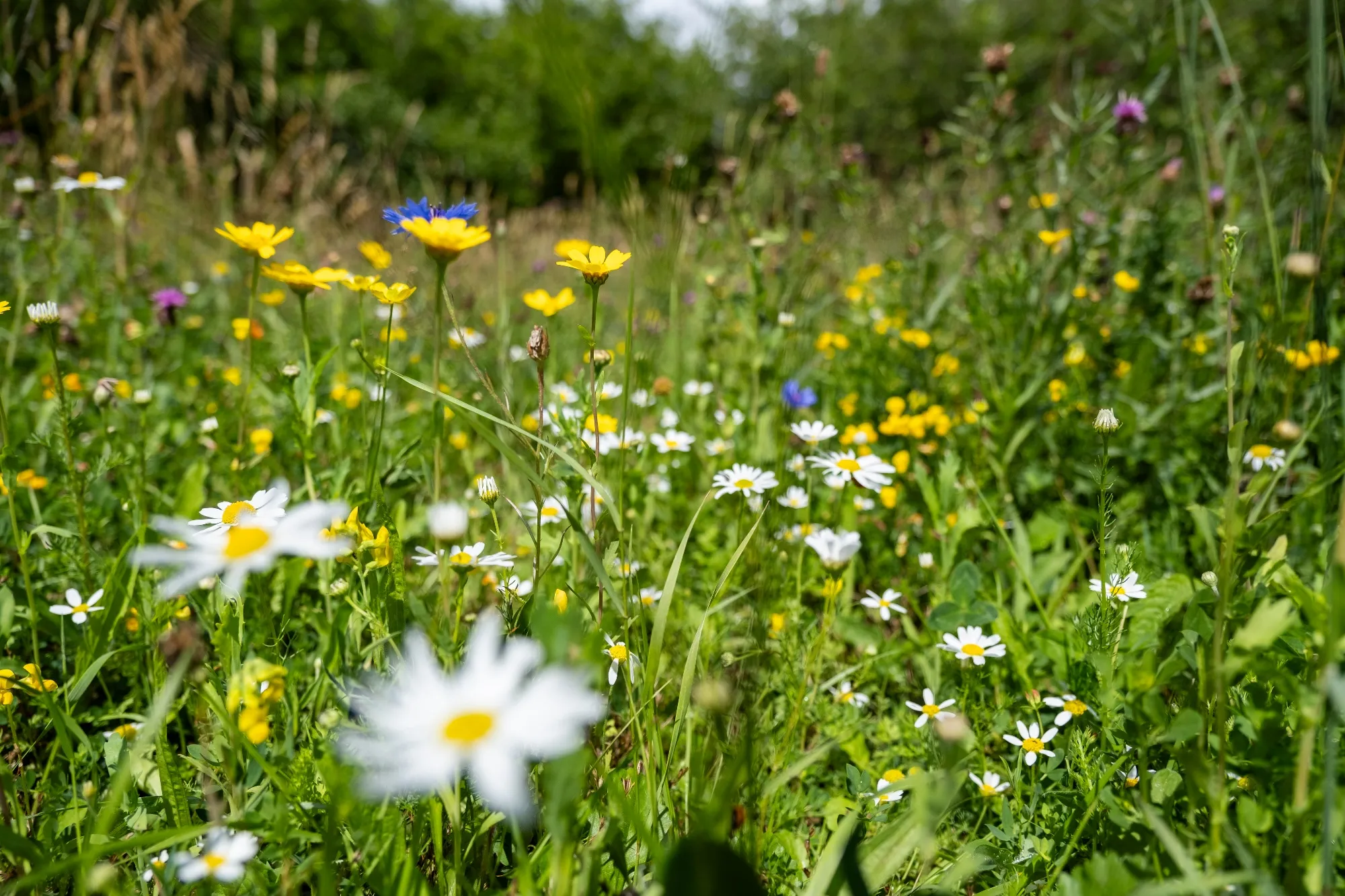
A green field full of grass and wildflowers
Wildflower meadow
Top tip

Regardless of whether an ecological assessment is required, all planning applications should include opportunities to promote wildlife gains through ecological enhancement in accordance with national and local planning policies.

Look out for this information when you’re reviewing planning applications in your local areas and highlight any additional opportunities for enhancements to the planning authority (this can be on a ‘without prejudice’ basis if you are objecting to the application in question).  

Share this article