
News
The story of Kinky - Mull's miracle White-tailed Eagle
How one White-tailed Eagle defied the odds and changed how we view the species
4th Sep 2026
Have you ever heard the distinctive bubbling call of the male Black Grouse as they begin their annual mating ritual, known as lekking? Or even been lucky enough to see one of these striking birds in their upland habitat?
5 min read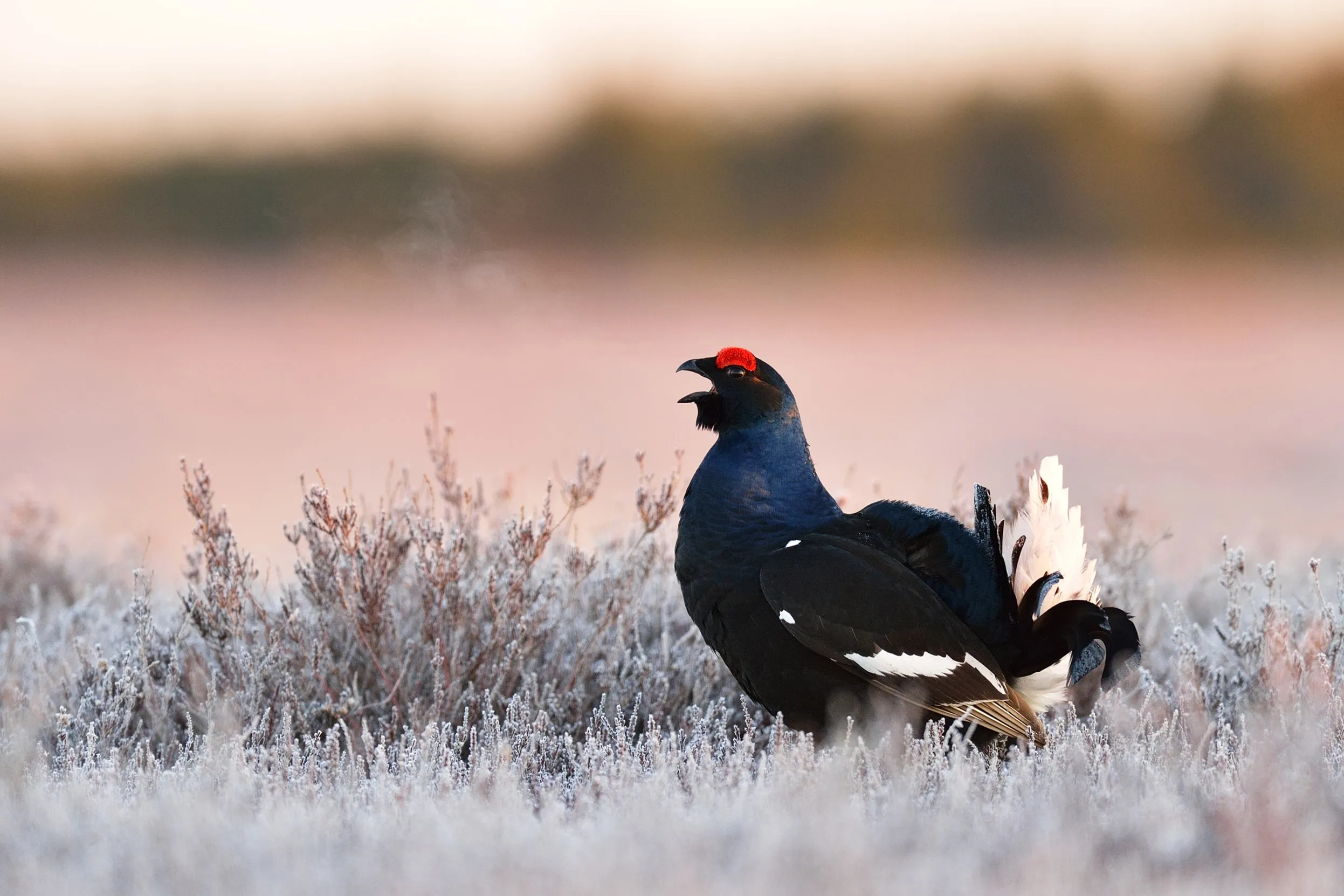
This year, volunteers from the RSPB's Species Volunteer Network have ventured out onto the moors of north Wales in the darkness of early dawn, to seek out the mesmerizing performance of the lekking male Black Grouse.
These sunrise outings are all for an important reason – the annual lek counts. These spring surveys help estimate population numbers of this impressive yet declining species. They form a vital part of the RSPB Black Grouse Recovery Project, which began in the 1990s.
Black Grouse lek counts are carried out very carefully to avoid disturbing the birds. Our dedicated team of volunteers were specially trained in early spring, in preparation for the surveys. On the day of the count, surveyors arrive quietly before dawn, watch from a safe distance using binoculars or scopes, and only visit each site once during the peak season. This way, we can learn more about Black Grouse populations while making sure the bird’s natural behaviour is not disrupted.
We hear from two volunteers helping to saving one of Wales’ most vulnerable species.
We arrived on site an hour before dawn, and to our surprise we heard the distinctive sound of a lek straight away. We moved slowly towards the sound and our next site but sadly we did not see it. We were, however, rewarded with a beautiful sunrise, met some curious sheep and friendly dogs, and were treated to a lovely dawn chorus full of the sounds of Wrens; warblers; thrushes; Blackbirds and Blue Tits. A beautiful morning in the north Wales countryside helping nature!
Kathryn McGrath – volunteer
It was still dark when we arrived on site and started tramping across the moors to reach our designated zone for the grouse count. I knew the terrain from doing Curlew surveys a couple of weeks earlier, but the thickets of grass and hummocks of moss were difficult to navigate in daylight – never mind with just a head torch! Even so, we made it into our zone in time for the first traces of light over the horizon and followed the path mapped out in advance, straining our eyes and ears for any trace of our elusive quarry.
For the first three quarters of our survey, we saw and heard nothing, and I was beginning to worry that we would have to head to the post-survey meet up empty handed. Then, just a few hundred metres from the end of our zone we heard it. The characteristic burbling, like water boiling in a pan, followed by the “and what?!” screams. There were at least two lekking males somewhere! We aimed ourselves at a small rise to get the best possible view and stared through binoculars in arcs until our eyes watered, but we didn’t even spot a hint of those bright-red eyebrows. After long minutes we gave up and moved further along – to the sound of a separate lek! Again, we examined every grassy hummock and every patch of heather but with no success. Having reached the far edge of our zone we headed back to the car, both us and the record sheet accepting that all we had was the direction of the noises, and the points at which we’d heard them. The sun was almost fully up now, and the far mountains of Eryri were bathed in a golden light that promised a hot day to come. Despite not seeing any grouse, it was still a fantastic experience to be involved in, an important cause to contribute to, and it was a delight to even hear that famous call in the wild. Perhaps next year I’ll have more luck.
Kate Harrison - Volunteer
The RSPB Species Volunteer Network project began in England and Northern Ireland. But thanks to the players of People’s Postcode Lottery, the Network has now expanded to Wales and Scotland.
If you are feeling inspired and would like to get involved in species recovery projects or any other volunteering roles, please go to our RSPB Volunteering Opportunities page.
If you can’t find the sort of volunteering role you’re looking for from our listed opportunities, please do get in touch so we can help find the right role for you. You can contact us directly at SpeciesVolunteerNetwork@rspb.org.uk
The Black Grouse Recovery Project is made possible using the Nature Network Fund, provided by the National Lottery Heritage Fund on behalf of the Welsh Government and in partnership with Natural Resources Wales (NRW).
RSPB partners carrying out the Black Grouse lek counts, are NRW, National Landscapes and COFNOD, the North Wales Environmental Information Service.


.jpg)