
Wildlife Disease Fund
Thank you for your support – we couldn’t do what we do without our generous members and supporters.
An update on avian flu, its impact, and what you can do to help.

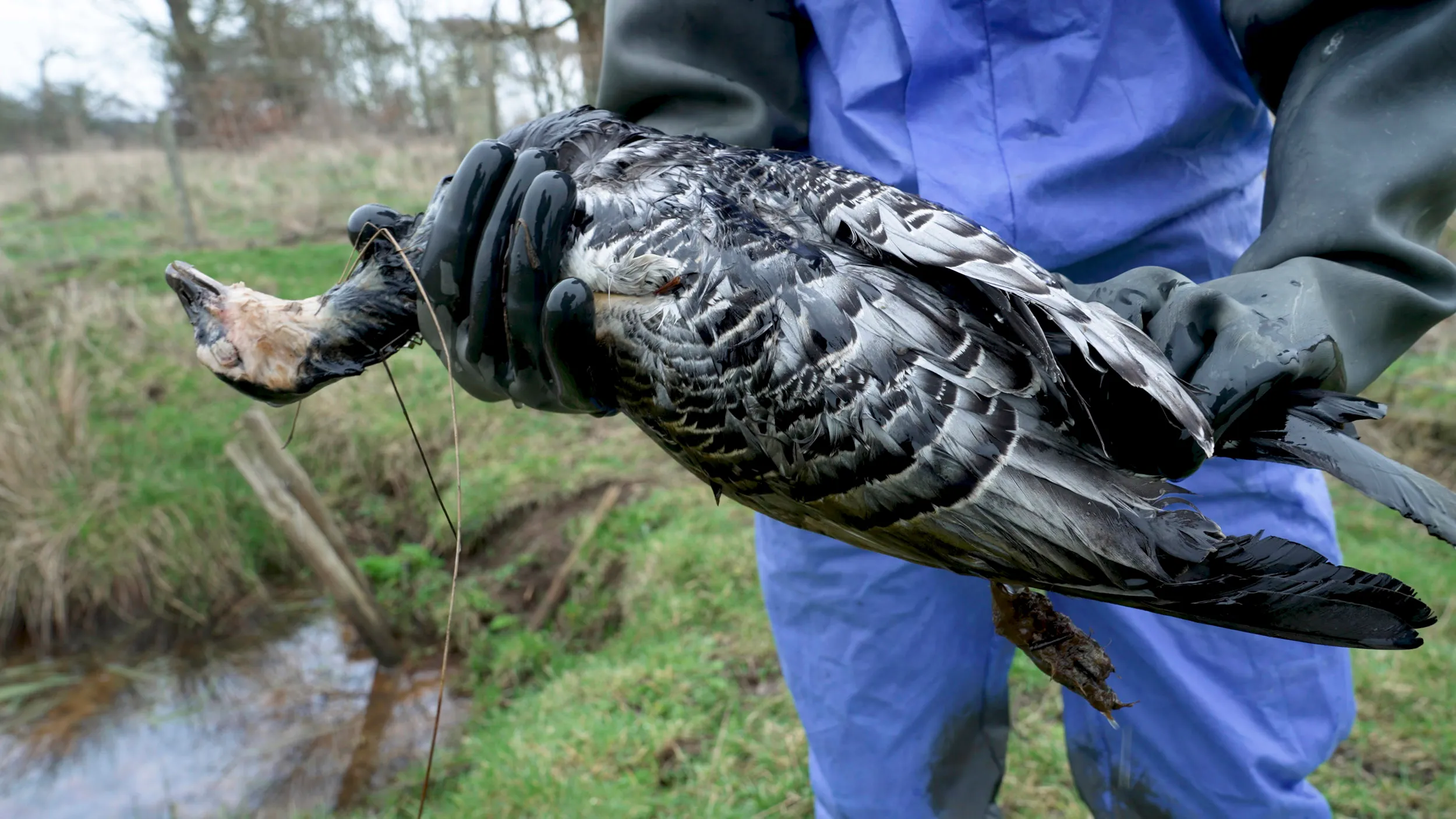
In this film we report from RSPB Mersehead in Dumfries and Galloway. In winter, the nature reserve is home to huge flocks of Barnacle Geese but this year the team are worried about the possible impact of avian flu. Sadly since filming, we have seen cases of bird flu on the Solway Coast, including Barnacle Geese at RSPB Mersehead.

Avian flu or bird flu is a disease that mainly affects wild birds and poultry. As with other viral diseases, there are lots of different strains, most of which cause few or no symptoms in infected wild birds.
However, the current global outbreak is caused by a Highly Pathogenic Avian Influenza (HPAI). The virus originated in intensive poultry operations in Asia in 1996 before spreading to wild birds. Since 2020, we have seen an escalation in the impacts from the virus globally, with an increasing and worrying number of species and countries affected.
Before 2021, outbreaks of HPAI in the UK killed relatively small numbers of wild birds and tended to be seasonal, affecting waterfowl during the winter. But since 2021, the current strain has had catastrophic impacts on UK birds throughout the year, with cases seen across the summer in seabird colonies. HPAI has caused population declines in several seabird species, and has led to Great Skuas being added to the Red List of highest conservation concern.

This summer, the virus continued to circulate. Although it hasn’t caused the same level of devastation as in previous years, sadly it has still caused mass mortalities at several UK seabird colonies. We’re also concerned that Herring Gulls, a species which is already Red-listed, continue to be impacted by HPAI, with many cases recorded across the summer.
Worryingly, this year is the first time we have seen persistence of HPAI in resident waterfowl across the summer. We’re also concerned about the ongoing cases in gamebirds. Since March, there have been a number of outbreaks at captive gamebird facilities and mass mortality incidents in released Pheasants. Cases in released Pheasants have continued to be reported into autumn.
During October 2025, we saw a huge rise in avian flu cases in waterfowl. Defra (the Department for Environment, Food & Rural Affairs) increased the flu risk level for wild birds across Great Britain to very high, and cases continued to rise in November. Cases in both wild birds and poultry have also been reported in Northern Ireland.
Last winter, avian flu cases were seen in waterfowl, gulls and birds of prey. The poultry industry was also hit hard. We are concerned that this winter could be even worse. We are entering what’s expected to be a very high-risk period for transmission of the virus between birds, so it’s essential the UK is prepared.

The greatest impacts to date in UK birds have been seen in seabirds, but we’re increasingly concerned about the ongoing impact on birds of prey and waterfowl populations. Current outbreaks in Whooper Swans, and the consistently high numbers of cases being seen in Mute Swans over a number of years, are particularly worrying.
In winter 2021/22, bird flu killed a third of the Svalbard breeding population of Barnacle Geese – at least 13,200 birds. These birds spend their winters in southern Scotland and northern England. While thankfully this population bounced back after this first outbreak, worryingly we are now seeing another outbreak affecting these birds.
There is also evidence that White-tailed Eagles and Golden Eagles aren’t breeding as successfully, and that some local population declines in Peregrine Falcon and Buzzard are linked to HPAI.
In Europe, migrating Common Crane populations have also been severely impacted in recent weeks, with an estimated 30,000 having died. Thankfully we haven’t had any reported cases in UK Cranes to date, but this is something we’re keeping an eye on.
Across our nature reserves, our teams are working hard to monitor the birds. Any dead birds are reported to Defra (in Great Britain) or DAERA (in Northern Ireland) for testing.
We’re also supplying our reserve teams with the equipment they need. This ensures that, in the event of an outbreak, we’re in the best position possible to limit impacts where we can whilst keeping our staff safe.
The RSPB will continue to push all four UK Governments to strengthen their avian flu response plans. This must include action to reduce the risk of disease outbreaks and to limit their impacts on wild birds. Essential action is also needed if our already struggling wild bird populations are to recover and be resilient to disease threats.
The Ouse Washes in Cambridgeshire forms the largest area of washland in the UK. Washland is grazing pasture that floods in the winter. This creates a rich habitat that attracts thousands of ducks and other waterfowl, including Whooper Swans, every winter. Sadly, however, around 200 Whooper Swans have been killed by avian flu, so far, this year.
RSPB Ouse Washes Senior Site Manager, Jonathan Taylor, discusses the impact of the virus:
“After initial testing by Defra confirming avian flu in a dead Whooper Swan, so far this year for the entirety of the Ouse Washes, around 200 Whooper Swans have sadly succumbed to the virus.
“It’s an awful disease that has likely been accelerated early in the season by recent dry conditions – meaning that large numbers of swans have been roosting on small areas of flooded land which allows the disease to spread more easily from bird to bird.
“Thankfully, recent heavy rainfall has started the process of water levels rising across the site, allowing the swans to spread out more to roost. Hopefully, the numbers of infected bird numbers will drop as we move into winter.
“Following latest guidance to minimise impacts of the disease, we will continue to monitor and evaluate each situation as it occurs to decide on the best course of action.
“Evidence on the effectiveness of removing dead birds to prevent further spread of the virus is limited. So, in most cases, we are not collecting dead birds unless there is a significant public health risk. This is because removing dead birds comes with risks to both our workforce and wild birds. The process of collecting carcasses can cause disturbance, stress and the movement of other birds which risks spreading the disease further.”

Risk to the public is currently assessed as very low. However, Government advice is not to touch any visibly sick or dead birds. It’s also important to keep pets away, and we recommend avoiding disturbance to wild birds to give them the best chance of fighting this disease.
Instead, please report any dead birds found to Defra in Great Britain or DAERA in Northern Ireland.
Sick and dead birds can also be reported to BirdTrack, which helps provide data to increase our understanding of population impacts.
We advise against feeding waterfowl at this time. Feeding these birds could encourage them to congregate where they’re being fed and increase the risk of the virus spreading.
With the ongoing threat of avian flu and other diseases such as trichomonosis and Usutu impacting UK birds, it’s never been more important to look after our birds. If you can, we’d be so grateful if you could support our work through the RSPB Wildlife Disease Fund.
Join us in the fight to control avian flu and other wildlife diseases by making a one-off donation or sign up to donate monthly. With a regular donation, you can help us plan ahead, raise our ambitions and take even bolder steps to combat these growing threats.
Thank you for your support – we couldn’t do what we do without our generous members and supporters.


