
Visit Marshside and Hesketh Out Marsh for nature trails and bird hides along the Ribble Estuary, looking over saltmarsh and lagoons.
Once extinct as a breeding species in the UK, RSPB members are now helping Avocets to thrive.

Long legs, a delicate bill and decked out in monochrome, the Avocet looks as though it has stepped straight out of Hollywood’s silver screen. It’s no wonder it was chosen as the RSPB’s logo. But there’s more to this bird than just its striking looks.
In the 1940s, Avocets were so scarce, the UK’s few breeding birds were guarded around the clock. Now, they thrive on many RSPB nature reserves – a symbol of hope, restoration and rejuvenation. All thanks to people like you.
RSPB members made our work possible. A team of people, united by their love for nature, helped take this bird from threatened to thriving.
Avocets had been lost as a breeding bird from the UK by 1840, partly due to a lack of suitable places to breed. Wetlands had been drained at scale, as land had been reclaimed for agriculture and development. But through World War II, some accidental conservation began.
“When we were setting up the guns I suggested to the engineers that we flood the poor-quality pasture to the south of the coastguard cottages, to prevent the Germans getting in with their tanks. The Ogilvie family of Sizewell Hall weren't present so we couldn't ask them, so we simply opened the sluice gates and flooded the area. When the invasion didn't happen and we left, it just remained in that condition until the end of the war, and this became the place to which the Avocet returned.”
- Captain Lees-Smith, Adjutant in charge of the Coast Regiment and Suffolk Coast Artillery
In 1947, after World War II, a team of dedicated former soldiers slept top-to-toe in a tent in Suffolk. They were on a new mission: Codename Operation Zebra, guarding some of the UK’s most precious breeding birds.
The land at Sizewell Hall, and the nearby Havergate Island, became home to four pairs of breeding Avocets in 1947 – the UK’s first in over 100 years. These precious birds were kept so secret that the team at Minsmere didn’t know of Havergate’s Avocets and vice versa.
Havergate Island, previously farmed, had also been flooded through the 1940s. Left neglected through the war, the flood defences breached. Both located on Suffolk’s coast, these newly flooded locations were prime places for Avocets from elsewhere in Europe to recolonise Britain.

Astoundingly, the RSPB had signed the lease to manage the land at Sizewell Hall just a few weeks prior to the Avocets’ arrival. Thanks to our members, this incidental wildlife haven was soon to become our flagship nature reserve – renamed RSPB Minsmere.
Reeds can grow quickly on flooded land, and so Minsmere rapidly became a reedbed. This was great news for species like Bitterns, Marsh Harriers, Bearded Tits, and other reedbed specialists. But Avocets, which need more open habitats with shallow pools to forage in, stopped breeding at Minsmere in 1949.
Bert Axell MBE became Minsmere’s Warden in 1959. He realised that this natural regeneration could mean some breeding birds would lose the habitats they rely on. While more reedbed wasn’t a problem in itself, these freshly flooded landscapes weren’t being replaced. Land was – and still is – drained across the UK.
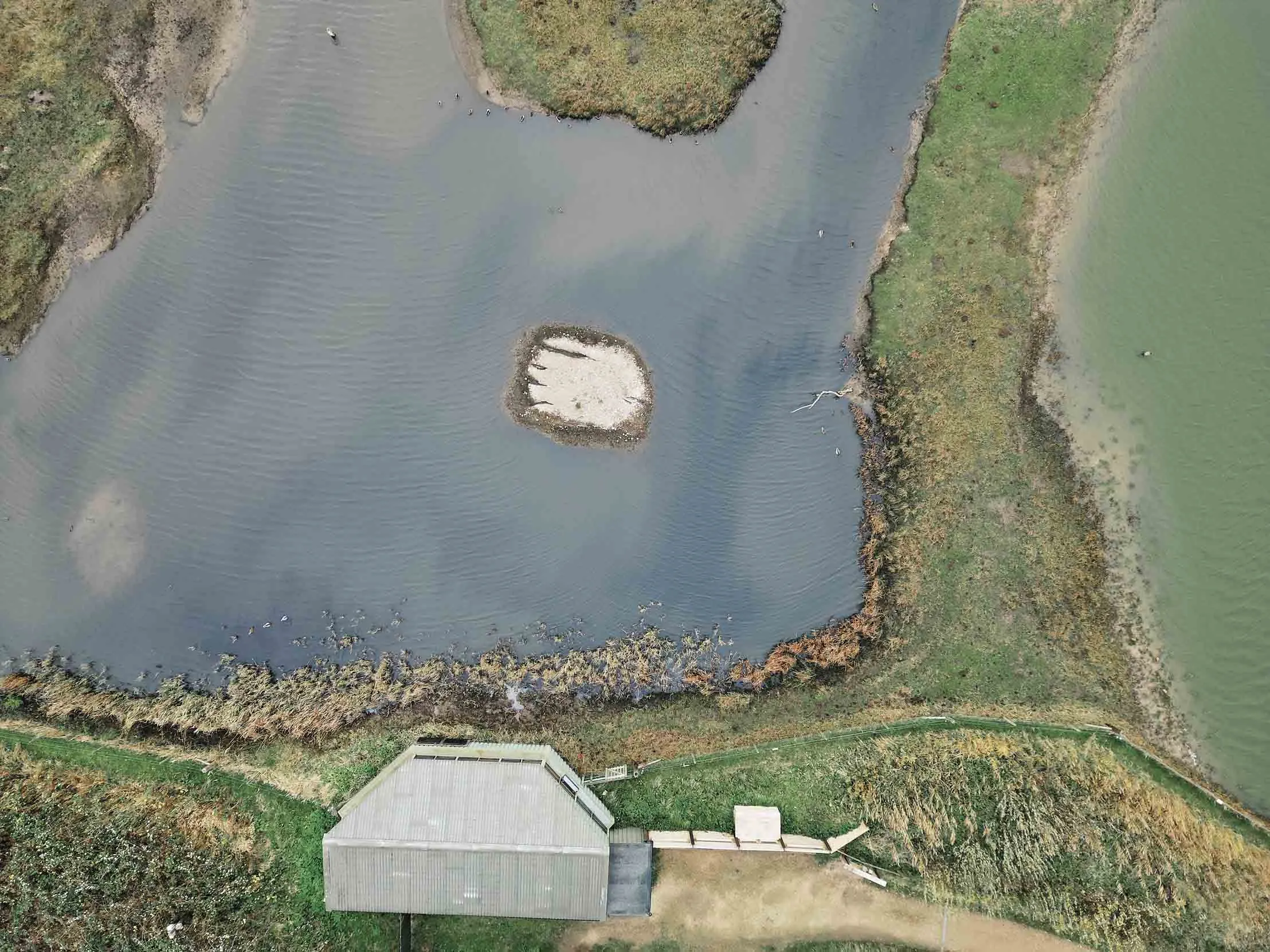
In 1962, Bert pioneered a method of habitat management, creating an area known as ‘the scrape’. He dug out shallow lagoons to mimic natural coastal lagoons and created islands to encourage the nesting of wading birds and gulls. The scrape was a success, and these wading birds have bred at Minsmere every year since 1963, the year that the scrape was first implemented.

With this pioneering conservation style now implemented at many nature reserves around the UK, Avocet numbers have gone from local extinction to become our most rapidly increasing breeding wading bird.
Along with spreading along the east coast, breeding Avocets can now be found in Wales and in the north of England. In 2018, a pair even bred in Scotland for the first time at RSPB Skinflats. Today, there are an estimated 1950 breeding pairs, and 8700 wintering birds in the UK.
The Avocet’s success just wouldn’t have been possible without nature lovers like you. Our members have enabled us to buy more land around the UK and have paid for more on-the-ground conservation, which in turn, means more Avocets.
Here's a few sites across England, where you can see breeding Avocets. Visit in the spring months, and you’ll see fluffy chicks with serious ‘aw’ factor.

A mosaic of intertidal mudflats, wet grasslands and coastal lagoons, the Ribble Estuary is an internationally important site for wintering water birds. It’s also home to increasing numbers of breeding species, thanks to dedicated habitat management, made possible by our members.
Breeding Avocet numbers have risen from zero to over 150 in the past 25 years. Redshanks, Oystercatchers, and Lapwings also raise their chicks here – and the sites have even been home to nesting Arctic Terns. In winter, the hides and viewing areas at both Marshside and Hesketh Out Marsh are the perfect places to enjoy views of birds of prey, like Merlins and Hen Harriers, as panicked flocks of Pink-footed Geese and Golden Plovers take to the skies, aware of their presence.
Visit Marshside and Hesketh Out Marsh for nature trails and bird hides along the Ribble Estuary, looking over saltmarsh and lagoons.
Woodland, reedbeds, freshwater and saltwater pools, glorious golden sands and blue waters –Titchwell Marsh really does have it all. Nestled on the north Norfolk coast, this nature reserve is a vital stop off point on the East Coast Atlantic Flyway, attracting an incredible assortment of resident and migratory birds – including the odd rarity!
Sanderlings scuttle along the shoreline, Golden Plovers swirl in flocks and Brent Geese purr overhead at Titchwell Marsh. The reedbeds are home to breeding Bearded Tits and Marsh Harriers, while the lagoons provide essential habitat for wading birds.
Avocets are thriving here, and since habitat improvements in 2021, Titchwell has fledged 171 chicks – more than in its previous history – thanks to the LIFE on the Edge Project.
Common Terns are also a very recent success story, with 2025 seeing a new record of 30 chicks fledged.

Visit Titchwell Marsh for unforgettable nature spectacles and expert-led guided walks, then refuel in the café.
Formerly an important coal mining area, the Dearne Valley was once one of the most polluted places in Europe. Now, after over 30 years of nature restoration, kickstarted by local partners and taken over by the RSPB in 2003, nature is thriving in this once-industrial landscape.
While Old Moor is the main visitor centre and nature reserve on the Dearne Valley complex, the RSPB manages a handful of other sites in the area, including RSPB Adwick Washland and RSPB Wombwell Ings. As a result, the Dearne Valley’s habitats are bigger, better and more joined up, rejuvenating a post-industrial landscape that had been left to go derelict in the 1980s. And conservation work here is paying off – this year, 42 pairs of Avocets bred successfully in the valley.
.jpg)
With seven hides, three nature trails, plus pond dipping and play areas, RSPB Old Moor is fun for all the family. You’ll also find a café and shop in our newly refurbished visitor centre.
While these birds have made a remarkable recovery, breeding Avocets are still mostly found on sites specifically managed for nature.
For this species to continue to expand, conservation organisations and supporters like you are continuing to work together to secure more land for nature and manage it appropriately. This is an especially urgent task, as many existing breeding sites face risks, including unpredictable weather together with higher sea levels and increased coastal erosion.
Adopted as the RSPB logo in the 1970s, the Avocet is a reminder of what we can achieve when we refuse to give up. Together, with our members, we’ve shown that it’s possible to bring species back from the brink – and even back from local extinction.
To our members, thank you for coming together to help nature soar. At this critical time for nature’s recovery, you’re helping to protect and restore our wildlife and wild places every single day.


