
News
Transforming the RSPB for the future
Our plan to continue delivering our mission for birds, wildlife and nature.
14th Oct 2026
Chicks put at risk following suspected illegal killing of male Hen Harriers in Northern England.
5 min read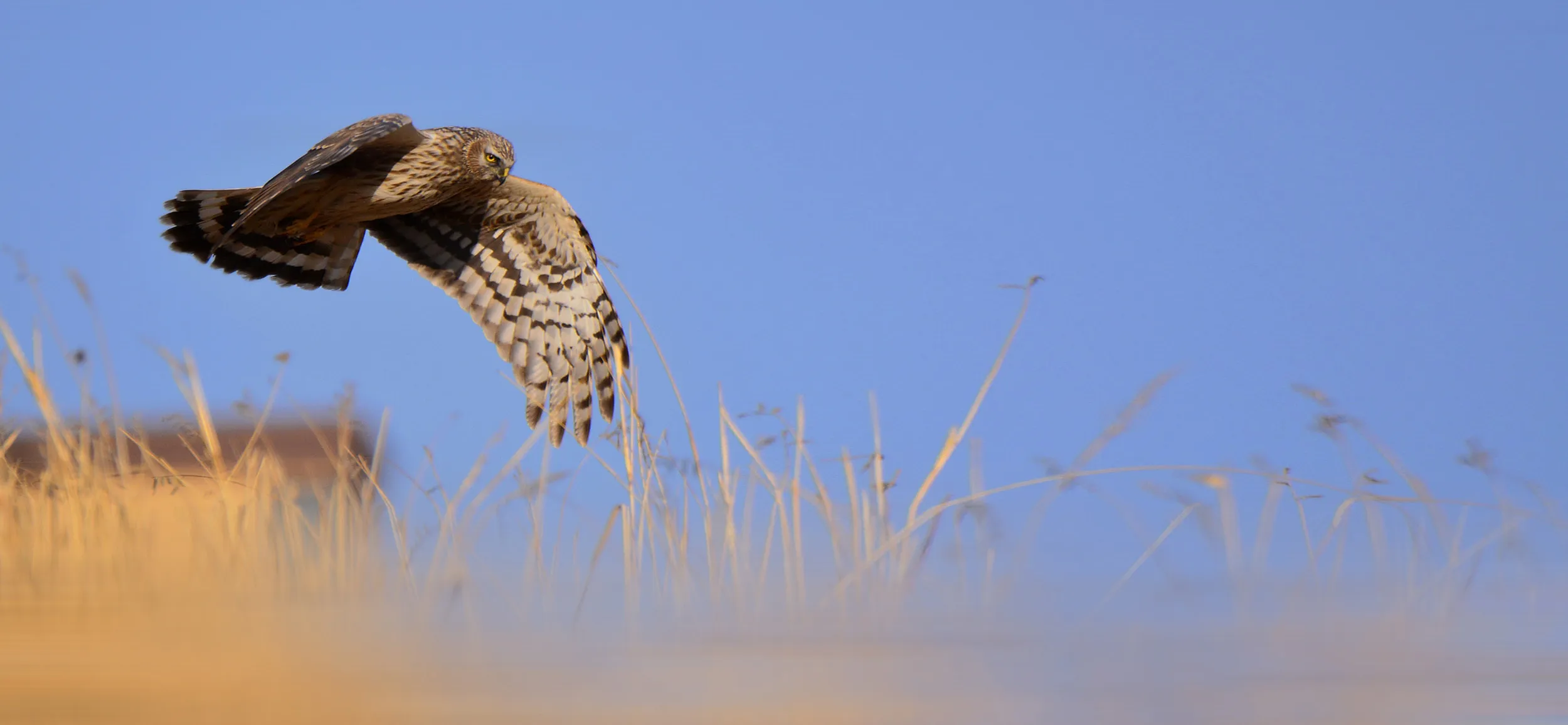
Earlier this year, four breeding male Hen Harriers suspiciously disappeared from nests in northern England. Against all the odds, five healthy Hen Harrier chicks have now successfully fledged from two nests following support from RSPB staff and volunteers.
Hen Harriers are one of the UK’s most intensely persecuted birds of prey and so rare that they are on the UK Red List of highest conservation concern.
In May, over a period of just eight days, four breeding male Hen Harriers suspiciously disappeared from their nests in northern England – two from RSPB Geltsdale Nature Reserve in Cumbria, and a further two from the Forest of Bowland in Lancashire. It is suspected that the birds were illegally killed.
However, a quick response by RSPB staff and volunteers has resulted in the successful fledging of five Hen Harrier chicks from two of these nests.
While two of the nests failed at incubation stage, the others had youngsters. Determined to save the chicks, RSPB staff and volunteers provided emergency supplementary food, under licence, to the females. The staff and volunteers also ensured the nests were closely monitored. Chris Hind, a volunteer at Geltsdale RSPB Reserve said:
We were incredibly hopeful that our efforts would pay off, but nothing was guaranteed. To see these birds take to the sky after weeks of tough work is fantastic but, as with all Hen Harriers in the UK, these birds face an uncertain future.”


Sadly, the disappearance of the four male Hen Harriers fits a pattern. Since 2020, a total of eight breeding males have disappeared whilst foraging away from the Geltsdale reserve. In 2023 a satellite-tagged male, known as Dagda, was found shot dead on neighbouring moorland.
It is highly unusual for a male to naturally desert its nest, and the loss of a male usually has a devastating impact on their breeding success with the female often abandoning their nest.
In the Forest of Bowland, one of the disappearing birds was a satellite tagged individual known as Dynamo. His tag suddenly stopped transmitting with no sign of malfunction. The tag data showed that over the previous 10 days he had remained within six kilometres of the nest but often travelled off the RSPB monitored land to forage.

The sudden and suspicious disappearance of satellite tagged Hen Harriers are synonymous with suspected and confirmed incidents of illegal persecution. If birds die naturally, satellite tags still transmit data and are recoverable. Despite a land search at the last point of transmission, no body or tag was recovered. Dynamo is the 115th satellite tagged Hen Harrier to have suddenly disappeared in the UK since 2010.
Lancashire and Cumbria Police have launched investigations. However, to date, no charges have been brought.
A recent RSPB report, Hen Harriers in the firing line, revealed 102 confirmed suspected incidents of Hen Harrier persecution recorded in the UK between 2020 and 2024. Most of these incidents took place on or near land managed for grouse shooting, with 89% of them in Northern England.
To effectively prevent these crimes, we are calling for greater regulation of grouse shooting in England through the introduction of a robust licensing system. Only through this balanced and proportionate approach can a meaningful deterrent to those committing these crimes be introduced.
In Scotland, the Wildlife Management and Muirburn (Scotland) Act means that all grouse shoots must have a licence to operate, and estates which are suspected of killing birds of prey may lose their licence. This legislation has been well received by many within the industry in Scotland, as it only penalises those who deliberately commit these crimes.
Mark Thomas, RSPB Head of Investigations UK, explains: “Sadly, these four missing Hen Harriers are just the latest in a long line of identical incidents recorded over decades and demonstrates the catastrophic knock-on effect to the breeding success and recovery of this species.
Those killing Hen Harriers do so with little or no fear of recrimination. Now is the time for the Westminster Government to act on licensing this industry, if it is truly serious about the conservation of this amazing species"

If you have any information relating to these crimes contact police on 101 and fill in the RSPB’s online reporting form.
If you wish to contact us anonymously, call the RSPB’s confidential Raptor Crime Hotline on 0300 999 0101.


