How to identify

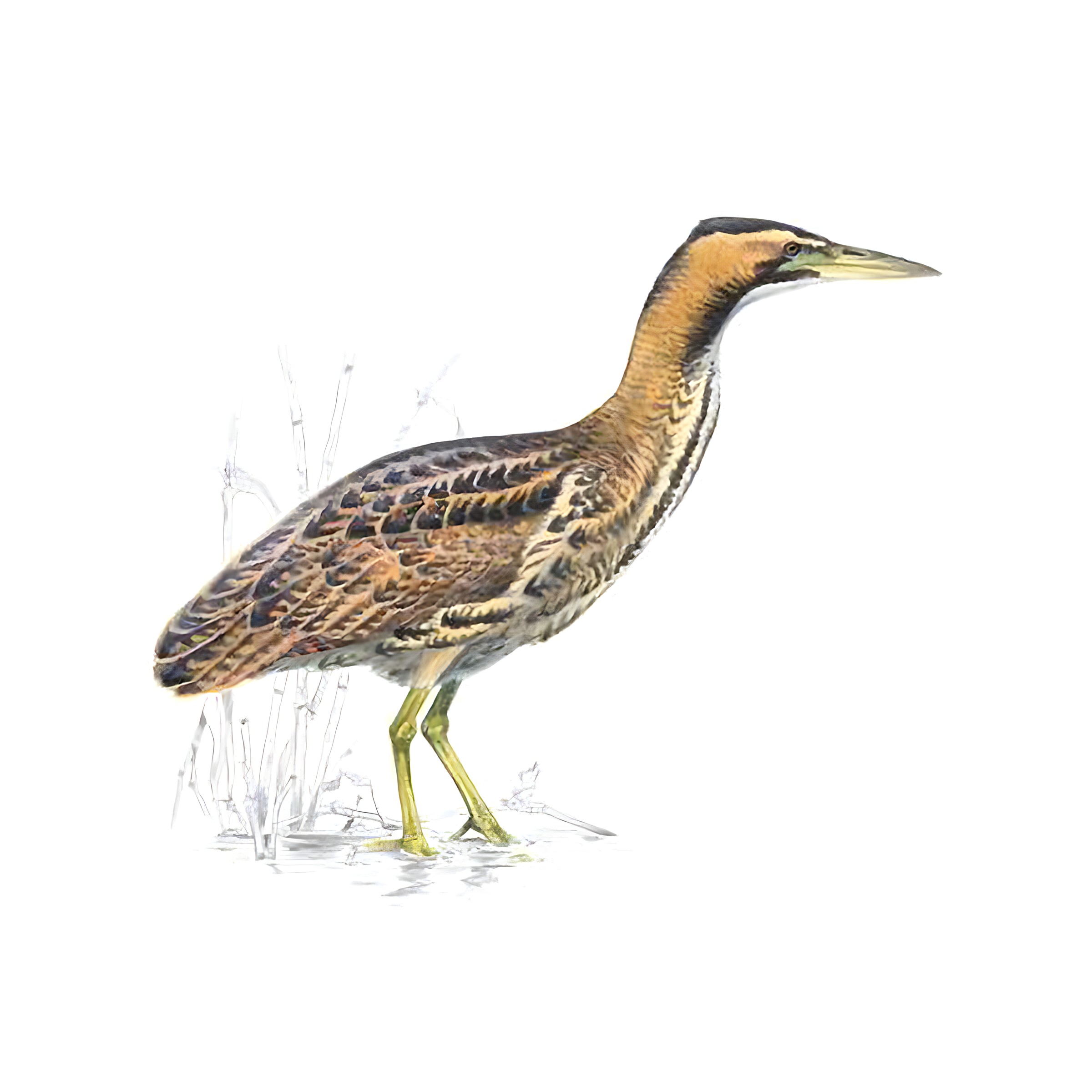
The Bittern is a thickset heron with pale, buff-brown plumage covered with dark streaks and bars. It flies on broad, rounded, bowed wings. A secretive bird, very difficult to see, as it moves silently through reeds at water's edge, looking for fish. The males make a remarkable far-carrying, booming sound in spring. It's very small, reedbed-dependent population make it an Amber List species. It is also a Schedule 1 species, meaning it's illegal to intentionally recklessly disturb them.

Call

Bittern

Niels Krabbe / xeno-canto

Conservation status

In 1997, just 11 male Bitterns boomed around the UK. The RSPB’s members have been instrumental in bringing this bird back from the brink by supporting the creation of new reedbeds. Over the past thirty years, this species has bounced back.

A Bittern looking into water, its reflection staring back.
Bittern
Another record-breaking year

It’s been another record-breaking year for Bitterns in the UK with 283 booming males recorded in the latest results from the RSPB and Natural England, a 20% increase from the previous survey and the biggest jump since monitoring began in 1990. 

Where and when to see them

Difficulty rating - Hard

On the fringes of a reedbed, a buff-brown heron skulks at the water’s edge. His plumage is the perfect camouflage against the golden vegetation. He’s a stealth hunter and on the lookout for Eels, fish and amphibians. After catching his prey, he disappears into the dense reeds.

Despite being so difficult to see, the male Bittern is the loudest bird in the UK. His deep booms rumble through the reeds and can be heard up to three miles away! This foghorn-like call is a serenade to passing female birds and is an effective way of marking his territory.

The peak time to hear Bitterns booming is from March through to May, but early birds can be heard staking out their patch throughout February.

Key

  1. Resident
  2. Passage
  3. Summer
  4. Winter
* This map is intended as a guide. It shows general distribution rather than detailed, localised populations.
  1. Jan
  2. Feb
  3. Mar
  4. Apr
  5. May
  6. Jun
  7. Jul
  8. Aug
  9. Sep
  10. Oct
  11. Nov
  12. Dec

Where best to see them

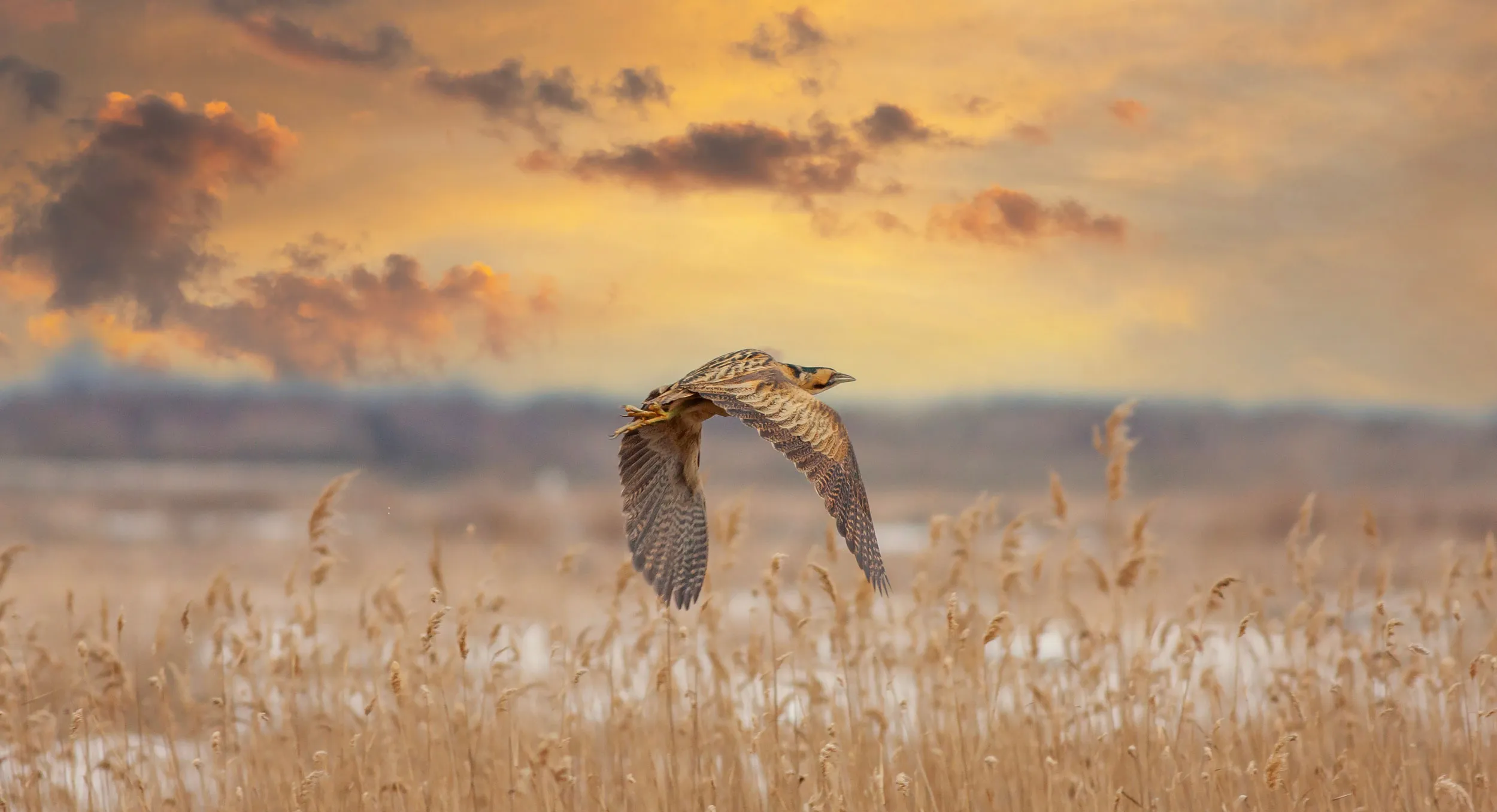
A lone Bittern emerging from a reedbed.
Bittern
Birds of the month

Head outside and discover fascinating birds each month. Read on for top ID tips, what to listen for, and where to see them.

Key facts