How to identify

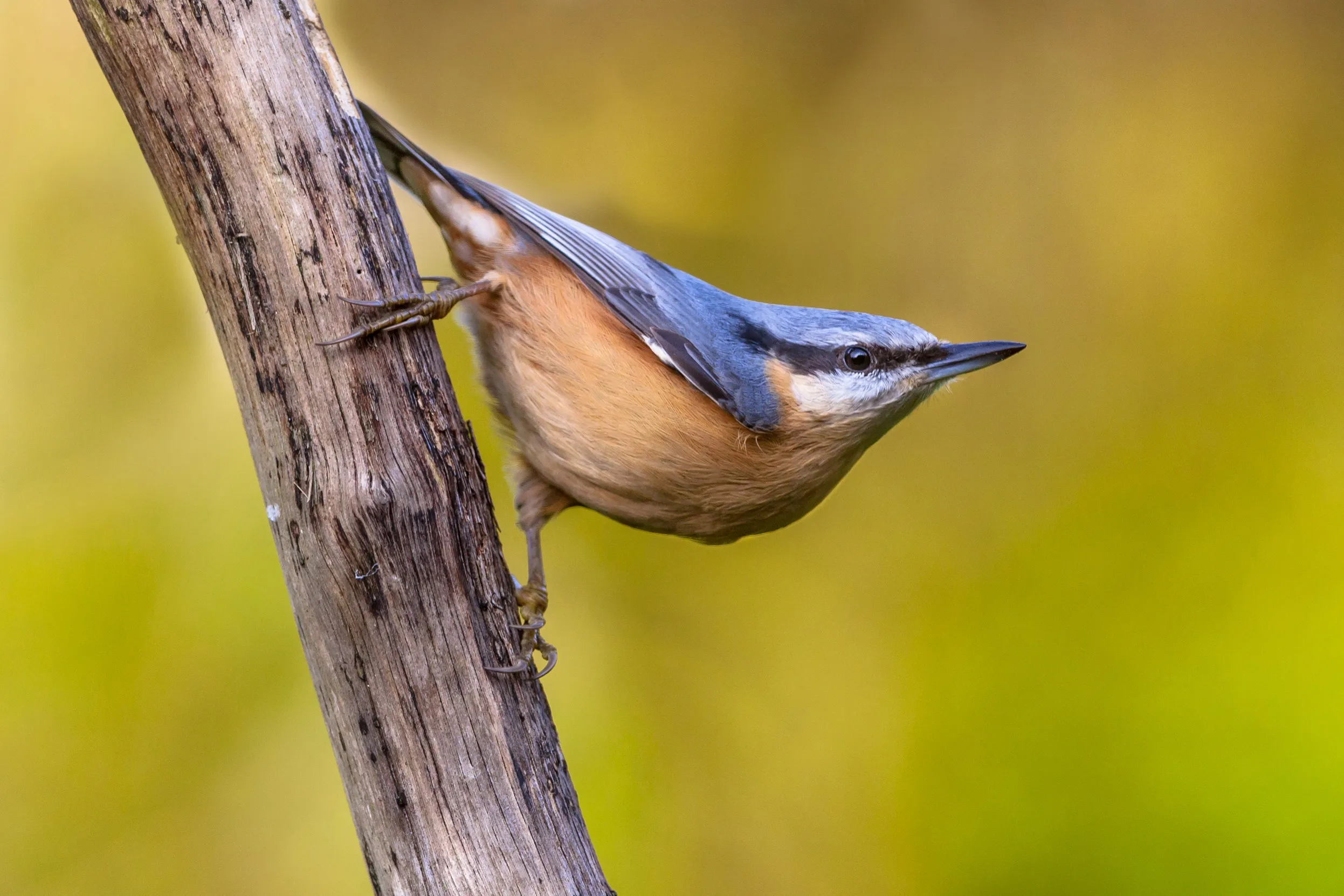
The Nuthatch is a plump bird about the size of a Great Tit that resembles a small Woodpecker. It's blue-grey on top and whitish below, with chestnut on its sides and under its tail. It has a black stripe on its head, a long black pointed bill and short legs. It breeds throughout England and Wales and has recently begun to breed in southern Scotland. It is a resident, with birds rarely travelling far from the woods where they hatch.

Call

Nuthatch

Sander Bot / xeno-canto

Key features to look out for

  • A plump bird about the size of a Great Tit that resembles a small Woodpecker
  • Blue-grey on top and whitish below, with chestnut on its sides and under its tail
  • It has a black stripe on its head, a long black pointed bill and short legs
  • Listen for its series of whistles from the woodland canopy

Conservation status

With a 291% increase between 1967 and 2023, the Nuthatch is on the green list of Birds of Conservation Concern, meaning it is not in need of conservation help at the moment. Management of our woodland nature reserves means it has the optimum conditions to thrive.

Where and when to see them

Difficulty rating - Easy-moderate

In woodland across England, Wales and parts of southern Scotland. Absent from Ireland. They will also visit gardens, especially in the winter. The population has been increasing over the past 50 years, meaning you are more likely to come across one now.

Key

  1. Resident
  2. Passage
  3. Summer
  4. Winter
* This map is intended as a guide. It shows general distribution rather than detailed, localised populations.
UK distribution map for Nuthatch
  1. Jan
  2. Feb
  3. Mar
  4. Apr
  5. May
  6. Jun
  7. Jul
  8. Aug
  9. Sep
  10. Oct
  11. Nov
  12. Dec

Behaviour

It feeds in the tops of trees, so can be quite tricky to see, but its series of loud whistles will usually give away its identity.

Nuthatches also have a unique talent – they’re the only bird in the UK that can climb down a tree trunk beak first! Its dagger-like beak is characteristic and you might see one in a garden, especially in the winter.

Take care though, nut-watchers, Nuthatch behaviour can be confused with that of the Treecreeper. It’s a similarly sized bird that likes to scamper up the side of trees in search of insects before flying back down.

Nuthatch, adult climbing downwards on tree
Nuthatch
Wing Tips

Brilliant birds, month by month: what to see and where to go.

Your Nuthatch questions answered

How can I identify a Nuthatch?

Around the size of a Great Tit, they often resemble a small woodpecker. They have a round blue-grey body with a long black bill and broad black stripe across the eye and down the back of the head. They have short legs and a short tail which they use to balance and move down tree trunks head first. They also have chestnut colouring on their flanks.

What does a Nuthatch eat?

They feed mainly on insects such as small beetles and spiders but in autumn, they will switch to acorns, pine cones and yew seeds.

Where do Nuthatches nest?

Natural tree holes within deciduous woodland, parkland and mature gardens.

When do Nuthatches nest?

April – June. The female will ensure the nest is safe from larger birds by reducing the size of the entrance with mud. They fill the nest with bark and dead leaves and only the female will incubate but both adults will help feed the chicks.

How long do Nuthatches live?

Two years.

Do Nuthatches migrate?

No, they don't move far from where they hatched and breeding adults will remain in their territories all year round.

Are Nuthatches rare in the UK?

They are most abundant in the southern area of England and all of Wales but have recently expanded further into south Scotland.

Key facts