Love Puffins
Help protect them for generations to come.
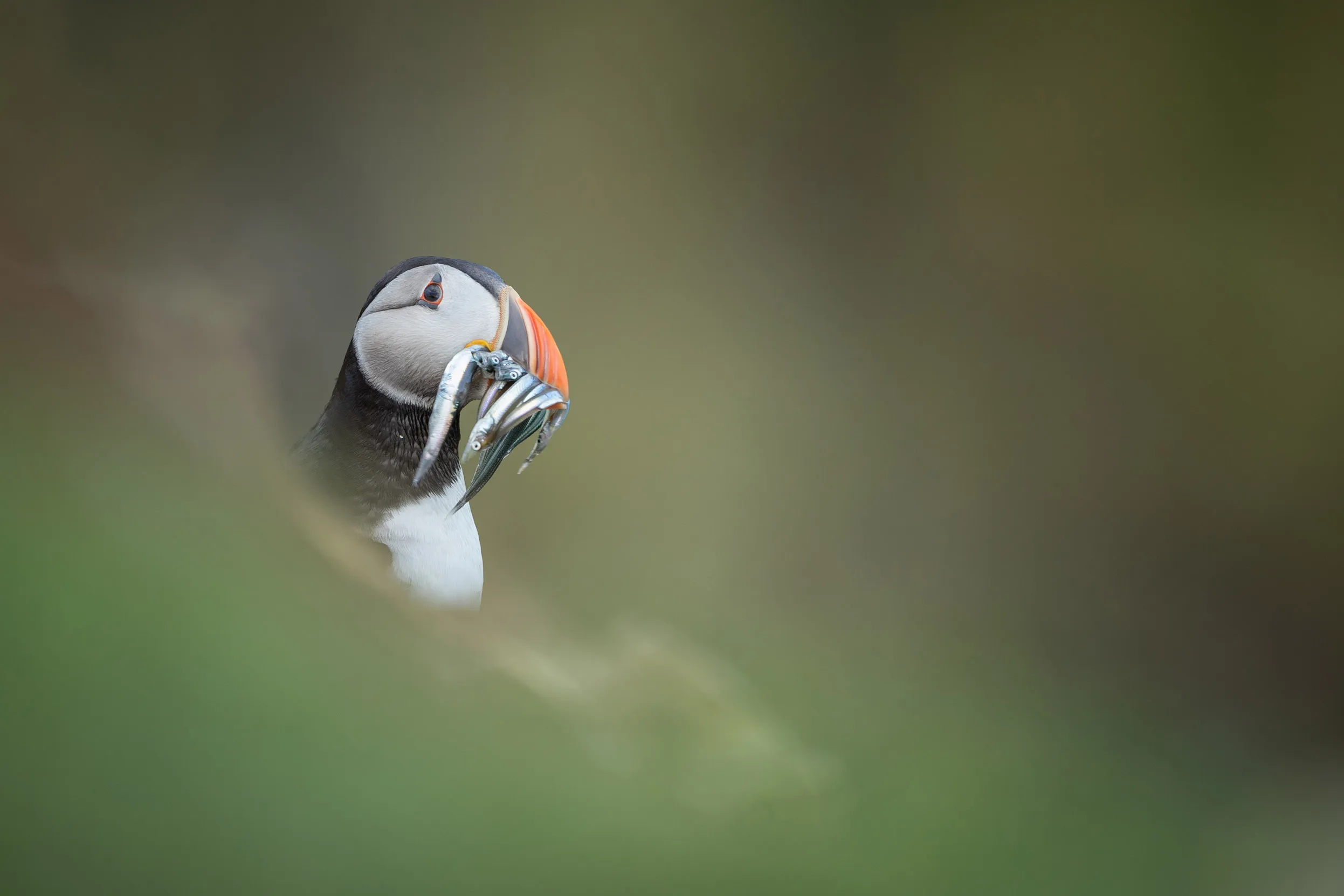
Follow the life of a Puffin from courtship to raising a chick. But as these charismatic seabirds face multiple pressures, we explain how you can help.
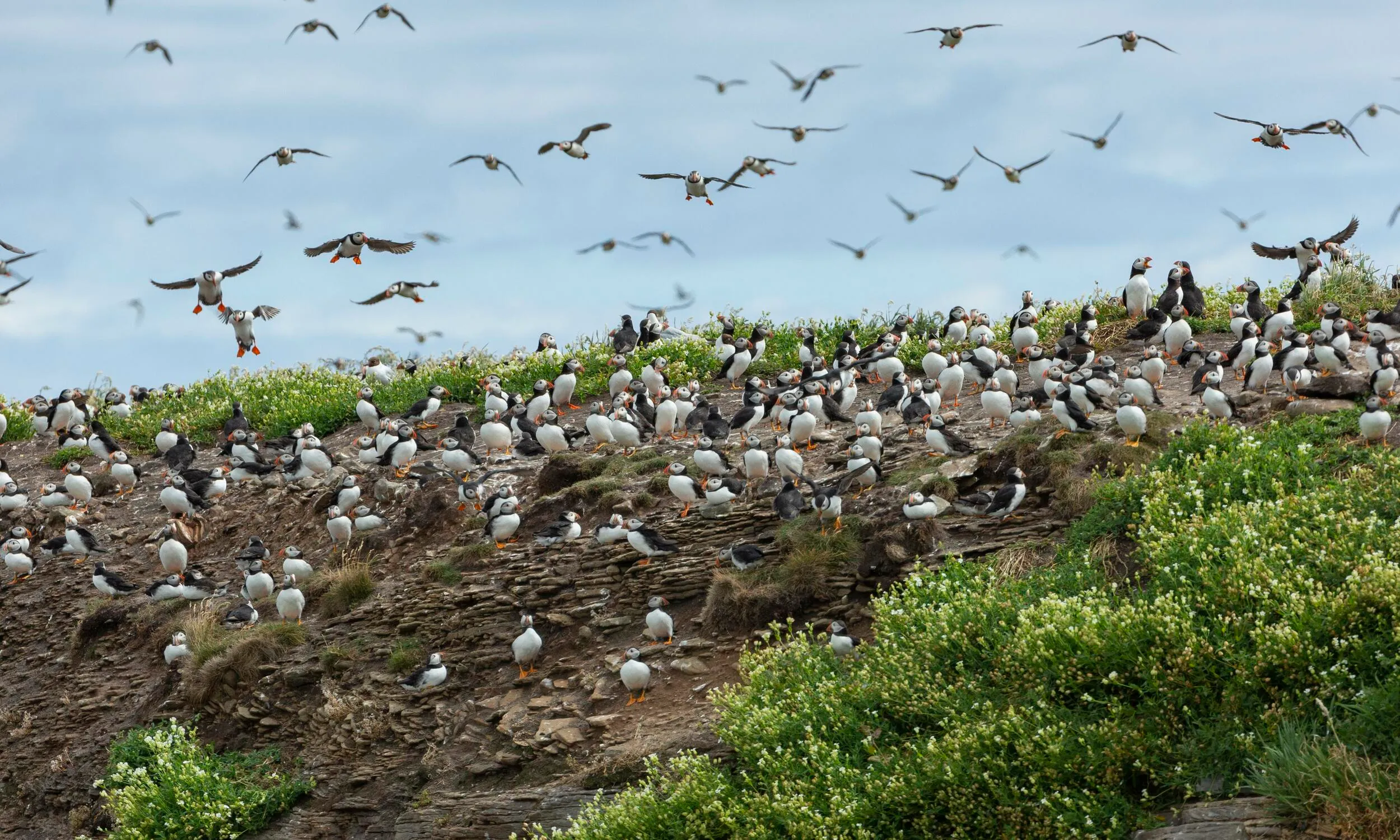
Puffins spend the winter at sea only returning to their breeding grounds in spring. Here they reunite with their lifelong mates, often going back to the same nest burrows every year. They greet their mates by rubbing their colourful bills together in a ritual known as ‘billing’.

As day breaks, our Puffin flies far out to sea, 20 miles from her nesting burrow. It’s the middle of the breeding season, and she has a chick to feed. She dives and comes up with her bill full of sandeels. Satisfied with her haul, she takes off with a splash and starts her long commute back to the colony.
As she flies, she joins other commuters. Lots of other birds – like Guillemots and Razorbills – have been fishing too. Their journeys merge onto a motorway-like route where thousands of birds come together to make their way towards land.
This kind of rush hour may not involve a traffic jam on busy roads, but it’s just one of the ways that life in a seabird colony resembles that of a human city. Both are full of noise, bickering, waste, smells – and thousands of compelling personal dramas.
Finally, the Puffin reaches home. All the burrows might look the same to us, but she recognises hers straight away. After all, she was here last year, and the year before that.

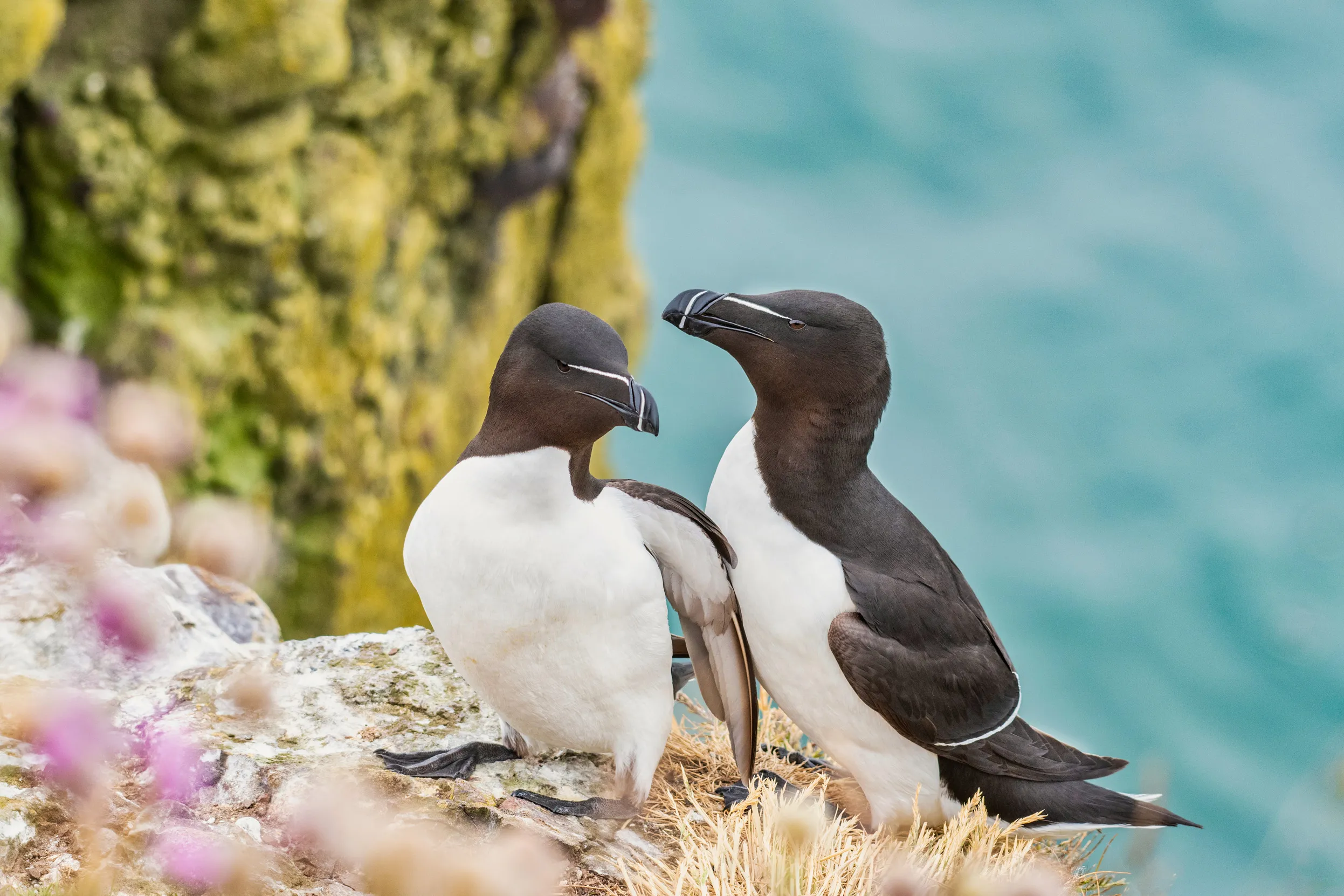
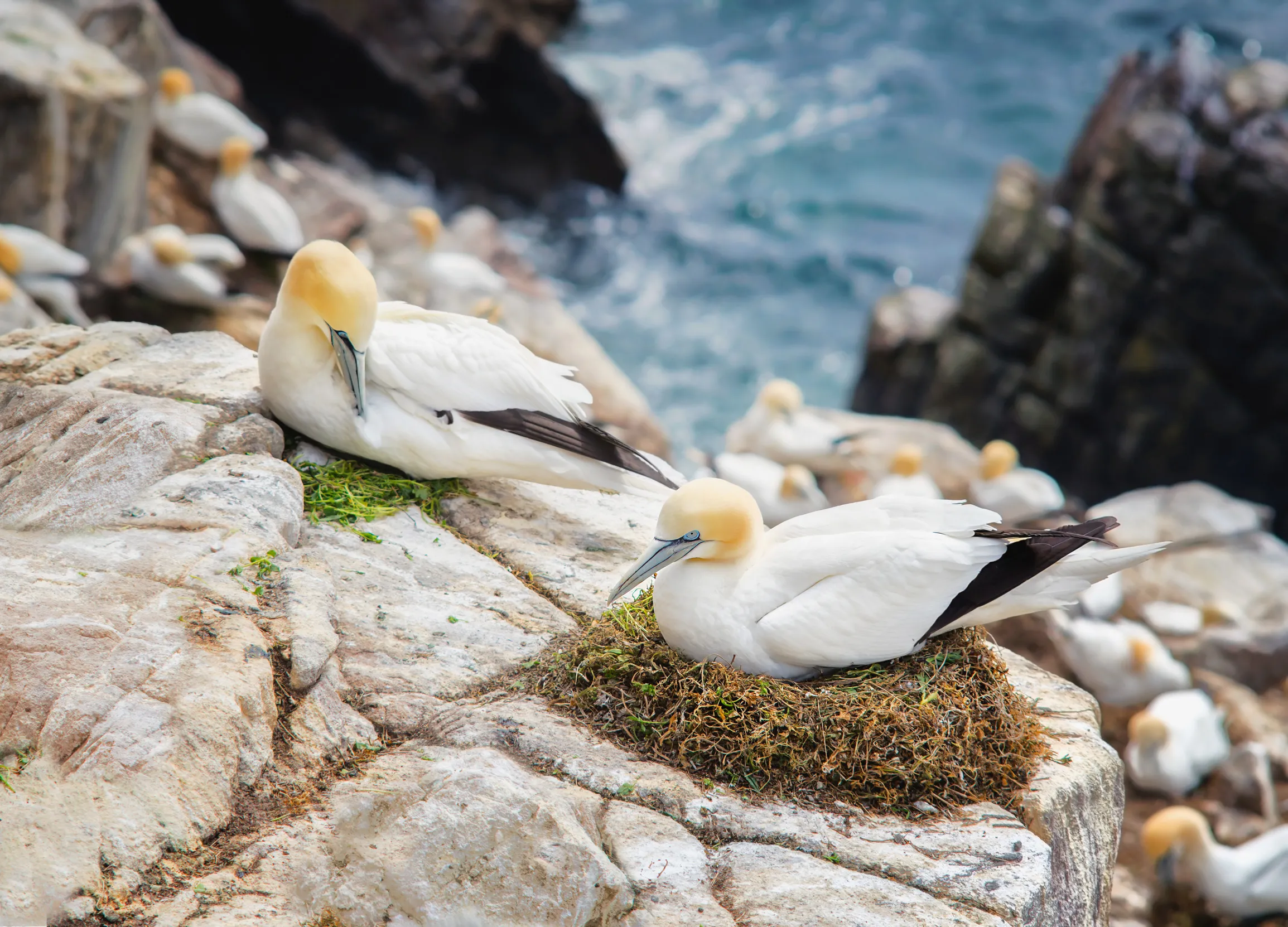
The sights and sounds of the colony are so entertaining that it’s easy to forget the birds are often on the edge of danger and even disaster. Many seabirds are in trouble, with Puffins, Kittiwakes and Terns all threatened with extinction in the UK.
Puffins are facing growing pressures, threatening their future. Changes in food availability, driven by climate change and overfishing, mean they are struggling to find enough sand eels and other fish to sustain themselves and their chicks. Out at sea, they risk entanglement in fishing gear, while the development of offshore renewable energy projects could disrupt their feeding and flight patterns. On land, their breeding colonies are under threat. Invasive predators like rodents can devastate puffin nesting sites, preying on eggs and newly hatched pufflings.

.jpg)
That’s why the RSPB is taking action to protect the nearly eight million seabirds that nest on the UK’s coastlines. We’re restoring their precious colonies so that, like us, they can continue to live busy, noisy and exciting lives.
We’ve made a good start, working with partners on projects like eradicating predatory rats on Lundy Island, which were unwittingly imported on visiting ships and shipwrecks. Puffin numbers have now been boosted from a meagre five birds to a far healthier 848 birds recorded in 2021. And Manx Shearwater numbers have risen from around 300 pairs to an incredible 5,500 pairs. We’ve also tagged struggling species like Roseate Terns, tracking their movements to get valuable information that shapes our ongoing conservation work.
The RSPB is constantly working to create bigger and better protected habitats for our beloved birdlife. But there’s still so much more to be done to ensure their survival.

Puffins are trying to find a home and raise their young – just like many of us. But right now, they’re facing huge challenges, from struggling to find food to losing safe places to nest. You can help give them a future.
By becoming an RSPB member, you'll help protect the feeding grounds where they search for food, the nesting sites where they raise their chicks, and the habitats they need to thrive. With your support, puffins won’t just survive, they’ll continue to bring joy to our coastlines, filling them with life, colour, and character for generations to come.
Join us today and be part of something truly special.
Help protect them for generations to come.