How to identify

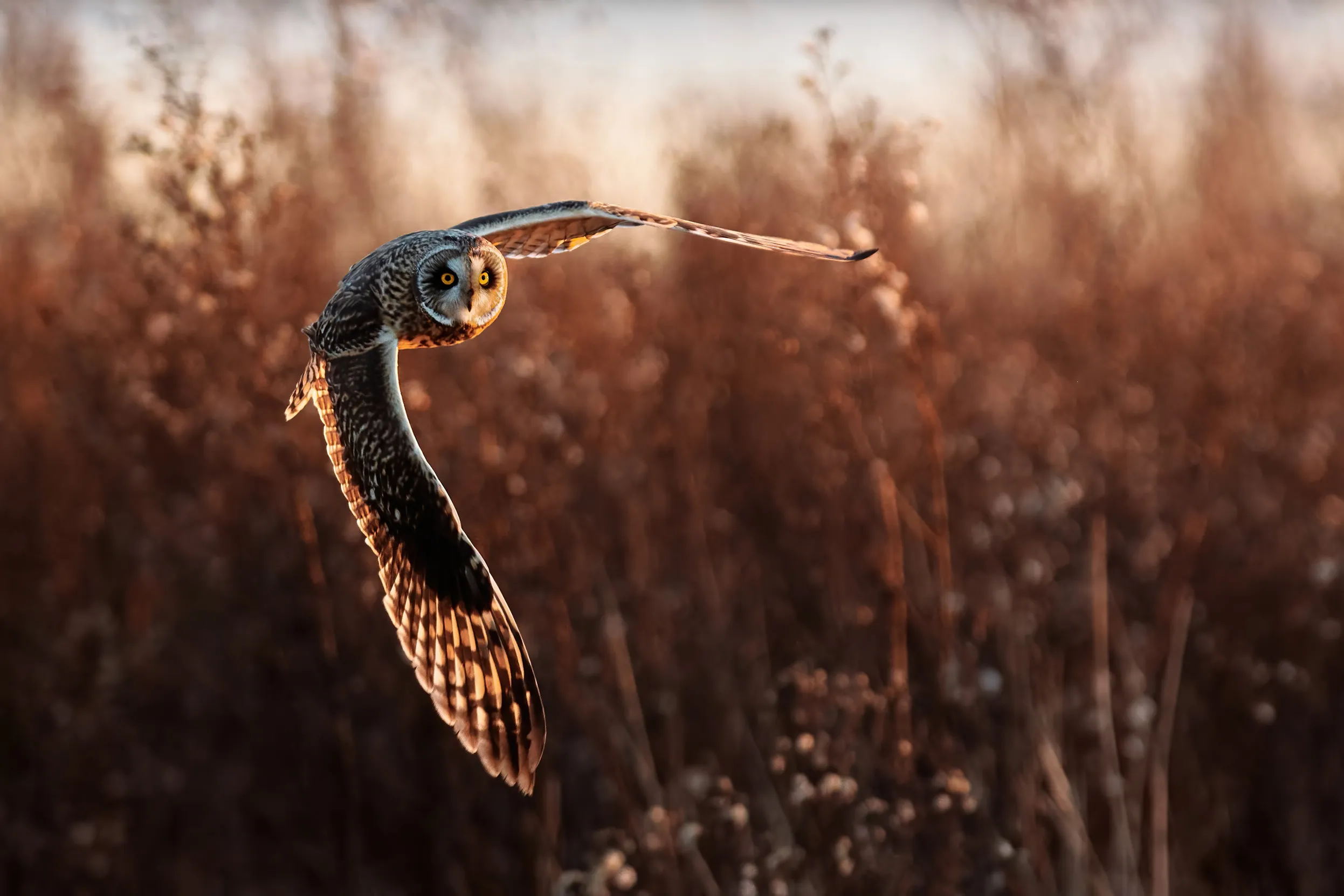
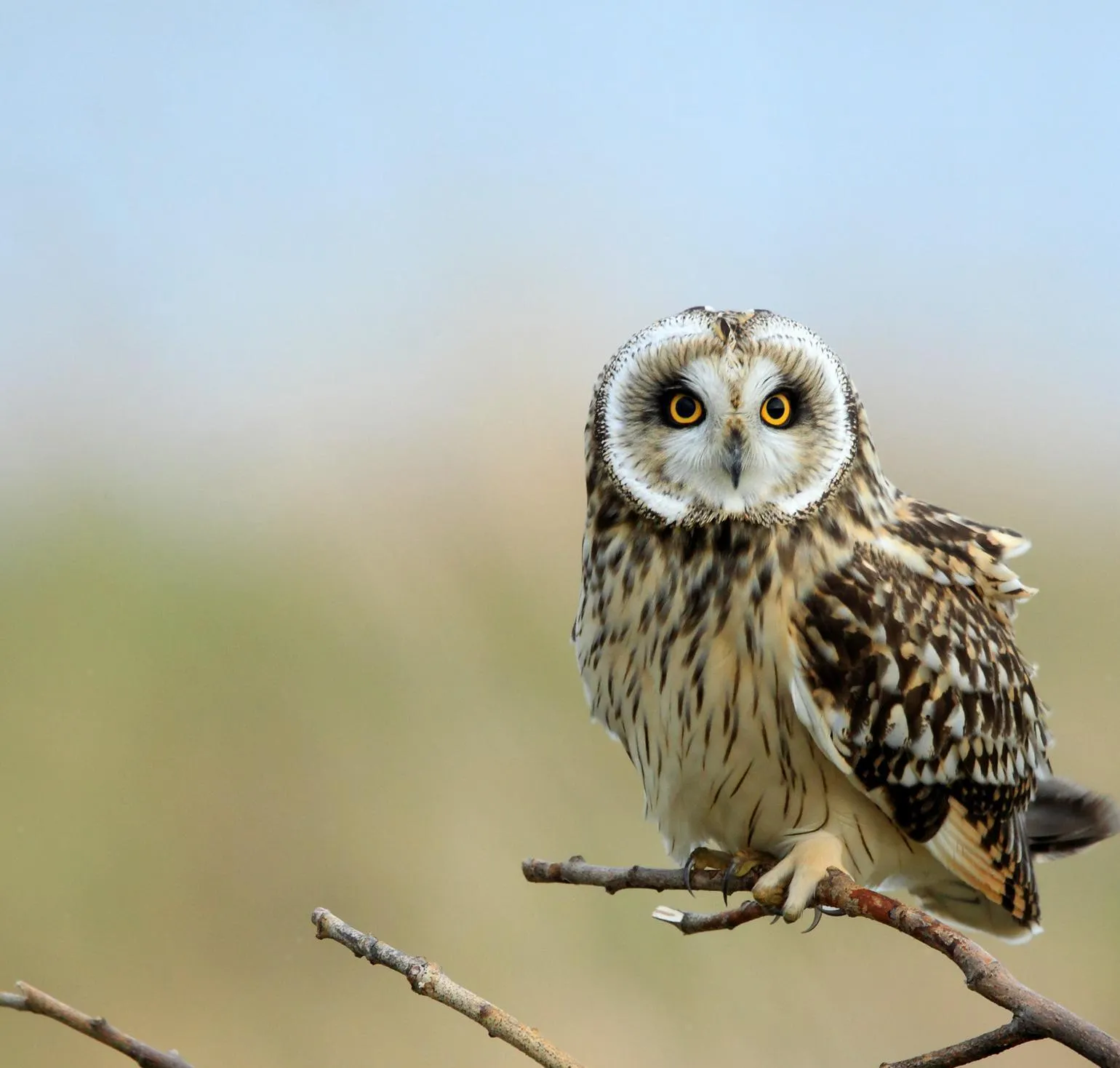
Short-eared Owls are medium sized owls with mottled brown bodies, pale under-wings and yellow eyes. They are often seen hunting during the day. In winter, there's an influx of continental birds (from Scandinavia, Russia, Iceland) to northern, eastern, and parts of central southern England, especially around the coast. They are of European conservation concern and so are an Amber List species.

Call

Short-eared Owl

Daniel Lane / xeno-canto

Key features to look out for

  • Striking yellow eyes surrounded by dark feathers
  • Pale underparts with dark streaks
  • Mottled brown and buff head and wings
  • Rounded head with barely visible ear tufts
  • Broad wings and a smooth, buoyant flight style

Conservation status

Short-eared Owls are currently on the Amber List of Birds of Conservation Concern. Their numbers fluctuate depending on prey availability and habitat conditions.

Where and when to see them

Difficulty rating - Medium

Short-eared Owls are active during the day, which makes them easier to spot than most. But their camouflage is excellent, and they often perch low to the ground, so you’ll need sharp eyes and a bit of patience. There are Shorties in the UK all year round, but now is a great time to see them as more join us from Scandinavia, Russia and Iceland to escape the freezing conditions further north.  

Short-eared Owls breed in the uplands, on moorlands and rough grasslands. But during the winter they’re much more widespread, turning up in lowland areas and around the coast – so keep an eye out for them hunting over fields, marshes and wetlands.

Key

  1. Resident
  2. Passage
  3. Summer
  4. Winter
* This map is intended as a guide. It shows general distribution rather than detailed, localised populations.
  1. Jan
  2. Feb
  3. Mar
  4. Apr
  5. May
  6. Jun
  7. Jul
  8. Aug
  9. Sep
  10. Oct
  11. Nov
  12. Dec

Where best to see them

Short-eared Owl, adult hunting over rough grassland
Short-eared Owl
Birds of the month

Head outside and discover fascinating birds each month. Read on for top ID tips, what to listen for, and where to see them.

Key facts