Avian flu: RSPB calls for a moratorium on gamebird and Mallard releases in the UK in 2025
We discuss the risk posed by governments across the UK by allowing the release of captive reared Mallards and gamebirds for shooting this year – given the ‘high’ levels of highly-pathogenic avian influenza (HPAI) currently circulating. Additionally, we highlight the urgent need for all four governments to effectively licence the release of these species on all sites to manage disease risks.

On this page
Current avian flu situation
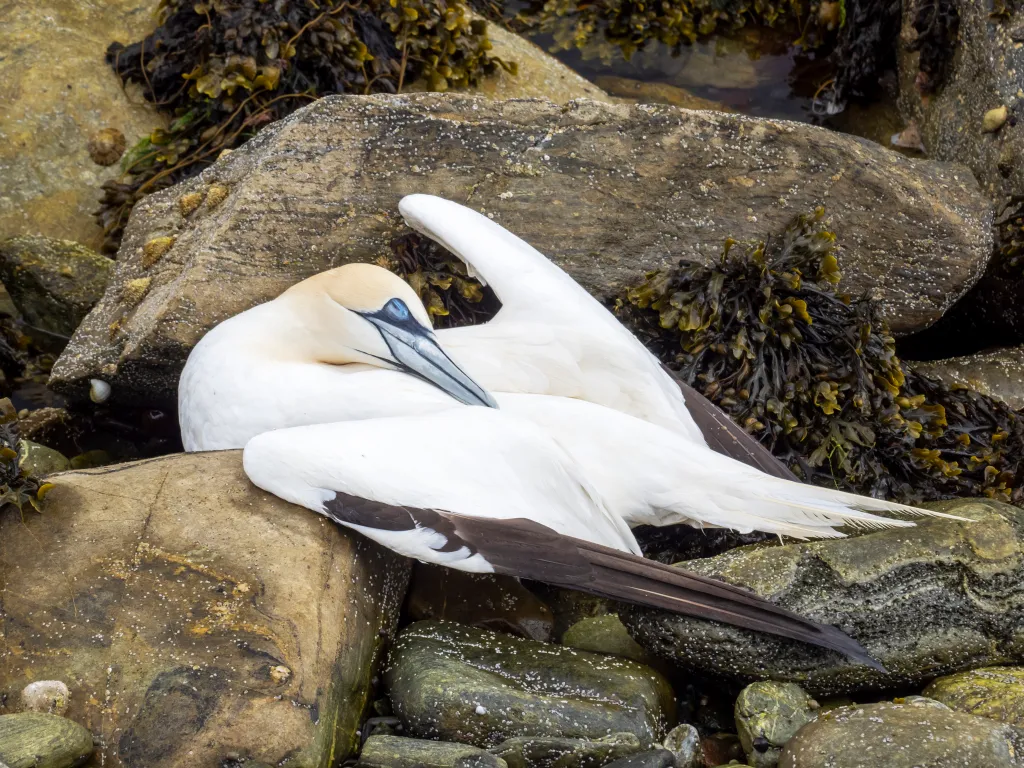
Across winter 2024/25, there have been large numbers of avian flu cases in waterfowl, birds of prey and gulls – including cases in White-tailed Eagles and Red-listed species such as Great Black-backed Gull, Starling and Curlew. The UK poultry sector has also been hit hard. There have been a significant number of outbreaks at captive bird premises since November, including to our knowledge at least one outbreak at a gamebird rearing farm.
To try and limit the spread of this devasting virus, Avian Influenza Prevention Zones (AIPZs) mandating enhanced biosecurity in captive birds have been in place across the UK since January, and poultry gatherings have been prohibited since February. Housing orders requiring captive birds to be kept inside were also put in place during the winter in Northern Ireland and in a significant proportion of England, however these have been lifted over the last week due to an assessed decrease in the risk to captive birds.
As is expected at this time of year - with wild birds leaving winter aggregations and the weather getting warmer - we have started to see a decrease in wild bird cases. Sadly however, the avian flu risk level for wild birds is still assessed by Defra as high and there is evidence of widespread circulation of the virus across the UK. There is no guarantee that the slowing of cases will continue. For example, in 2022 we saw a similar dip in cases before the virus then tore through seabird colonies. As we head into the breeding season - with memory of the devastation seen in 2022 and 2023, there is real concern about what the levels of avian flu circulating in the UK will mean for wild birds.

How could gamebird and Mallard releases increase avian flu risk?
In a typical year, it has been estimated that over 40 million Pheasants and Red-legged Partridges, and 2.6 million Mallards are reared in captivity and then released into the UK countryside ahead of the shooting season (Madden 2021). It is estimated that the total biomass of released birds is more than twice the spring biomass of all native UK breeding birds combined (Blackburn and Gaston 2018). The result is a drastic increase in susceptible birds present in the environment, at high densities which provide the opportunity for rapid disease spread, and with no immunity from prior exposure as new birds are released each year. This amplifies the risk of transmission of avian flu, and other diseases, within the UK and risks maintaining disease in areas, or at times of year, where it might otherwise fade out.
A 2022 Defra risk assessment concluded that during high-risk seasons such as 2022, the release of millions of captive Pheasants has a very high likelihood of infecting wild birds in the vicinity of release sites in many types of habitats. It also determined that released gamebirds could provide an additional source of susceptible birds as a reservoir of avian flu, could present a mechanism to maintain the virus in GB over the late summer/early autumn in the months leading up to the arrival of huge numbers of migratory wild birds, and could then be a population where mixing of existing and newly introduced strains could occur, creating opportunities for re-assortment between different virus strains, compounding issues for both wild birds and poultry.
A recent scoping review from Natural England concluded that release of Mallards has ‘a very high likelihood of major consequences to populations of wild birds’ in the context of increasing HPAI spread. And that released Mallards ‘have potential to act as both a reservoir and amplifier of [avian flu] and to play a major role in [avian flu’s] continued persistence and dissemination. [Natural England’s] confidence in these conclusions is high as there is extensive literature on avian influenza in Mallards’. Mallards can carry the virus without obvious symptoms, allowing them to move the virus over large distances (Teitelbaum et al. 2023; Spackman et al. 2023). Infected Mallards excrete high levels of virus, increasing infection loads in waterbodies and potentially exposing many other aquatic species.

It’s a ‘One Health’ issue
Avian flu continues to pose a risk to wildlife health and biodiversity conservation, domestic animals, human health, livelihoods, food security and economies globally. Tackling this disease requires governments to take an integrated "One Health” approach to managing risks, which recognises that human, wildlife, captive animal, and environmental health are closely linked. The importance of this approach is highlighted by the situation in the United States, which we covered in a previous blog.
Gamebirds occupy a unique position in that they often have close contact with humans (during rearing, shooting and consumption), with farm animals (often being released on, or near, farms, e.g. Reid et al. 2024), with wild birds (both in rearing pens, and after release), and with mammals (notably, predator species like foxes, as well as gundogs during the shooting season).
As a result, there is a risk of cross-species transmission where outbreaks of disease occur in gamebirds and there is growing evidence of spill-over from gamebirds into wildlife. In 2021, an outbreak of avian flu in Pheasants in Finland was linked to cases of the virus in Otter, Fox and Lynx (Tammiranta et al. 2023). In the UK last Autumn, there were positive cases of avian flu confirmed in Buzzards found not far from a mass mortality event among released Pheasants.
A recent study found that between August 2022 and January 2023 (which spans the time from Pheasant release until the late end of the shooting season) there was a significantly higher likelihood of an avian flu outbreak occurring in poultry farms where higher abundances of non-native gamebirds were present in the local area (Vickers et al. 2024). Experimental studies have also demonstrated that Pheasants are highly susceptible to avian flu, and can transmit it onwards to both other Pheasants, and poultry, most likely through contamination of the local environment (Seekings et al. 2024).

Current regulation of gamebird and Mallard releases
Since 2021, releases of gamebirds (Pheasants and Red-legged Partridges) on specially protected sites, or within 500m of their boundary, have been regulated in England. Following the 2022 outbreak of HPAI, in 2023 Natural England announced further restrictions on releases on or near to Special Protection Areas for wild birds (SPAs) to reduce the disease risk to the species for which these sites were designated. Outside these protected sites in England (which cover approximately 8.5% of England’s land area), releases on a Site of Special Scientific Interest (SSSI) may also require permission. There is very little regulation of gamebird releases elsewhere in the UK, although in 2023 Natural Resources Wales recommended that releases should be licensed because the current regime is inadequate to protect the environment; the Welsh Government has so far been silent on the matter.
Other mechanisms which can restrict gamebird releases are housing orders and disease control zones around infected captive bird premises. These measures are however designed to protect captive birds from current HPAI risks by keeping them inside. There can be a lack of coordination between the need to house captive birds for this purpose, and the need to prevent gamebird releases as a preventative measure. For example, avian flu risk levels can fluctuate across the season and – as we have seen this week - restrictions on housing may be lifted if the assessed current risk to captive birds drops. Gamebird releases may still be inadvisable to prevent amplification of disease risks, to prevent maintenance of the virus in wild bird populations, and to prevent high densities of gamebirds being present in the environment later in the year when migratory birds return and risk levels often increase.

Defra’s 2025 Habitats Regulations Assessment (HRA) for gamebird releases on SPAs in England has determined that for most SPAs, it won’t be possible to authorise releases this year as the potential avian flu risk posed to feature species is too high. In 2025, the general licence allowing releases (GL45) will therefore not be issued and Natural England - who are managing the gamebird licences for specially protected sites in England - has advised that for most SPAs individual licences are also unlikely to be possible, although delayed release is being considered in some cases.
Critically, as Mallard releases are not included in the existing regulation for specially protected sites in England, these can continue as usual on SPAs in the absence of other restrictions (i.e. in the absence of housing orders/disease control zones).
This raises serious questions:
1. If Pheasant and Red-legged Partridge releases are not being permitted on most SPAs in England this year due to HPAI risk, why are Mallard releases continuing on these SPAs unassessed and unregulated?
Mallard releases do not require a licence on specially protected sites in England because this regulation pre-dates the global avian flu outbreaks: the regulation was originally designed to prevent ecological damage caused by gamebirds, not avian flu risks. However, it’s been four years since avian flu hit the UK and updating this regulation to include Mallards is long overdue. We have flagged our concerns about the role of Mallard releases in the spread of avian flu with Defra and the UK Statutory Nature Conservation Bodies. Despite the known disease risk posed by Mallard releases, Defra has advised that it has still not considered inclusion of Mallards in this existing regulation; they have not included released Mallards in their risk assessments for gamebird releases on SPAs; nor have they included Mallards in their current research programme into the impacts of gamebird releases.

2. If Pheasant and Red-legged Partridge releases are not being permitted on most SPAs in England this year due to HPAI risk, why are releases being allowed outside of these areas anywhere in the UK?
Most wild bird populations exist outside SPAs, and in addition to releases potentially impacting local disease risks, the scale and widespread nature of gamebird and Mallard releases across the four countries of the UK amplifies risk at a UK wide scale.
Moreover, SPAs do not exist in isolation and birds do not recognise boundaries. Releases occurring outside the 500m buffer zone of SPAs could still increase the risk to feature species inside SPAs. Gamebird releases could serve to amplify disease risk within the area – through environmental contamination and spillover into bridging species, regardless of whether direct contact between gamebird and feature species occurs.
How can the UK and devolved Governments manage these risks?
It is clear that when avian flu risk is classed as high for wild birds, releases of gamebird and Mallard are inadvisable. The four UK governments have all seen first-hand the devastation the virus can cause to wild birds and poultry and given the known risks, need to take a precautionary “One Health” approach and regulate this activity. The RSPB calls for a moratorium on captive reared gamebird and Mallard releases across the UK in 2025.
It is also essential that all four UK governments recognise that effective regulation is needed in all years to manage disease risks as the avian flu virus is unpredictable, can change, and is also not the only disease risk posed by gamebirds releases (see the RSPB 2020 Gamebird Review).
For example, Pheasants are competent hosts for the causative agent of Lyme disease, Borrelia spp., and can harbour large numbers of ticks that act as vectors of this pathogen. A recent study found that woods with Pheasant releases had both higher numbers of adult ticks compared to control areas, and the ticks had almost 2.5 times higher prevalence of Borrelia (Michels et al. 2025). Given the widespread distribution of Pheasant releases across the UK, this suggests Pheasant releases could be playing a role in amplifying the risk of this disease.
What we need to see
The RSPB is calling for governments across the UK to license all future releases of reared gamebirds and Mallards (not just those on protected sites), underpinned by a statutory code of practice, with mandatory reporting of movements and releases. We believe statutory licensing is the only way to sensibly, proportionately and effectively regulate gamebird releases, and manage the associated disease risks. Given the severity of the ongoing global outbreak of avian flu, this should be developed as a matter of urgency. We are keen to engage with all interested parties in the design of a future licensing regime in each of the four UK countries.
Read more:
Published: 16 May 2025