Feature

Protecting ancient woodland, ancient trees and veteran trees

They’re valuable habitats but what exactly are they and how are they threatened by development?

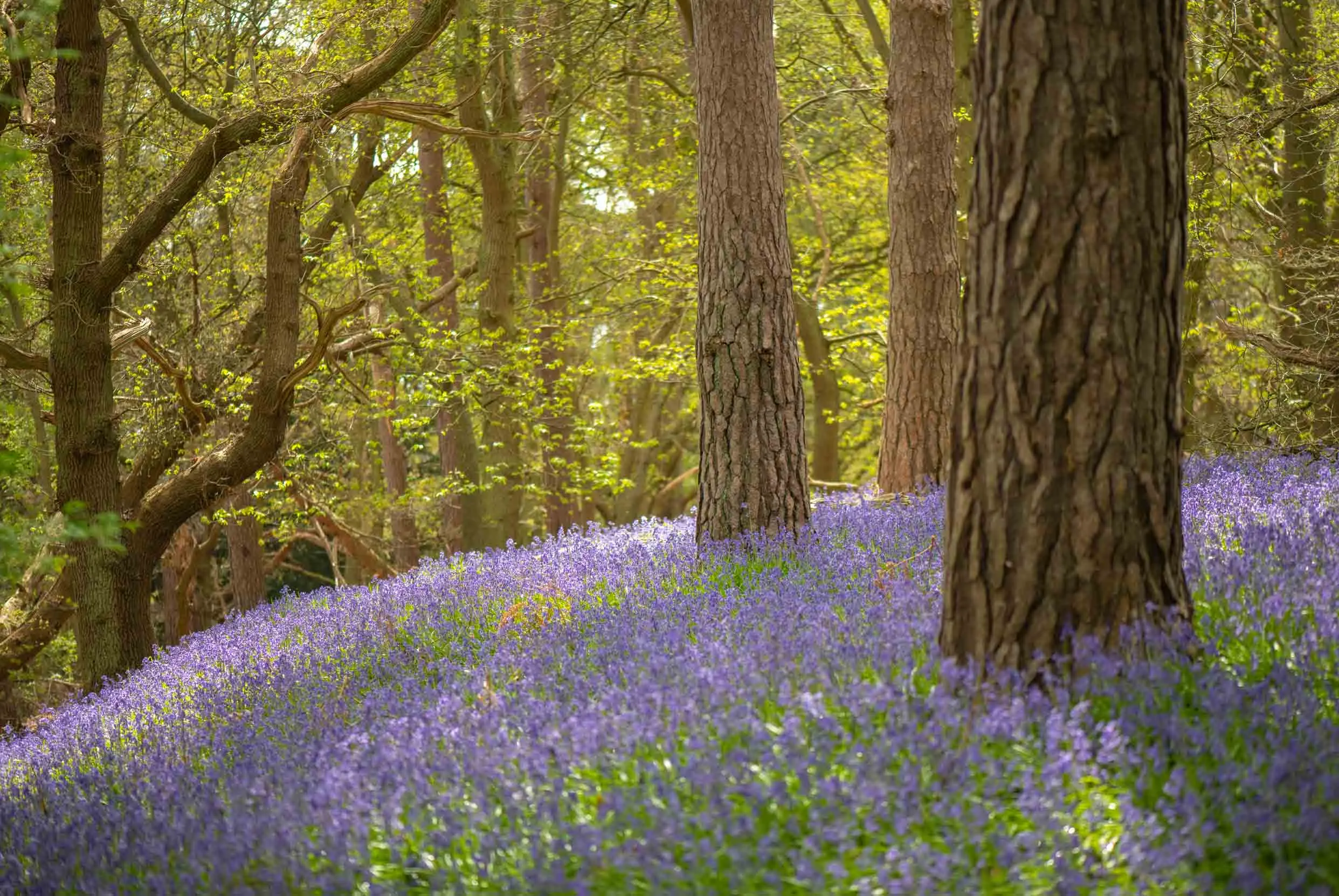
Purple flowering Bluebells cover the woodland floor of The Lodge.
On this page

Last updated: 2 July 2025

What is ancient woodland?

Ancient woodlands are defined as any area that has been wooded continuously since 1600 AD (or 1750 AD in Scotland). According to the Woodland Trust, they comprise just 2.5% of the UK’s land area. As well as containing ancient and veteran native trees, these habitats also include specialist plant and fungal communities which have remained relatively undisturbed over long periods of time. In turn, they support important invertebrate, bird and mammal species.  

Because ancient woodland habitats, and individual ancient and veteran trees, have developed over such long periods of time (often many hundreds and sometimes more than a thousand years), these habitats and features are considered irreplaceable. 

What is an ancient tree?

Ancient trees are defined by their age. They have passed maturity and are incredibly old in comparison to other trees of the same species. As different trees age at different rates, there is no set age for a tree to be classed as ancient. Ancient trees can be identified by some common characteristics

What is a veteran tree?

A veteran tree is not as old as an ancient tree but has some similar features which will develop further over time. Veteran trees can be thought of as the ancient trees of the future. 

How do I find out if a woodland or tree is ancient?

You can use the following resources to identify ancient woodland, ancient trees and veteran trees. 
 

  • Natural Resources Wales Ancient Woodland Inventory – here you can view ancient woodland on an interactive map or via DataMapWales. You can also submit enquiries about the designation of a woodland in the inventory.  

  • The Woodland Trust’s ancient tree inventory (click on ‘Tree search’ and enter a postcode) – only a small proportion of ancient or veteran trees are recorded on this inventory 


Ancient woodlands that are smaller than two hectares may not appear on these inventories. It’s therefore worth checking with your local record centre in case they hold data on smaller ancient woodlands.  

It’s important to note that not all ancient woodland will be recorded on these inventories, so if a site contains evidence of ancient woodland but it is not on the inventory you should contact Natural Resources Wales

In the middle of a grassy meadow stands a large Oak Tree with green leaves.

Development threats

Development proposals can pose a serious threat to ancient woodland, ancient and veteran trees, and the wildlife that they support. Effects of development can be both direct and indirect.  

Planning Policy Wales (paragraph 6.4.43, page 159) states that ancient woodland, ancient trees and veteran trees ‘are to be afforded protection from development which would result in their loss or deterioration unless very exceptionally there are significant and clearly defined public benefits; this protection must prevent potentially damaging operations and their unnecessary loss’. 

An example of exceptional circumstances could be an infrastructure project whose public benefit is considered to be significant enough to outweigh the loss or deterioration of the habitat.  

The starting point for any development proposal should be to identify ways to avoid harmful impacts to ancient woodland or ancient and veteran trees, such as looking for alternative sites or redesigning the scheme. The next step is then to reduce or mitigate any impacts that can’t be avoided, and as a last resort compensation should be used to offset any unavoidable remaining impacts. 

This ‘avoid, mitigate, compensate’ approach is known as the mitigation hierarchy.  

If a local planning authority (LPA) decides to grant planning permission that results in unavoidable loss or deterioration of habitat (where exceptional reasons are demonstrated), they should apply the mitigation hierarchy to avoid significant harm to biodiversity.  
Woodland in full leaf, Padley Gorge, Peak District National Park
Top tip

If you are concerned about a development proposal that threatens ancient woodland/trees or veteran trees, carefully review the planning application documents to make sure that the applicant has applied the ‘mitigation hierarchy’ approach as described above.

The application should demonstrate why any loss cannot be avoided and propose sufficient mitigation or compensation that needs to be agreed with the LPA (usually the LPA’s Tree Officer).

Submit an objection to the LPA if you don’t think the application has been properly justified.  

Share this article