Take action now
Nature must not be sacrificed in the fight against climate change. Add your voice and tell SSE and the First Minister to Cancel Berwick Bank.
Tens of thousands of seabirds are threatened by a vast offshore wind farm off the East Lothian and Fife Coasts.


In July 2025, the Scottish Government granted consent for the development of Berwick Bank Offshore Wind Farm. The decision came despite warnings, from RSPB Scotland and many others, of the catastrophic impact the project would have on our seabirds.
The RSPB strongly supports the development of renewable energy to tackle climate change, one of the greatest threats to wildlife. However, it must not be at any cost. The Berwick Bank site is incredibly important for some of our most threatened seabird species. There are many other places around our seas where offshore wind could be developed without such devastating impacts on seabirds.
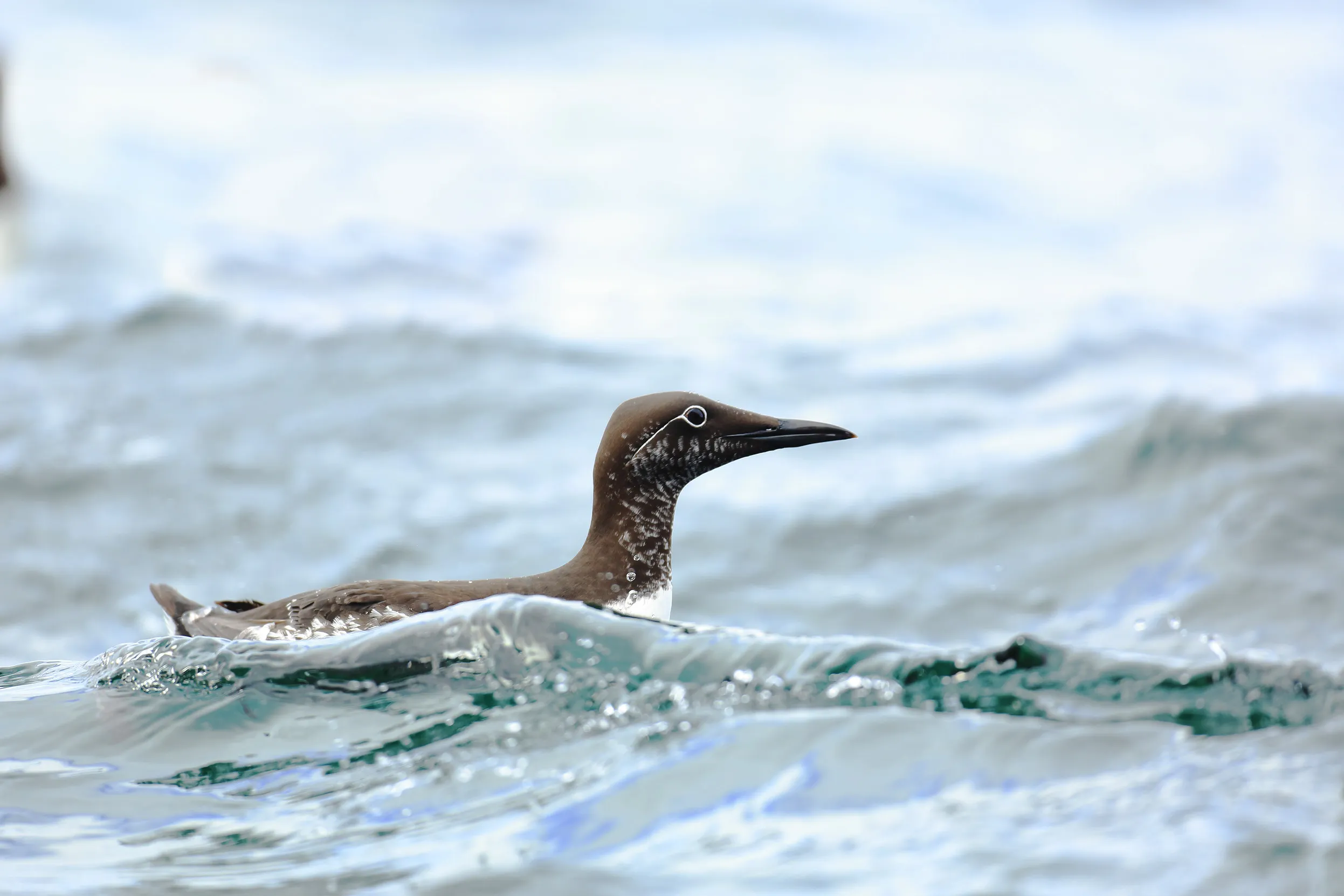
The developer, SSE Renewables, own predictions are that thousands of Guillemots, Kittiwakes, Gannets, Razorbills and Puffins will be killed over the project's lifetime, putting the conservation of these species at huge risk.
Berwick Bank has been granted consent despite catastrophic impacts predicted on multiple protected seabird colonies. Scottish Ministers are now required to ensure that compensation for those impacts is in place before the project can start operating.
However, the impacts of Berwick Bank are so great that an appropriate level of compensation may not be possible. In addition, efforts to achieve that compensation could use up all the compensation available for all developments. This would prevent the progression of multiple other less harmful offshore wind projects.
In support of the campaign to scrap Berwick Bank, Scottish Wildlife Trust Chief Executive, Jo Pike, said,
“Berwick Bank is simply the wrong development in the wrong place. The impact this development would have on our internationally important seabirds at a time when they are already vulnerable is unjustifiable.
“This is especially true when combined with the fact that there are other options for development that would have a lesser impact on nature as well as higher energy generation than Berwick Bank. While it is imperative that we move to more sustainable energy, this must not be to the detriment of nature.
“Granting of consent for this development was the wrong decision and we urge the Scottish Government to listen to the call to reconsider.”
We’re asking you to stand with us and other wildlife charities in calling for Berwick Bank to be scrapped. By doing so, you could help to prevent the likely deaths of tens of thousands of endangered seabirds.
Nature must not be sacrificed in the fight against climate change. Add your voice and tell SSE and the First Minister to Cancel Berwick Bank.
Berwick Bank is planned to be built off Scotland’s east coast, in the Firth of Forth and Firth of Tay area. The site is dangerously close to vital feeding grounds and habitats for critically important wildlife populations.

“Berwick Bank is the deadliest single windfarm for birds we are aware of anywhere on the planet. It could devastate entire colonies of seabirds and help wipe out some species from the face of Scotland entirely.
“Scotland’s seabird colonies are one of our national treasures, from the Puffins of the Isle of May to the Gannets of Bass Rock. Scotland is internationally important for seabirds and they need our protection now more than ever.”
Until a recent outbreak of avian flu, the Bass Rock Northern Gannet colony was the world’s largest. The wider area also supports critically important Kittiwake, Guillemot and Razorbill colonies. This abundance of wildlife makes the region one of the most valuable places in the world for seabirds.
As a result, the area is protected by a wealth of nature conservation designations. The Berwick Bank Offshore Wind Farm development threatens these species and protected sites.

Over 70% of Scotland’s seabird species are already in decline. They’re facing many threats, including climate change, unsustainable fishing and avian flu. The Berwick Bank development could push much-loved species like Puffins and Kittiwakes closer towards local or even national extinction.
The Scottish Government’s own assessment predicts that the farm will kill 2,808 Guillemots, 815 Kittiwakes, 261 Gannets, 154 Razorbills and 66 Puffins in the first year alone. Over its lifetime, it is expected to kill tens of thousands of birds.
This would be nothing short of disastrous.
The Berwick Bank site was first put forward as a potential site for an offshore windfarm well over a decade ago. The RSPB raised concerns in the strongest terms at that time, highlighting that the site was wholly inappropriate. Since then, many other offshore windfarms have been proposed in Scottish and UK waters.
The ScotWind leasing round alone includes 20 projects, with a generating capacity of around 30GW, dwarfing Berwick Bank's 4.1GW. While there will be concerning impacts on seabirds from some of these other projects, none are predicted to have anywhere near the catastrophic scale of impact on seabirds as Berwick Bank. For the sake of seabirds and climate action, some of these less damaging projects must progress instead of Berwick Bank.

Learn more about our position and the timeline of events so far.
Tell SSE and the First Minister to Cancel Berwick Bank.
Our team will be in touch to let you know more about how you can campaign for nature with the RSPB!
Join a flock of nearly 1.2 million people who are helping to protect our wonderful wildlife and wild places.


