
Become a member
Join 1.2 million people who are having a lasting impact for birds and nature.
An enormous 4.1GW offshore windfarm off the East Lothian and Fife Coast threatens some of our most important sites for seabirds.

We need to move to low carbon energy rapidly to tackle climate change – itself a major threat to wildlife. RSPB Scotland however strongly believe we must achieve this transition in harmony with nature. This means putting renewable technology in the right places, rigorously assessing potential impacts, and monitoring the ongoing impacts of consented development so we can learn for the future.
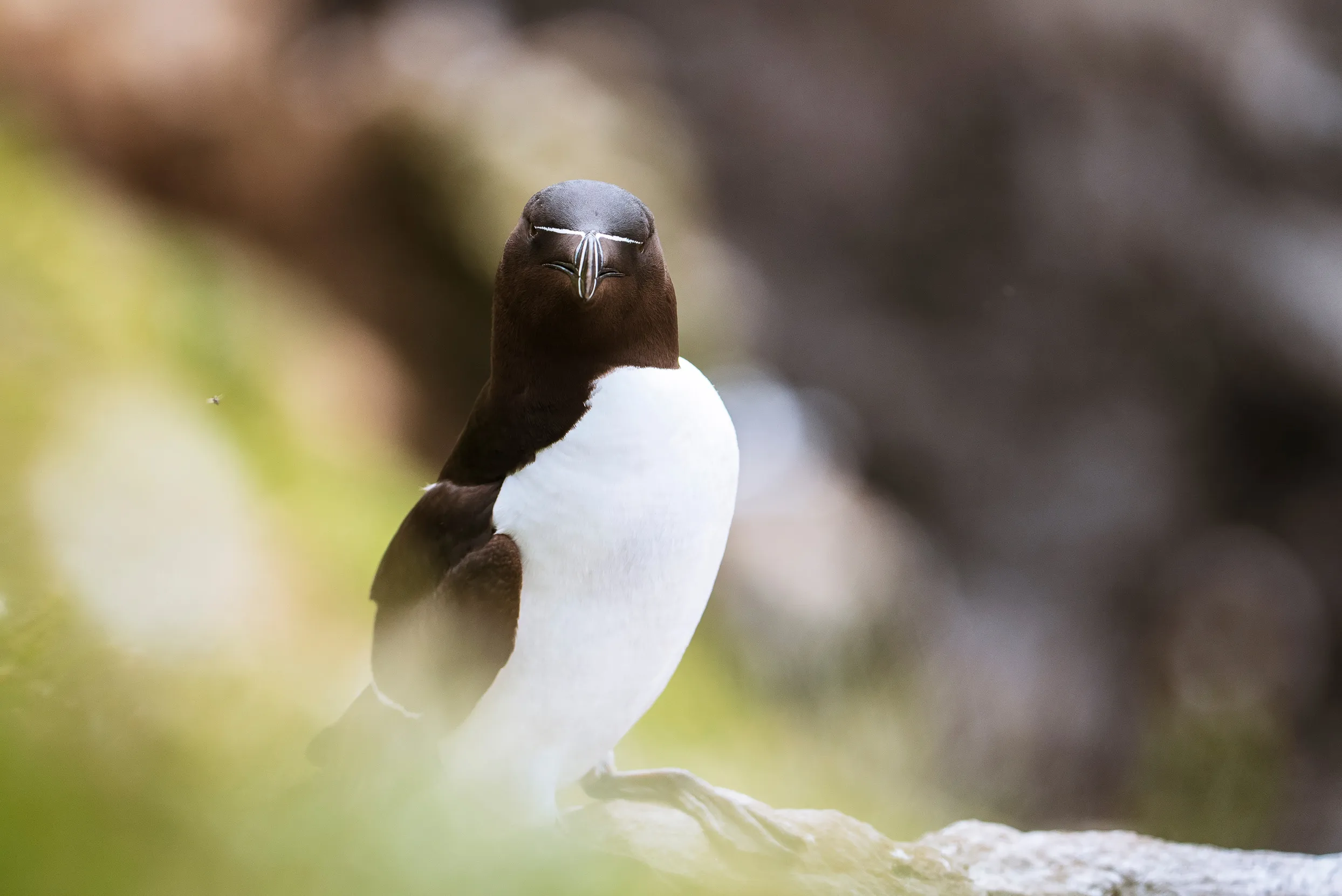
Berwick Bank offshore wind farm has been consented by the Scottish Government despite being in a highly important area for wildlife, especially seabirds. It is predicted to have severe impacts – the applicant predicts adult annual mortality of thousands of Guillemots, hundreds of Kittiwakes and scores of Razorbills and Puffins. The magnitude of these impacts is so significant it could likely hinder the conservation of sites designated to protect these species.Berwick Bank has been consented as an exception to the Habitats Regulations – a fundamental protection for Scottish wildlife. Although Scottish Ministers require the developers to demonstrate “sufficient” seabird compensation will be put in place before the project can start, it is not clear how the thousands of seabirds predicted to be killed can be compensated for.
Overall, we do not believe it is the right location for an offshore wind farm and urge the Scottish Government to consider other less damaging locations that would together deliver more energy than Berwick Bank without such devastating impacts. We will be carefully scrutinising the details of the consent documents and considering what further steps we will take.
The Forth and Tay area is home to a fantastic abundance of wildlife. The area includes the world’s largest Northern Gannet colony at Bass Rock; Kittiwake colonies at Fowlsheugh to the north and St Abbs to the south; and Gannet, Kittiwake, Puffin, Guillemot, and Razorbill colonies on the Isle of May and other Forth Islands.
These populations make this region one of the best places in the world for seabirds and it is duly protected by a wealth of nature conservation designations including national Sites of Special Scientific Interest (SSSI) and international Special Protection Areas (SPA) under the European Birds Directive. This development threatens species and protected sites.
Meanwhile, Scotland’s seabirds are already in crisis, with 70% of species in decline. They’re facing many threats, including climate change, unsustainable fishing, Avian Flu. This single development could push much-loved species like Puffins and Kittiwakes closer towards national extinction.
Join 1.2 million people who are having a lasting impact for birds and nature.
RSPB recognise climate change is the greatest threat to nature and support the transition to renewable energy to help reduce greenhouse emissions. Offshore wind has a part to play in a just transition away from Scotland’s dependence on fossil fuels.
Berwick Bank is sited 2km from the boundary of the Outer Firth of Forth and St Andrews Bay Complex Special Protection Area (SPA). This is one of the most diverse marine bird concentrations in Scotland and, during the breeding season, provides feeding grounds for a large assemblage of over 100,000 seabirds. It is also within foraging range of SPAs designated for their importance to breeding Northern Gannets (Morus bassanus), Atlantic Puffins (Fratercula arctica), Black-legged Kittiwakes (Rissa tridactyla), Razorbills (Alca torda) and Common Guillemots (Uria aalge). This includes the Forth Islands SPA (the location of Bass Rock – the largest gannetry in the world), Fowlsheugh SPA, and St. Abbs to Fast Castle SPA. SPAs are internationally important sites for birds and so subject to the highest level of protection.
As identified by the applicant, the proposed array area itself contains important spawning and nursery habitat for sandeel and other forage fish species. Sandeel are a key prey species for several seabird species (including Puffin, Kittiwake, Razorbill and Guillemot) and large numbers of these species have been identified within the proposed development array area especially during the breeding season by the applicant’s site surveys.

Offshore wind development located in significant and highly sensitive areas can have substantial negative impacts on the natural environment, partially seabirds. Seabirds are relatively long-lived, and as a result, their populations are sensitive to small increases in adult deaths. Their survival and productivity rates can be impacted by offshore windfarms directly (i.e. collision) and indirectly (e.g. displacement from foraging areas and having to use more energy to reach feeding grounds). They are also already under severe pressure. Between 1986 to 2019 the number of breeding seabirds in Scotland has declined by 49%. On top of this, seabirds have also been impacted by Highly Pathogenic Avian Influenza (HPAI) outbreaks. At some seabird colonies, such as the Northern Gannets at Bass Rock, this virus decimated breeding attempts in 2022.
The predicted impacts of Berwick Bank Offshore Wind Farm are extremely large. In the first year alone, the development is predicted to kill 2,808 Guillemots, 814 Kittiwakes, 260 Gannets, 154 Razorbills and 65 Puffins. Over its lifetime, it is expected to kill tens of thousands of birds, threatening important populations.
Following a review of the application, RSPB Scotland did not consider the search for alternative solutions performed by SSE Renewables to be adequate. The applicant dismissed Scotwind sites without proper assessment of whether they would meet the same objective as the proposed development and whether they would be less harmful.
We also do not believe that the proposed compensation measures are sufficient. There are evidence gaps around the colony compensation measures in terms of the species targeted, the feasibility of their implementation and their effectiveness. The proposed fisheries compensation measure to limit sandeel fishing is also inadequate. Scottish sandeel fisheries were closed in March 2024, a measure that RSPB greatly welcomed. We view it as a vital measure to build resilience in seabird populations in the face of mounting pressure from food shortages, offshore renewable energy development and Avian Flu. We do not consider it a legitimate way to compensate for an additional devastating threat to seabirds.
RSPB Scotland do not believe this is the right location for this type of development. We recognise there is a need for renewable energy and have sympathy with the applicant’s position. We appreciate the work they have done to understand the site. This unfortunately does not however make the impacts acceptable.
Overall, it is a highly sensitive area to place a windfarm. Inevitably the magnitude of the predicted impacts reflects this. The environmental aspects that make an area of sea a good nursery and spawning area for fish and foraging area for seabirds cannot be relocated. It is also not possible to relocate seabird breeding colonies. It is however possible to put an offshore windfarm development in a different location and there are alternative sites available where the same objective of this application would be met – and exceeded. We therefore must stand up for nature and object to the proposed development.
July 2025 – Berwick Bank application is consented, subject to a condition that requires seabird compensation before the project works start
May 2025 – The arbitration panel upholds the closure of sandeel fishing in UK waters
April 2025 – RSPB Scotland, Marine Conservation Society, National Trust for Scotland, Scottish Wildlife Trust and Scottish Seabird Centre write a joint letter to Scotland’s First Minister calling for Berwick Bank to be refused
November 2024 – The application is still under consideration.
End of October 2024 – The EU challenges the UK’s closure of sandeel fishing and sets up an arbitration panel.
March 2024 – The prohibition of the fishing of sandeel in the English waters of the North Sea and in all Scottish waters prevents EU vessels from operating this unsustainable fishery.
March 2024 – With partner organisations the National Trust for Scotland, the Scottish Seabird Centre, and the Scottish Wildlife Trust, RSPB Scotland writes to Gillian Martin MSP, urging the Scottish Government to reject the application - read the letter here - and watch a short film here.
November 2023 – RSPB Scotland respond to additional information submitted by applicant, maintaining our objection.
March 2023 – RSPB Scotland Object to the application.
January 2023 – The application for Berwick Bank Offshore Windfarm is submitted to Marine Scotland Licensing.