.jpg)
Discover more
Learn about Waxwings and where to see them.
Five winter wonders to discover this festive season.

With Christmas just around the corner, it’s easy to get swept up in shopping, wrapping and festive gatherings, and forget about the winter wonders waiting outside. But if you take a moment in nature this month, you could be treated to sights as magical as even the twinkliest Christmas lights – from flocks of Starlings performing their breathtaking aerial ballets to jewel-like Firecrests flitting through frosty branches.
Here’s our pick of five festive stars to look out for this month. Which one will top your Christmas wishlist?
With their slicked-back crests and lashings of dramatic black ‘eyeliner’, Waxwings are the punk rockers of the bird world. Their unusual name comes from the glossy red tips on some of their wing feathers, which look as if someone has dipped them in melted wax.
These gorgeous birds breed over in Scandinavia, but if berry supplies are running low in winter, they head to the UK in search of food. They travel in noisy flocks, raiding trees and hedges for fruit, before moving on as quickly as they came. If you’re lucky enough to encounter them, it’s a magical experience!
Waxwings sound as elegant as they look. Listen for their high-pitched, trilling calls – almost like the tinkling of a bell.

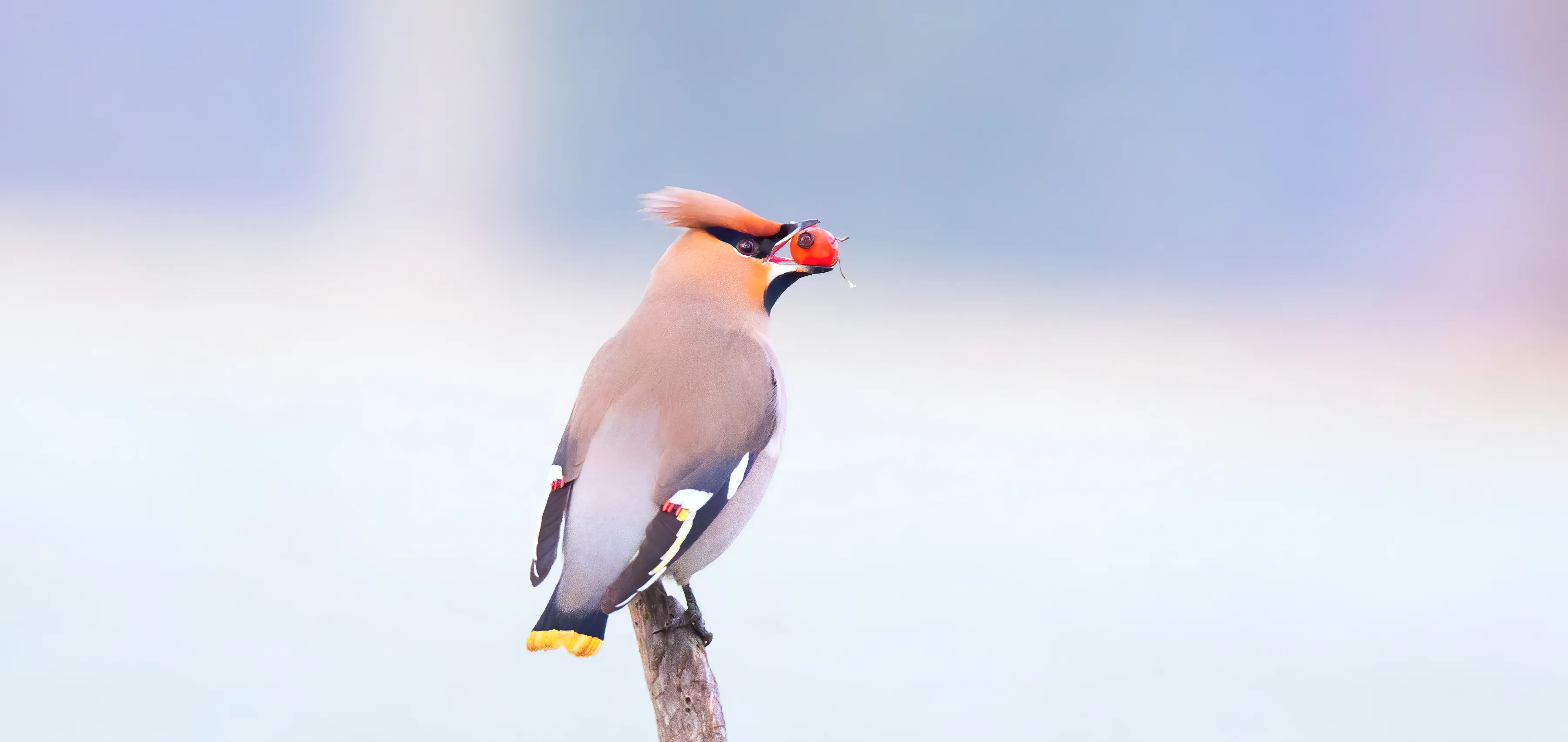
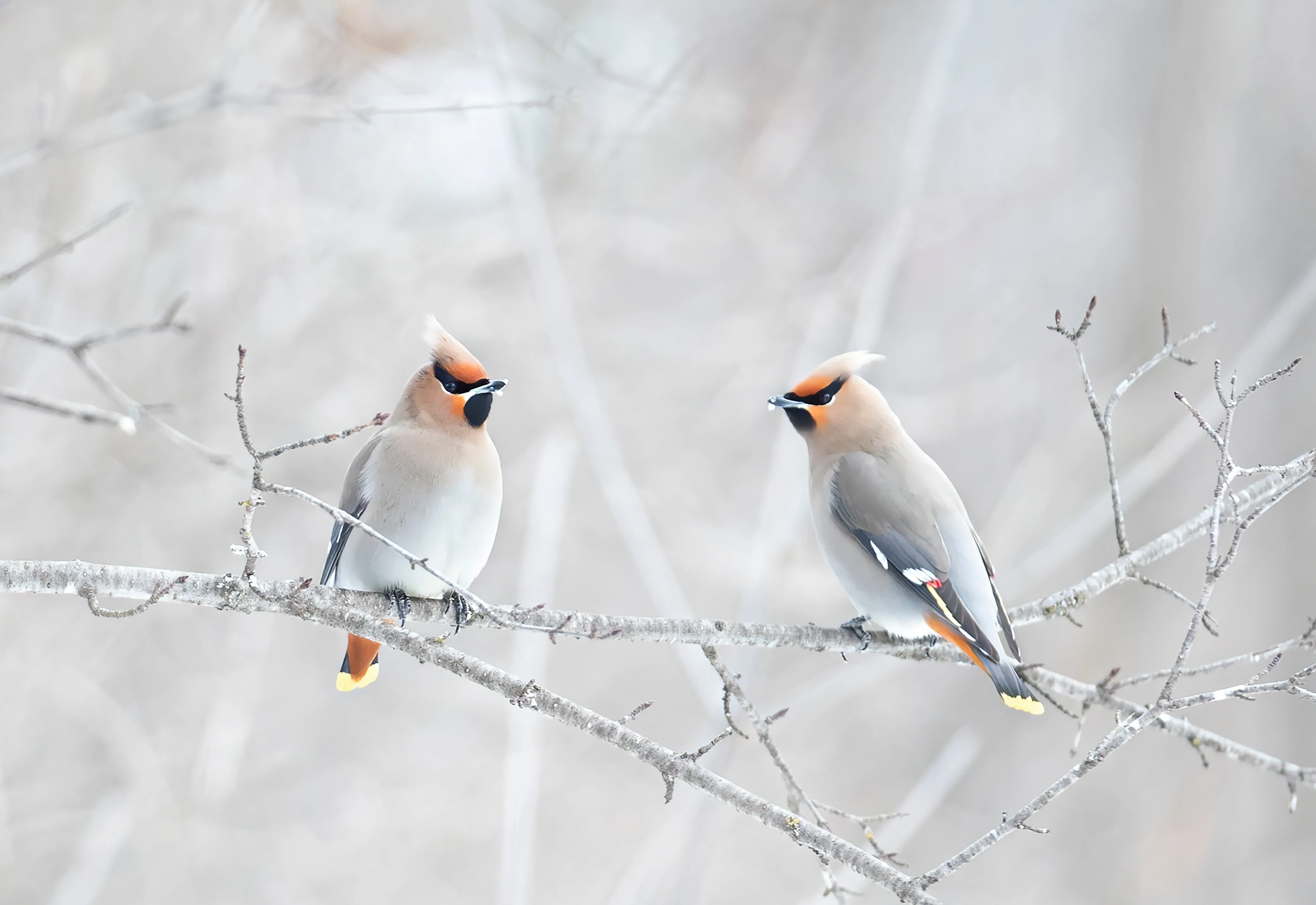

Waxwings roam in nomadic flocks, searching for berries. Your best chance of seeing them is in northern and eastern England, especially in places with Rowan and Hawthorn trees. They often turn up on suburban streets lined with berry bushes, and even in supermarket car parks – so keep a lookout when you’re doing your weekly shop!
Medium – Waxwing are unpredictable. In some years, only a few hundred will make the journey to the UK, but in others, thousands will flock to our shores in what’s known as an ‘irruption’. If you find a Rowan or Hawthorn tree heavy with fruit, you might strike gold – but you’ll need luck on your side.
Waxwings are on the Green list. Their numbers in the UK vary each winter, depending on berry supplies and weather conditions over in continental Europe.
Learn about Waxwings and where to see them.
Weighing in at just six grams – that’s the equivalent of six paperclips – Goldcrests are seriously small. In fact, they’re Europe’s tiniest bird! But don’t let their size fool you – these little birds are surprisingly tough. Each autumn, our resident Goldcrests are joined by reinforcements that fly here all the way from Scandinavia and Russia to make the most of our milder weather.
People once found it so hard to believe that such delicate birds could flap their way across the North Sea that they thought Goldcrests must hitch a ride on the back of migrating Woodcocks! This led to them being nicknamed ‘Woodcock pilots’. Nowadays we know that these tiny travellers are perfectly capable of making the journey all by themselves.
Goldcrests make a very high-pitched, thin ‘tsee-tsee-tsee’ call. Their song is a cheerful, repeating ‘deedly-deedly-deedly’, often ending in a trill. Sadly, many of us lose the ability to hear these super-high notes as we get older – so if you’re on the hunt for Goldcrests it’s always handy to have a young companion in tow to listen out for them!

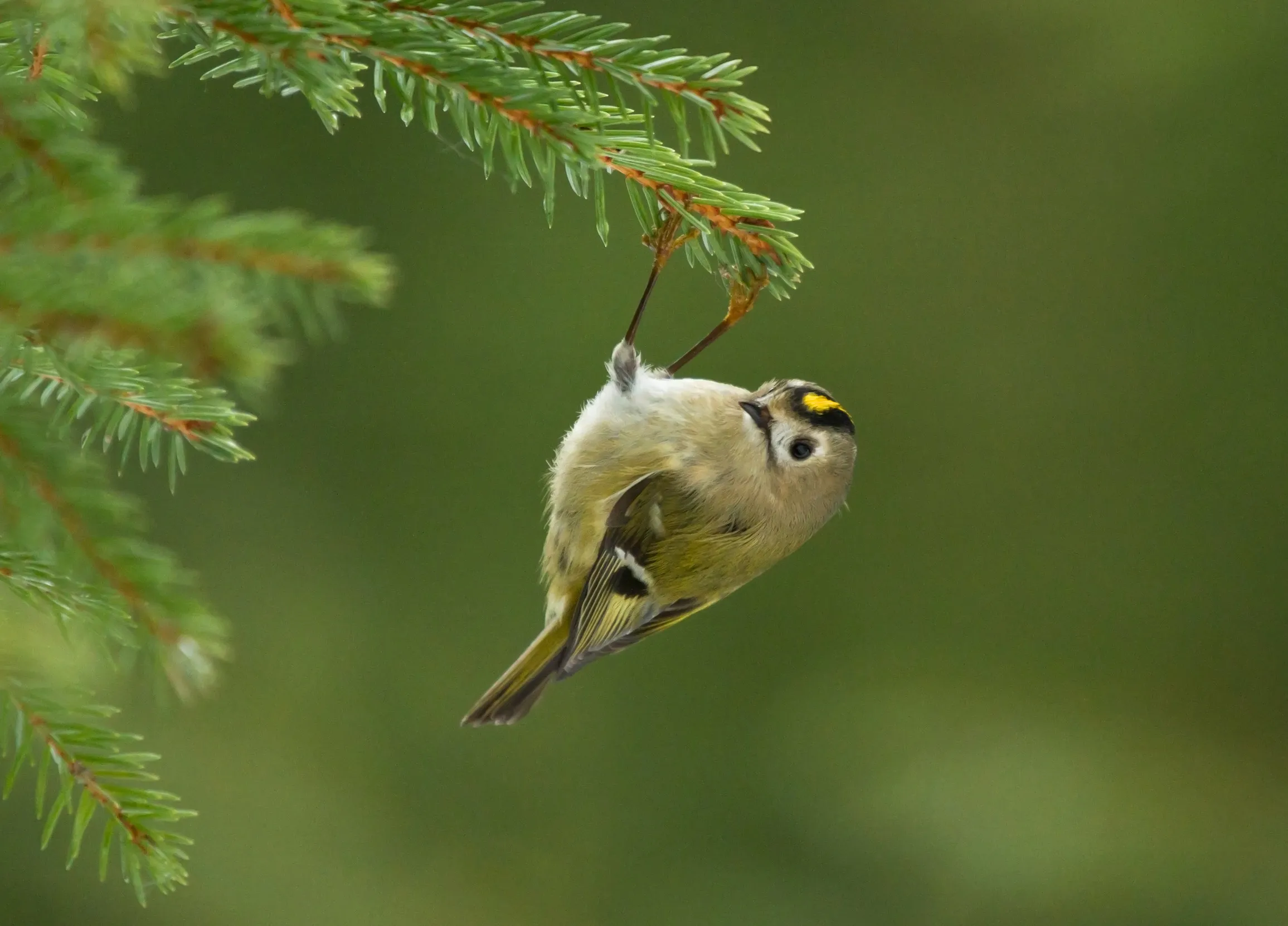


Goldcrests are widespread across the UK. You’re most likely to spot them flitting about in the treetops of conifer and mixed woodlands, though they’ll also visit parks and gardens with mature trees.
They’re incredibly active little birds and often dangle upside down as they hunt for insects hidden in the foliage. Winter is prime Goldcrest-spotting season, as migrant arrivals boost numbers. Goldcrests often tag along with roaming tit flocks – so if you think you’ve spotted a Blue Tit, it’s always worth a second look!
Medium – Goldcrests are quite common, but their tiny size and love of the treetops mean they can be easy to overlook.
Goldcrests are on the Green List of least conservation concern.

Learn about Goldcrests and where to see them.
With a scientific name that translates as ‘fire-capped little king’, the Firecrest has a lot to live up to, but this dazzling little bird doesn’t disappoint. Males sport a flash of vivid orange on their crown (yellow in females), and both sexes have a bold white ‘eyebrow’ stripe that gives them a permanently annoyed appearance. Think of them as the Goldcrest’s flashier (and grumpier) cousin.
Ever-so-slightly larger than Goldcrests, Firecrests are much rarer and were first recorded breeding in the UK in the 1960s. Like Goldcrests, they are constantly on the go – you might even be lucky enough to spot one hovering hummingbird-like as it searches for insects and spiders in the trees.
Firecrests have a very high-pitched ‘zit-zit-zit’ call that’s sharper and more insistent than a Goldcrest’s. Their song is a rapid, tinkling series of notes. Like with Goldcrests, these sounds are at the upper end of our hearing range, so they can be difficult for older ears to pick up.
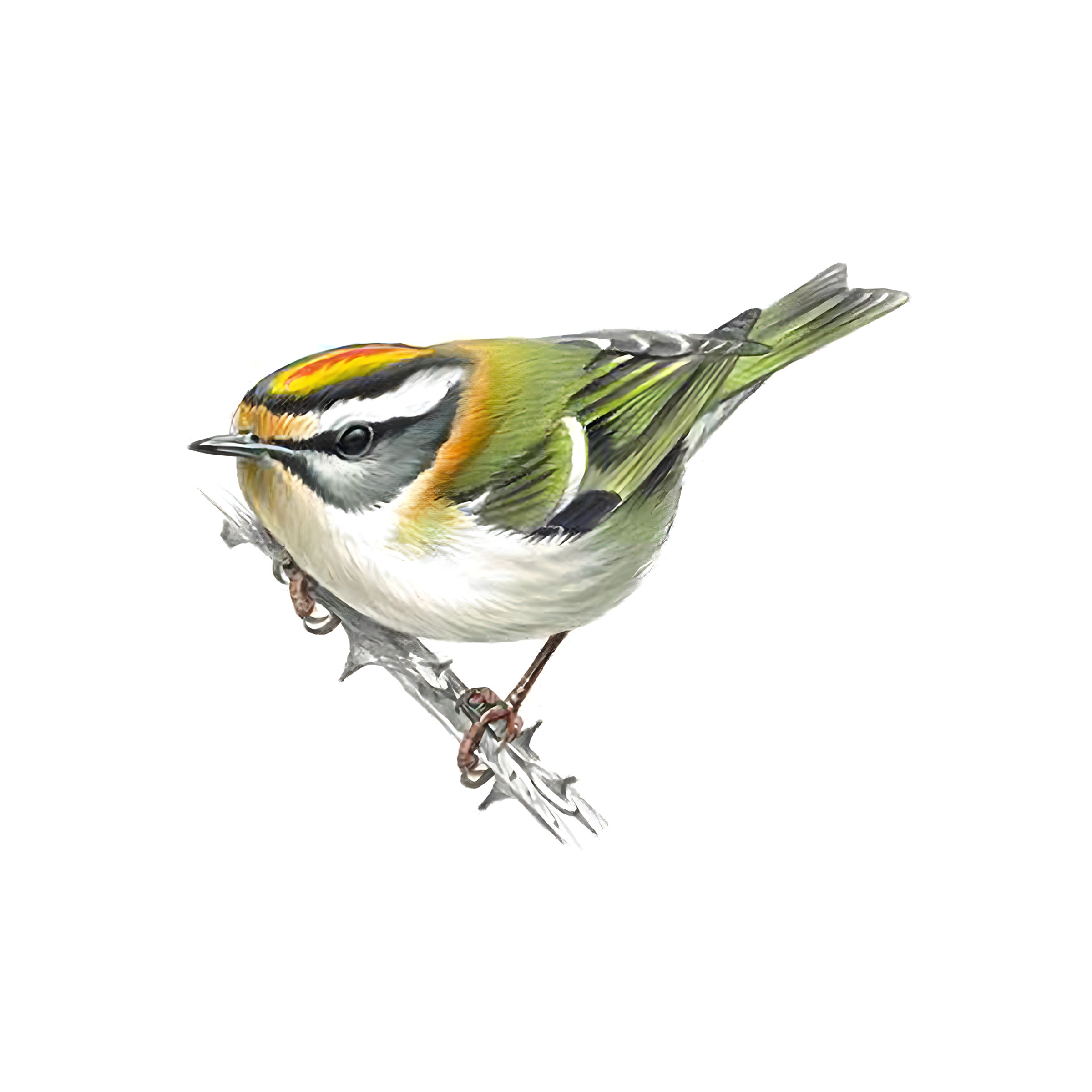


Firecrests love mature woodland with plenty of conifers, but they’ll happily explore mixed or broadleaf woodland with dense undergrowth. Like Goldcrests they’re endlessly busy, flitting about in search of insects high in the trees, but they will also venture down into scrub and bushes more often than their cousins. You’re most likely to spot them in southern England, where they breed, though winter migrants from continental Europe could pop up more widely.
Hard - Firecrests are much scarcer than Goldcrests in the UK, although their numbers are on the rise. You’ll need patience and a keen eye to catch a glimpse of these fast-moving little birds, but now is the best time to look, as winter migrants boost your chances.
Firecrests are on the Green List.

Learn about Firecrests and where to see them.
At this time of year, the humble Starling puts on one of nature’s most spectacular shows. As the sun dips below the horizon, hundreds – and sometimes thousands – of them gather in vast flocks that swoop and swirl across the sky, like the avian equivalent of the Red Arrows.
These dazzling displays are so perfectly synchronised that people once thought that Starlings could read each other’s minds, allowing them to twist and turn in perfect unison. Scientists have since figured out that Starlings have lightning-fast rection speeds, which mean they can mirror the flight path of the birds around them.
Starlings are real chatterboxes and their calls are a mix of whistles, chirps and clicks. They’re fantastic mimics too and have even been known to copy car alarms and mobile ringtones!
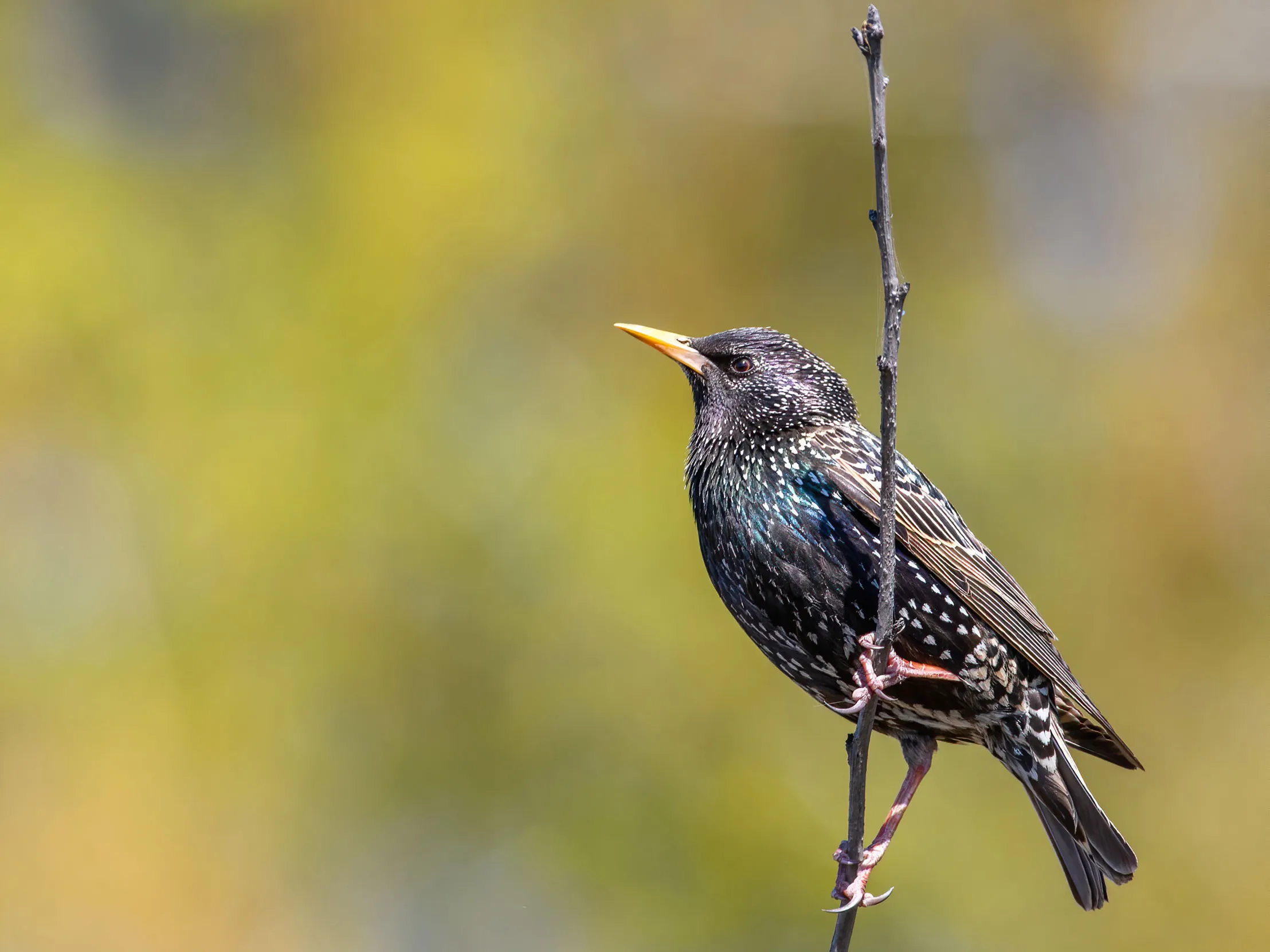
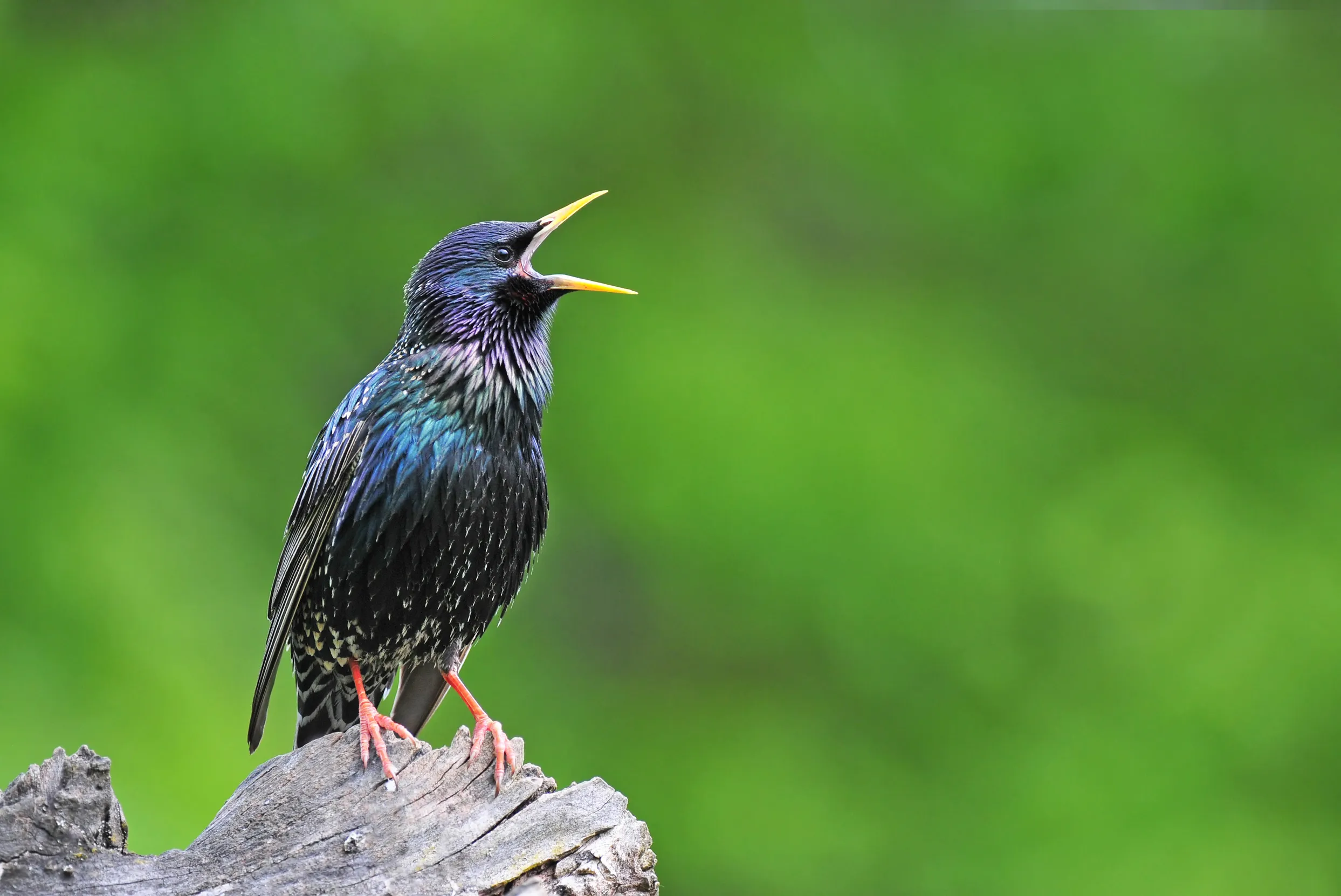
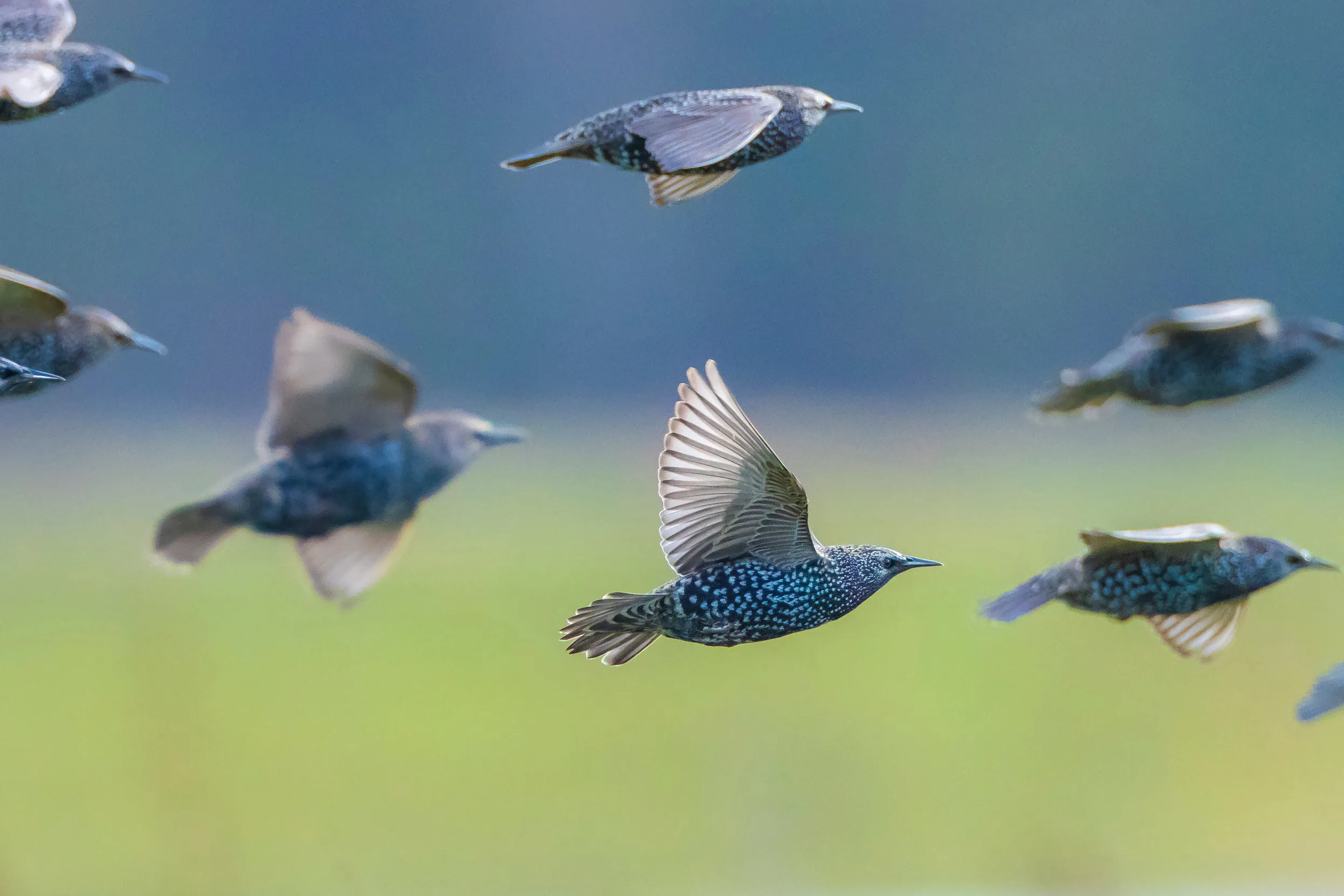

Starlings are regular garden visitors and you could see them pretty much anywhere in the UK, except parts of Scotland. To be in with a chance of watching one of their spectacular aerial performances – called a murmuration – head to large roost sites like reedbeds, piers, and coastal marshes.
Easy – Starlings are resident in the UK all year round, but their numbers swell in winter, when birds migrate here from Scandinavia.
If you’re lucky enough to see a Starling murmuration you might think these birds are doing well. But Starlings declined by 57% between 1995 and 2023 and they now feature on the Red List of birds of high conservation concern.

Learn about Starlings and where to see them.
Hawfinches are nature’s nutcrackers. They’re chunky and powerful birds, with a huge beak that’s strong enough to crack open cherry stones – in fact, their scientific name literally means ‘kernel crusher’! Their distinctive big-headed and bull-necked appearance is due to the massive muscles needed to operate their impressive beak.
Although they’re the UK’s largest finch, Hawfinches are masters of hide and seek, and they spend most of their time hidden away in the leafy treetops. But in winter, your chances of seeing one get a whole lot better. Migrant birds from the continent join the UK’s resident birds, often forming small flocks, and the bare trees make them easier to spot. With more birds, and fewer hiding places, winter is prime Hawfinch spotting time!
When flying, Hawfinches often make a series of high-pitched, repetitive ‘seep-seep-seep’ calls – this is a tell-tale sign that they’re in the area. They also make short, sharp ‘tik, tik’ calls, very similar to a Robin.


Hawfinches like mature, deciduous woodlands, especially those with Hornbeam, Beech, Yew and cherry trees. You’re most likely to see them high up in the canopy, but they will occasionally come down to the ground to drink or feed.
Hawfinches are mostly confined to patches of southern England, as well as parts of Wales and Scotland, but they’re absent from Northern Ireland. From late autumn, when migrant birds start arriving from the continent, they could pop up almost anywhere, including parks and gardens with mature trees – so keep your eyes peeled!
Hard – Hawfinches are incredibly shy and secretive birds, making them really tricky to spot. Winter is the best time to look for them, but expect a challenge!
Hawfinches are on the Red List because their numbers have declined, and their range has shrunk dramatically. It’s not clear exactly what’s causing this decline, but it’s likely that the loss of mature woodland is partly to blame, as well as disease. We’re conducting research to better understand the threats they face and what we can do to help them.

Learn about Hawfinches and where to see them.
We hope you feel inspired to try and see some of these birds this month. We’d love to hear how you get on. You can share your photos with us at NotesonNature@rspb.org.uk We’ll share some of the best in a future issue of Notes on Nature.
Please be mindful when taking photos not to disturb wildlife or habitats. Further guidance can be found in The Nature Photographer's Code of Practice.


